
August 21, 2026
Spirituality
3 min read
Grahan: Story, Significance and Effects on us
Discover the significance of Grahan in Hinduism, the story of Rahu and Ketu, traditional practices during eclipses, and their effects on our body and environment.
A Grahan (eclipse) is a fascinating celestial event that has held a special place in Hindu traditions for centuries. While science explains an eclipse through the movement and alignment of the Sun, Moon and Earth, Hinduism associates it with spiritual significance, ancient mythology and special religious practices.
Whether it is a Surya Grahan (Solar Eclipse) or Chandra Grahan (Lunar Eclipse), the period is traditionally considered an important time for prayer, meditation and spiritual practices.
Grahan
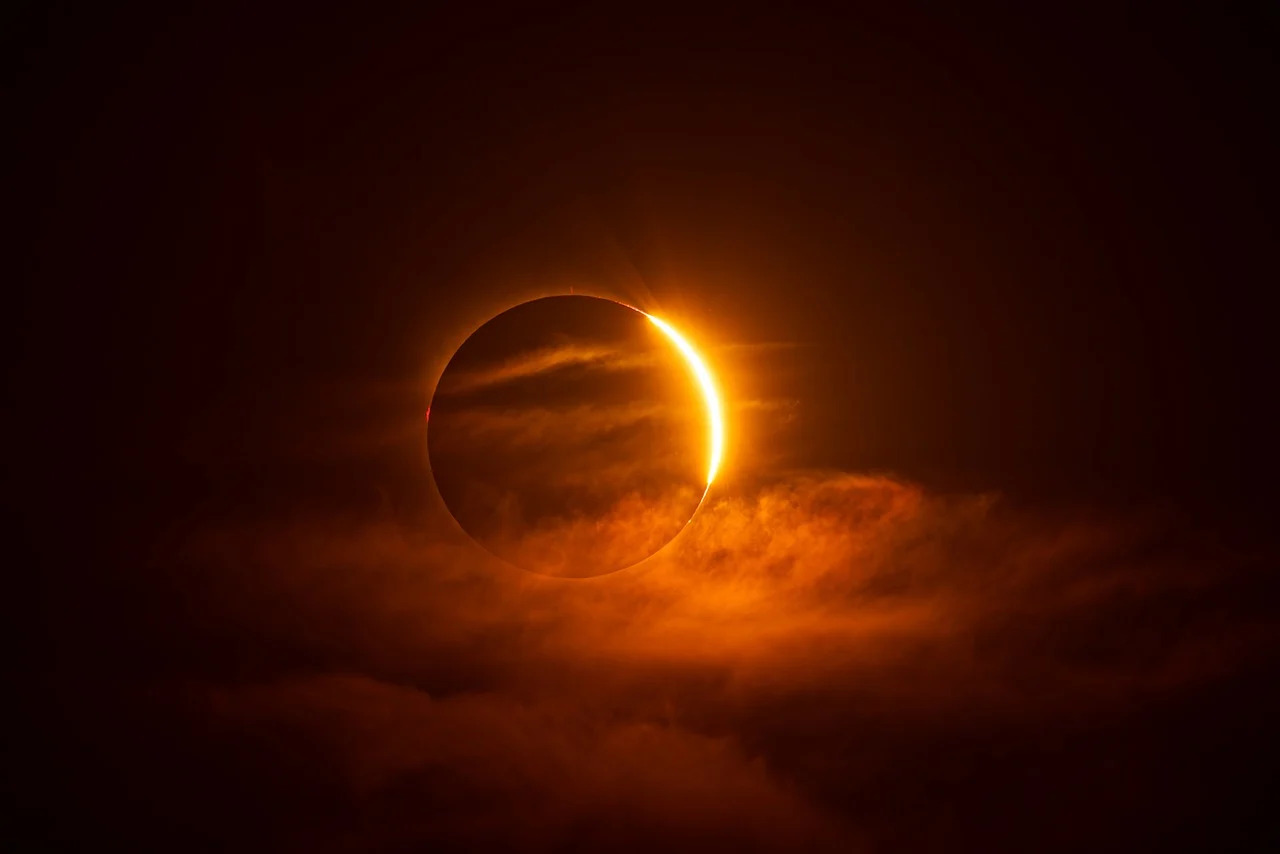
A Surya Grahan occurs when the Moon comes between the Earth and the Sun and blocks the Sun's light, either partially or completely.
A Chandra Grahan occurs when the Earth comes between the Sun and Moon, causing Earth's shadow to fall on the Moon.
Both are natural astronomical events, but their significance extends beyond astronomy in Hindu culture.
Significance in Hinduism
In Hindu mythology, eclipses are traditionally connected with Rahu and Ketu. According to the story of Samudra Manthan, the Asura Swarbhanu tried to consume Amrit by disguising himself as a Deva. Lord Vishnu discovered him and separated his head from his body. His head became Rahu and his body became Ketu.
According to the traditional belief, Rahu periodically attempts to swallow the Sun or Moon, which is associated with the occurrence of eclipses.
Because of this spiritual association, grahan is considered by many devotees to be a powerful period for mantra chanting, meditation, prayer and purification.
Traditional practices during Grahan
Different families and communities follow different customs, but some commonly observed practices include:
Chanting mantras and prayers
Meditation and spiritual reflection
Observing a vrat or fasting
Taking a bath before or after the eclipse
Performing daan and charitable acts
Offering prayers to one's chosen deity
Many devotees believe that spiritual practices performed during an eclipse can help strengthen one's focus and devotion. Through Bhaktinama, devotees can also explore convenient options for online puja booking, online pandit booking and online temple booking, making religious practices more accessible.
Effects of Grahan on body
There are many traditional beliefs about the effects of an eclipse on the human body. However, science does not establish that an eclipse itself causes illness, infertility or other mysterious physical effects.
There can, however, be observable environmental changes. During a solar eclipse, daylight decreases temporarily and some animals may respond to the sudden change in light.
One genuine health concern is eye safety. Looking directly at a solar eclipse without proper eye protection can damage the eyes. Specialised solar viewing glasses or certified solar filters should always be used.
Grahan: A Meeting of Faith and Science
Hindu traditions give grahan a spiritual meaning, while modern astronomy explains the scientific process behind it. These perspectives need not necessarily conflict. An eclipse can be appreciated as a remarkable cosmic event while also being observed through the lens of faith and tradition.
For many devotees, the deeper message of grahan is to pause, turn inward and use the moment for prayer, meditation and self-reflection.
Conclusion
Grahan in Hinduism represents a unique blend of mythology, spirituality and astronomy. From the story of Rahu and Ketu to the tradition of mantra chanting and daan, eclipses continue to hold cultural and religious significance.
While science helps us understand the actual effects of an eclipse, Hindu traditions encourage devotees to use this special period for spiritual growth and reflection. With platforms like Bhaktinama, traditional practices such as online puja booking and online pandit booking can be accessed more conveniently, helping devotees stay connected with their spiritual traditions.
Whether it is a Surya Grahan (Solar Eclipse) or Chandra Grahan (Lunar Eclipse), the period is traditionally considered an important time for prayer, meditation and spiritual practices.
Grahan
A Surya Grahan occurs when the Moon comes between the Earth and the Sun and blocks the Sun's light, either partially or completely.
A Chandra Grahan occurs when the Earth comes between the Sun and Moon, causing Earth's shadow to fall on the Moon.
Both are natural astronomical events, but their significance extends beyond astronomy in Hindu culture.
Significance in Hinduism
In Hindu mythology, eclipses are traditionally connected with Rahu and Ketu. According to the story of Samudra Manthan, the Asura Swarbhanu tried to consume Amrit by disguising himself as a Deva. Lord Vishnu discovered him and separated his head from his body. His head became Rahu and his body became Ketu.
According to the traditional belief, Rahu periodically attempts to swallow the Sun or Moon, which is associated with the occurrence of eclipses.
Because of this spiritual association, grahan is considered by many devotees to be a powerful period for mantra chanting, meditation, prayer and purification.
Traditional practices during Grahan
Different families and communities follow different customs, but some commonly observed practices include:
Chanting mantras and prayers
Meditation and spiritual reflection
Observing a vrat or fasting
Taking a bath before or after the eclipse
Performing daan and charitable acts
Offering prayers to one's chosen deity
Many devotees believe that spiritual practices performed during an eclipse can help strengthen one's focus and devotion. Through Bhaktinama, devotees can also explore convenient options for online puja booking, online pandit booking and online temple booking, making religious practices more accessible.
Effects of Grahan on body
There are many traditional beliefs about the effects of an eclipse on the human body. However, science does not establish that an eclipse itself causes illness, infertility or other mysterious physical effects.
There can, however, be observable environmental changes. During a solar eclipse, daylight decreases temporarily and some animals may respond to the sudden change in light.
One genuine health concern is eye safety. Looking directly at a solar eclipse without proper eye protection can damage the eyes. Specialised solar viewing glasses or certified solar filters should always be used.
Grahan: A Meeting of Faith and Science
Hindu traditions give grahan a spiritual meaning, while modern astronomy explains the scientific process behind it. These perspectives need not necessarily conflict. An eclipse can be appreciated as a remarkable cosmic event while also being observed through the lens of faith and tradition.
For many devotees, the deeper message of grahan is to pause, turn inward and use the moment for prayer, meditation and self-reflection.
Conclusion
Grahan in Hinduism represents a unique blend of mythology, spirituality and astronomy. From the story of Rahu and Ketu to the tradition of mantra chanting and daan, eclipses continue to hold cultural and religious significance.
While science helps us understand the actual effects of an eclipse, Hindu traditions encourage devotees to use this special period for spiritual growth and reflection. With platforms like Bhaktinama, traditional practices such as online puja booking and online pandit booking can be accessed more conveniently, helping devotees stay connected with their spiritual traditions.