November 13, 2025
Temple Mandir
5 min read
Vishalakshi Temple— The Divine Eye of Shakti
Vishalakshi Temple in Varanasi is one of the holiest Shakti Peethas, where Goddess Sati’s earrings are believed to have fallen. Revered as “the one with wide eyes,” Vishalakshi symbolizes divine vision and compassion. Together with Meenakshi of Madurai and Kamakshi of Kanchipuram, she forms the Trishakti triad. Nestled near the Ganga at Mir Ghat, the temple radiates feminine grace and spiritual power, offering devotees wisdom, peace, and liberatio
Nestled in the heart of Varanasi, the world’s oldest living city, stands the Vishalakshi Temple — a sacred abode of Devi Shakti and one of the Shakti Peethas, the holiest shrines dedicated to the Mother Goddess. The name Vishalakshi means “the one with wide eyes,” symbolizing her all-seeing compassion and wisdom that embrace the entire cosmos.
This temple is not just a site of worship but a living embodiment of Sanatan Dharma, where divine feminine energy flows through the ghats, the chants, and the very air of Kashi. Devotees believe that Goddess Vishalakshi blesses her children with darshan, wisdom, and liberation (moksha), aligning perfectly with the city’s ancient reputation as the gateway to salvation.
Mythological Significance — The Story of the Shakti Peetha
According to Devi Purana and Skanda Purana, when Sati, the first consort of Lord Shiva, immolated herself in grief at her father Daksha’s Yajna, Lord Shiva carried her lifeless body in deep sorrow, performing the Tandava of destruction. To calm him down and restore cosmic balance, Lord Vishnu released his Sudarshan Chakra, which cut Sati’s body into 51 pieces.
Wherever her body parts fell, those sites became Shakti Peethas, charged with divine feminine energy. It is believed that Sati’s earrings (kundalas) or her eyes fell at the site where the Vishalakshi Temple now stands, giving rise to the name Vishalakshi — “the wide-eyed goddess.”
Thus, Varanasi not only represents liberation through Shiva but also the grace and maternal love of Shakti.
The Connection Between Vishalakshi, Kamakshi, and Meenakshi
Vishalakshi Devi is revered as one of the Trishakti Peethas, forming a divine triad with:
Meenakshi of Madurai (Tamil Nadu) — the fish-eyed goddess symbolizing compassion,
Kamakshi of Kanchipuram (Tamil Nadu) — the goddess of love and desire,
and Vishalakshi of Varanasi (Uttar Pradesh) — the goddess of vision and wisdom.
Devotees believe that worshipping all three forms grants complete spiritual fulfillment — Kama (love), Jnana (wisdom), and Moksha (liberation).
Architectural Beauty and Spiritual Ambience
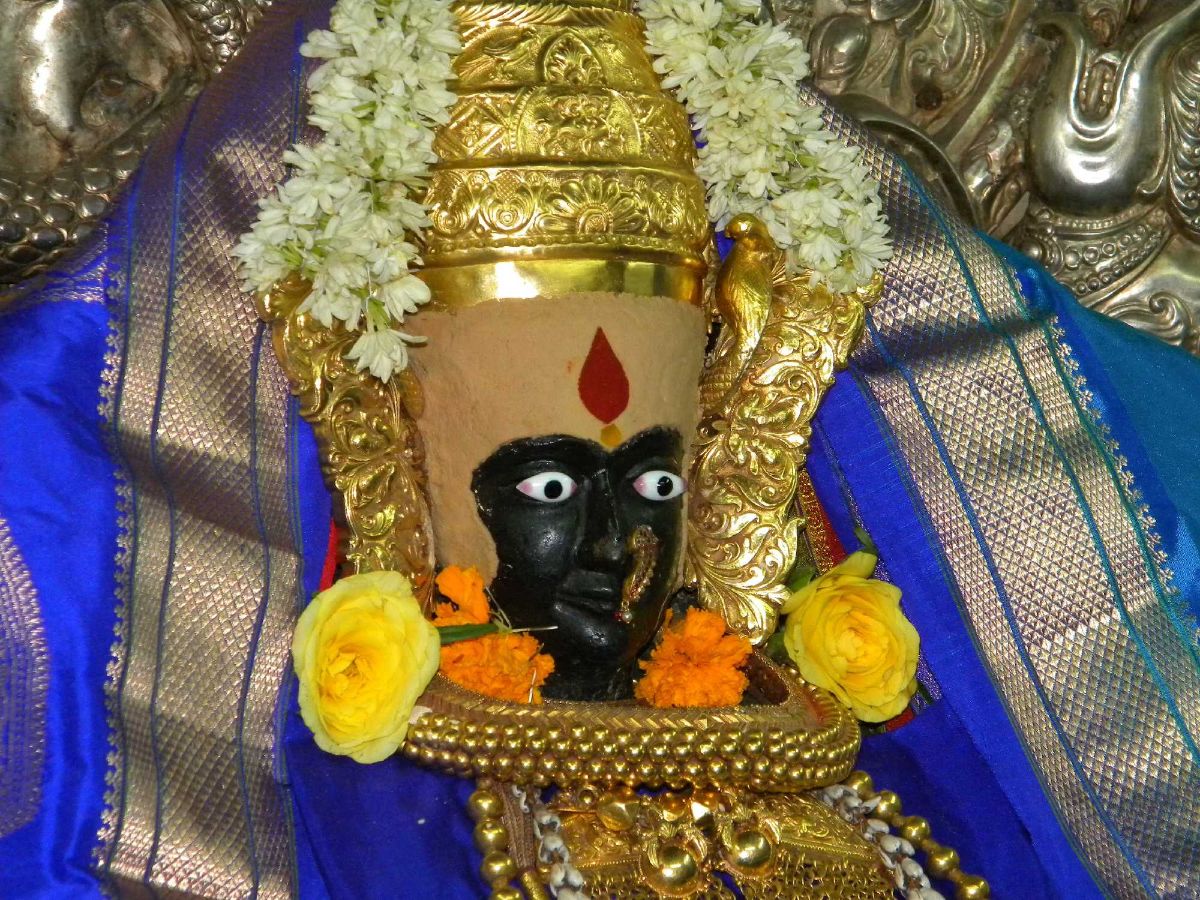
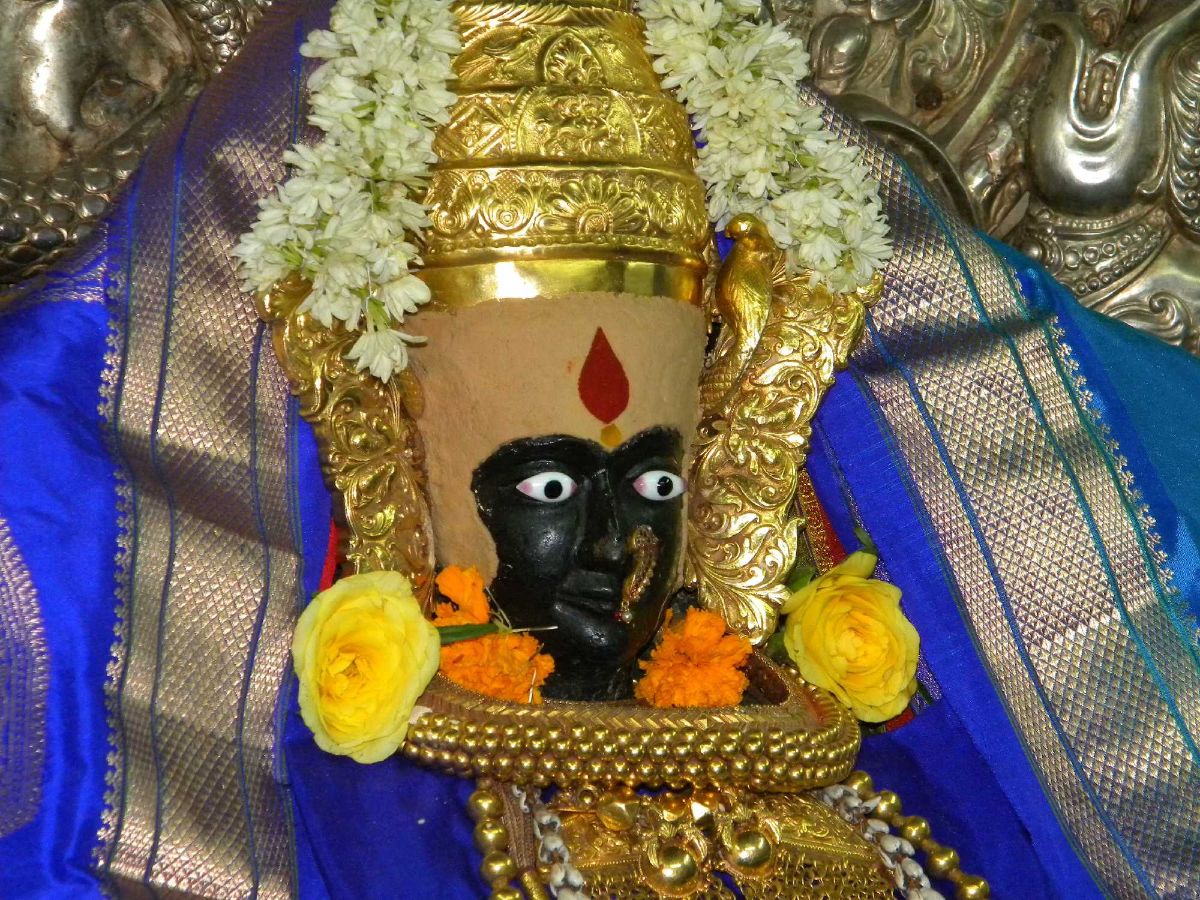
The Vishalakshi Temple stands close to the Mir Ghat, near the sacred Ganga river, and though smaller in size compared to other temples of Kashi, its spiritual vibration is immense. The sanctum (garbhagriha) houses the idol of Goddess Vishalakshi adorned with red sarees, silver ornaments, and flowers, symbolizing Shakti in her benevolent form.
The temple walls are inscribed with mantras and artistic carvings, and the air resonates with the chants of “Jai Maa Vishalakshi.” The temple’s simplicity, coupled with the powerful aura of devotion, draws countless pilgrims every day — especially women seeking divine blessings for prosperity, protection, and marital harmony.
Rituals and Festivities
The temple is particularly vibrant during:
Navratri – Nine nights dedicated to the worship of the goddess in her various forms.
Kajali Teej – Celebrated with songs and rituals by women to honor the feminine power.
Shravan Month – When both Shiva and Shakti are worshipped together.
Devotees often offer red bangles, sindoor, coconuts, and saris to the goddess. It is also customary for married women to offer prayers here seeking eternal marital bliss and protection for their husbands.
The Spiritual Connection with Annapurna and Vishwanath
Vishalakshi Temple is deeply connected to the Kashi Vishwanath Temple, dedicated to Lord Shiva, and the Annapurna Temple, dedicated to the goddess of nourishment. Together, these three temples represent the Trinity of Power in Kashi —
Vishwanath (Shiva) – the giver of liberation,
Annapurna (Shakti) – the giver of sustenance,
Vishalakshi (Shakti) – the giver of vision and divine knowledge.
It is believed that a pilgrimage to Kashi remains incomplete without visiting all three shrines.
Symbolism — The All-Seeing Mother
The name Vishalakshi is not merely a physical description but a profound symbol. Her wide eyes represent her ability to:
See all suffering and grant protection,
Perceive beyond illusion, guiding the devotee toward truth,
Bestow clarity and vision, both worldly and spiritual.
In spiritual psychology, Vishalakshi is seen as the divine witness, reminding us that the Goddess sees not only our deeds but our intentions, our inner light, and our struggles.
Spiritual Experience for Pilgrims
Visiting the Vishalakshi Temple is often described as a deeply moving experience. The hum of ancient mantras, the fragrance of sandalwood and flowers, the reflection of diyas in the Ganga — all these evoke a sense of timelessness.
Pilgrims say that the moment you step into the sanctum, the Goddess’ eyes seem to follow you — not to judge, but to assure, to comfort, and to remind that the Mother sees all and loves all.
Modern Relevance
In today’s world, where people struggle with disconnection and anxiety, the Vishalakshi Temple serves as a reminder of divine compassion and feminine strength. The Goddess’ gaze teaches awareness — to see others with empathy and to view life as sacred.
As spiritual seekers rediscover the balance between material and inner worlds, Vishalakshi Devi becomes a symbol of clarity amidst chaos, wisdom amidst confusion, and grace amidst struggle.
The Vishalakshi Temple of Varanasi stands not merely as a temple but as a timeless symbol of divine motherhood and wisdom. It unites the energies of Shiva and Shakti, Kashi and the cosmos, the seen and the unseen.
Every devotee who bows before her receives not just blessings but a vision — a reminder that the Goddess’ eyes are forever open, watching, protecting, and guiding her children through the river of life.
Book experienced pandits online for all Hindu puja rituals with Bhaktinama – simple, reliable, and authentic.
This temple is not just a site of worship but a living embodiment of Sanatan Dharma, where divine feminine energy flows through the ghats, the chants, and the very air of Kashi. Devotees believe that Goddess Vishalakshi blesses her children with darshan, wisdom, and liberation (moksha), aligning perfectly with the city’s ancient reputation as the gateway to salvation.
Mythological Significance — The Story of the Shakti Peetha
According to Devi Purana and Skanda Purana, when Sati, the first consort of Lord Shiva, immolated herself in grief at her father Daksha’s Yajna, Lord Shiva carried her lifeless body in deep sorrow, performing the Tandava of destruction. To calm him down and restore cosmic balance, Lord Vishnu released his Sudarshan Chakra, which cut Sati’s body into 51 pieces.
Wherever her body parts fell, those sites became Shakti Peethas, charged with divine feminine energy. It is believed that Sati’s earrings (kundalas) or her eyes fell at the site where the Vishalakshi Temple now stands, giving rise to the name Vishalakshi — “the wide-eyed goddess.”
Thus, Varanasi not only represents liberation through Shiva but also the grace and maternal love of Shakti.
The Connection Between Vishalakshi, Kamakshi, and Meenakshi
Vishalakshi Devi is revered as one of the Trishakti Peethas, forming a divine triad with:
Meenakshi of Madurai (Tamil Nadu) — the fish-eyed goddess symbolizing compassion,
Kamakshi of Kanchipuram (Tamil Nadu) — the goddess of love and desire,
and Vishalakshi of Varanasi (Uttar Pradesh) — the goddess of vision and wisdom.
Devotees believe that worshipping all three forms grants complete spiritual fulfillment — Kama (love), Jnana (wisdom), and Moksha (liberation).
Architectural Beauty and Spiritual Ambience
The Vishalakshi Temple stands close to the Mir Ghat, near the sacred Ganga river, and though smaller in size compared to other temples of Kashi, its spiritual vibration is immense. The sanctum (garbhagriha) houses the idol of Goddess Vishalakshi adorned with red sarees, silver ornaments, and flowers, symbolizing Shakti in her benevolent form.
The temple walls are inscribed with mantras and artistic carvings, and the air resonates with the chants of “Jai Maa Vishalakshi.” The temple’s simplicity, coupled with the powerful aura of devotion, draws countless pilgrims every day — especially women seeking divine blessings for prosperity, protection, and marital harmony.
Rituals and Festivities
The temple is particularly vibrant during:
Navratri – Nine nights dedicated to the worship of the goddess in her various forms.
Kajali Teej – Celebrated with songs and rituals by women to honor the feminine power.
Shravan Month – When both Shiva and Shakti are worshipped together.
Devotees often offer red bangles, sindoor, coconuts, and saris to the goddess. It is also customary for married women to offer prayers here seeking eternal marital bliss and protection for their husbands.
The Spiritual Connection with Annapurna and Vishwanath
Vishalakshi Temple is deeply connected to the Kashi Vishwanath Temple, dedicated to Lord Shiva, and the Annapurna Temple, dedicated to the goddess of nourishment. Together, these three temples represent the Trinity of Power in Kashi —
Vishwanath (Shiva) – the giver of liberation,
Annapurna (Shakti) – the giver of sustenance,
Vishalakshi (Shakti) – the giver of vision and divine knowledge.
It is believed that a pilgrimage to Kashi remains incomplete without visiting all three shrines.
Symbolism — The All-Seeing Mother
The name Vishalakshi is not merely a physical description but a profound symbol. Her wide eyes represent her ability to:
See all suffering and grant protection,
Perceive beyond illusion, guiding the devotee toward truth,
Bestow clarity and vision, both worldly and spiritual.
In spiritual psychology, Vishalakshi is seen as the divine witness, reminding us that the Goddess sees not only our deeds but our intentions, our inner light, and our struggles.
Spiritual Experience for Pilgrims
Visiting the Vishalakshi Temple is often described as a deeply moving experience. The hum of ancient mantras, the fragrance of sandalwood and flowers, the reflection of diyas in the Ganga — all these evoke a sense of timelessness.
Pilgrims say that the moment you step into the sanctum, the Goddess’ eyes seem to follow you — not to judge, but to assure, to comfort, and to remind that the Mother sees all and loves all.
Modern Relevance
In today’s world, where people struggle with disconnection and anxiety, the Vishalakshi Temple serves as a reminder of divine compassion and feminine strength. The Goddess’ gaze teaches awareness — to see others with empathy and to view life as sacred.
As spiritual seekers rediscover the balance between material and inner worlds, Vishalakshi Devi becomes a symbol of clarity amidst chaos, wisdom amidst confusion, and grace amidst struggle.
The Vishalakshi Temple of Varanasi stands not merely as a temple but as a timeless symbol of divine motherhood and wisdom. It unites the energies of Shiva and Shakti, Kashi and the cosmos, the seen and the unseen.
Every devotee who bows before her receives not just blessings but a vision — a reminder that the Goddess’ eyes are forever open, watching, protecting, and guiding her children through the river of life.
Book experienced pandits online for all Hindu puja rituals with Bhaktinama – simple, reliable, and authentic.