December 30, 2025
Spirituality
5 min read
The Sacred Significance of Yellow in Hinduism
Yellow in Hinduism is not just a color—it symbolizes knowledge, purity, prosperity, and divine energy. Worn by deities like Lord Vishnu and Goddess Saraswati, used in rituals, festivals, and offerings, it represents wisdom, auspiciousness, and spiritual enlightenment, guiding devotees towards positivity and divine blessings.
Colors in Hinduism are not merely decorative—they carry profound spiritual, psychological, and symbolic meanings. Among all colors, yellow holds a particularly sacred and auspicious place. It symbolizes knowledge, learning, prosperity, and divine energy, and its presence is deeply intertwined with rituals, festivals, and the depiction of deities in Hindu tradition.
At Bhaktinama, we not only share spiritual knowledge but also make your devotional journey
easier through modern, accessible services like online pandit booking, online temple booking,
ordering puja samagri online.
Symbolism of Yellow: Knowledge, Purity, and Divinity
Yellow in Hinduism is the color of light, intellect, and enlightenment. It represents the awakening of the mind and the pursuit of wisdom, purity, and virtue. Ancient scriptures often highlight yellow as a symbol of spiritual development and divine consciousness.
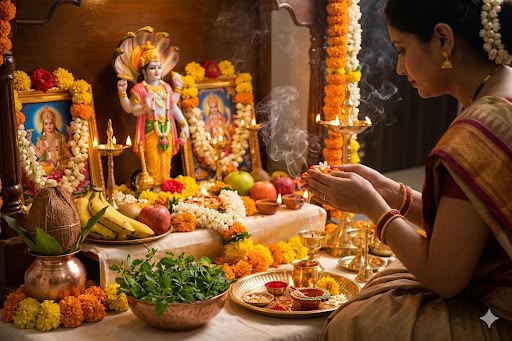
Lord Vishnu, the preserver and protector of the universe, is frequently depicted wearing yellow garments, signifying nourishment, prosperity, and sacred energy. Similarly, Goddess Saraswati, the goddess of knowledge, wisdom, arts, and learning, is traditionally shown adorned in yellow or white with yellow accents, reinforcing the association between yellow and intellectual growth. The color signifies clarity, mental focus, and the illumination of the soul, guiding devotees toward truth and higher understanding.
At Bhaktinama, these rituals are made easy with our online booking services, which include
pandit booking, temple booking, ordering ingredients, and guidance for performing any ritual all
at your fingertips.
Yellow in Rituals and Ceremonies
In Hindu rituals, yellow is considered highly auspicious. It is commonly used during religious ceremonies, celebrations, and important life events to invoke divine blessings and positive energy. Some notable instances include:
Vasant Panchami: This festival, dedicated to Goddess Saraswati, celebrates knowledge, learning, and the arrival of spring. Devotees wear yellow garments, offer yellow flowers, and adorn altars with yellow decorations, symbolizing prosperity, joy, and intellectual awakening.
Bhaktinama Services: Making Your Vrat Easy and Divine
In today’s fast-paced life, maintaining traditional rituals can be challenging. Bhaktinama bridges
this gap by combining devotion with convenience, ensuring that your Kamada Ekadashi
observance becomes smooth and stress-free.
● Online Temple Booking: Devotees can book darshan or special पजू ा at renowned
temples from the comfort of their home, ensuring participation even when travel is not
possible.
● Online Pandit Booking: Arrange experienced and verified pandits for Ekadashi पजू ा,
vrat katha, and rituals at your home with ease and authenticity.
● Puja Samagri (Ingredients) Ordering: Get all essential पजू ा items—like incense, diya,
fruits, and sacred सामग्री—delivered to your doorstep without hassle.
● Personalized Ritual Guidance: Step-by-step assistance and guidance help even
beginners perform Kamada Ekadashi vrat correctly.
With Bhaktinama, devotion is no longer limited by time, distance, or availability—it becomes
accessible to everyone.
Wedding Ceremonies: Yellow, along with turmeric, plays a significant role in Hindu weddings. The Haldi ceremony, where turmeric paste is applied to the bride and groom, is a symbol of purification, auspiciousness, and protection from negative energies.
Platforms like Bhaktinama further enhance this journey by making spiritual practices simpler,
accessible, and more meaningful in modern life. Online booking of pandits, temple, पजू ा सामग्री
delivery all just one tap away.
Griha Pravesh and Housewarming Rituals: Yellow flowers, clothing, and decorations are commonly used to bless a new home, invoking prosperity, happiness, and positive energy.
Yellow in Nature and Offerings
Hinduism places great emphasis on nature in rituals, and yellow is prominently featured through flowers, fruits, and spices:
Marigolds: Widely used in pujas and temple decorations, marigolds symbolize purity, spiritual growth, and devotion. Their bright yellow hue attracts positive energy and is believed to please the deities.
Turmeric (Haldi): A sacred yellow spice, turmeric is more than a ritualistic offering—it represents health, purification, and divine protection. Its use in ceremonies emphasizes yellow’s connection with well-being and auspiciousness.
Fruits and Sweets: Yellow fruits like bananas and offerings such as laddoos are often used in temples and during religious festivities as symbols of abundance and prosperity.
Psychological and Spiritual Importance of Yellow
In addition to its symbolic meaning, yellow has a profound effect on the mind and spirit. It is believed to stimulate intellect, clarity, optimism, and mental alertness. In yoga and Ayurveda, yellow is linked with the solar plexus chakra (Manipura), which governs confidence, personal power, and self-esteem. Wearing yellow or incorporating it into rituals is thought to enhance focus, positive energy, and spiritual growth.
Yellow as a Color of Seasons and Celebration
Yellow also symbolizes the vibrancy of spring and life, marking new beginnings and rejuvenation. Festivals like Vasant Panchami and even Holi feature yellow prominently, representing the joy, energy, and renewal of life. It’s a color that brings warmth, positivity, and auspiciousness into the environment.
With Bhaktinama’s modern services like online temple booking, pandit booking, and पजू ा सामग्री
delivery, your spiritual practices become effortless and deeply fulfilling. Stay connected with
Bhaktinama to experience devotion in the most convenient and authentic way.
In Hinduism, yellow is much more than a color—it is a symbol of divinity, knowledge, and prosperity. From the garments of deities to flowers and spices used in rituals, yellow embodies spiritual wisdom, purity, and auspicious energy. It encourages mental clarity, optimism, and a connection with the divine. Incorporating yellow in daily life, prayers, and celebrations invites knowledge, peace, and blessings, illuminating both the inner self and the surrounding environment with its sacred radiance.
Book experienced pandits online for all Hindu puja rituals with Bhaktinama – simple, reliable, and authentic.
At Bhaktinama, we not only share spiritual knowledge but also make your devotional journey
easier through modern, accessible services like online pandit booking, online temple booking,
ordering puja samagri online.
Symbolism of Yellow: Knowledge, Purity, and Divinity
Yellow in Hinduism is the color of light, intellect, and enlightenment. It represents the awakening of the mind and the pursuit of wisdom, purity, and virtue. Ancient scriptures often highlight yellow as a symbol of spiritual development and divine consciousness.
Lord Vishnu, the preserver and protector of the universe, is frequently depicted wearing yellow garments, signifying nourishment, prosperity, and sacred energy. Similarly, Goddess Saraswati, the goddess of knowledge, wisdom, arts, and learning, is traditionally shown adorned in yellow or white with yellow accents, reinforcing the association between yellow and intellectual growth. The color signifies clarity, mental focus, and the illumination of the soul, guiding devotees toward truth and higher understanding.
At Bhaktinama, these rituals are made easy with our online booking services, which include
pandit booking, temple booking, ordering ingredients, and guidance for performing any ritual all
at your fingertips.
Yellow in Rituals and Ceremonies
In Hindu rituals, yellow is considered highly auspicious. It is commonly used during religious ceremonies, celebrations, and important life events to invoke divine blessings and positive energy. Some notable instances include:
Vasant Panchami: This festival, dedicated to Goddess Saraswati, celebrates knowledge, learning, and the arrival of spring. Devotees wear yellow garments, offer yellow flowers, and adorn altars with yellow decorations, symbolizing prosperity, joy, and intellectual awakening.
Bhaktinama Services: Making Your Vrat Easy and Divine
In today’s fast-paced life, maintaining traditional rituals can be challenging. Bhaktinama bridges
this gap by combining devotion with convenience, ensuring that your Kamada Ekadashi
observance becomes smooth and stress-free.
● Online Temple Booking: Devotees can book darshan or special पजू ा at renowned
temples from the comfort of their home, ensuring participation even when travel is not
possible.
● Online Pandit Booking: Arrange experienced and verified pandits for Ekadashi पजू ा,
vrat katha, and rituals at your home with ease and authenticity.
● Puja Samagri (Ingredients) Ordering: Get all essential पजू ा items—like incense, diya,
fruits, and sacred सामग्री—delivered to your doorstep without hassle.
● Personalized Ritual Guidance: Step-by-step assistance and guidance help even
beginners perform Kamada Ekadashi vrat correctly.
With Bhaktinama, devotion is no longer limited by time, distance, or availability—it becomes
accessible to everyone.
Wedding Ceremonies: Yellow, along with turmeric, plays a significant role in Hindu weddings. The Haldi ceremony, where turmeric paste is applied to the bride and groom, is a symbol of purification, auspiciousness, and protection from negative energies.
Platforms like Bhaktinama further enhance this journey by making spiritual practices simpler,
accessible, and more meaningful in modern life. Online booking of pandits, temple, पजू ा सामग्री
delivery all just one tap away.
Griha Pravesh and Housewarming Rituals: Yellow flowers, clothing, and decorations are commonly used to bless a new home, invoking prosperity, happiness, and positive energy.
Yellow in Nature and Offerings
Hinduism places great emphasis on nature in rituals, and yellow is prominently featured through flowers, fruits, and spices:
Marigolds: Widely used in pujas and temple decorations, marigolds symbolize purity, spiritual growth, and devotion. Their bright yellow hue attracts positive energy and is believed to please the deities.
Turmeric (Haldi): A sacred yellow spice, turmeric is more than a ritualistic offering—it represents health, purification, and divine protection. Its use in ceremonies emphasizes yellow’s connection with well-being and auspiciousness.
Fruits and Sweets: Yellow fruits like bananas and offerings such as laddoos are often used in temples and during religious festivities as symbols of abundance and prosperity.
Psychological and Spiritual Importance of Yellow
In addition to its symbolic meaning, yellow has a profound effect on the mind and spirit. It is believed to stimulate intellect, clarity, optimism, and mental alertness. In yoga and Ayurveda, yellow is linked with the solar plexus chakra (Manipura), which governs confidence, personal power, and self-esteem. Wearing yellow or incorporating it into rituals is thought to enhance focus, positive energy, and spiritual growth.
Yellow as a Color of Seasons and Celebration
Yellow also symbolizes the vibrancy of spring and life, marking new beginnings and rejuvenation. Festivals like Vasant Panchami and even Holi feature yellow prominently, representing the joy, energy, and renewal of life. It’s a color that brings warmth, positivity, and auspiciousness into the environment.
With Bhaktinama’s modern services like online temple booking, pandit booking, and पजू ा सामग्री
delivery, your spiritual practices become effortless and deeply fulfilling. Stay connected with
Bhaktinama to experience devotion in the most convenient and authentic way.
In Hinduism, yellow is much more than a color—it is a symbol of divinity, knowledge, and prosperity. From the garments of deities to flowers and spices used in rituals, yellow embodies spiritual wisdom, purity, and auspicious energy. It encourages mental clarity, optimism, and a connection with the divine. Incorporating yellow in daily life, prayers, and celebrations invites knowledge, peace, and blessings, illuminating both the inner self and the surrounding environment with its sacred radiance.
Book experienced pandits online for all Hindu puja rituals with Bhaktinama – simple, reliable, and authentic.