
December 24, 2025
Uncategorized
5 min read
The Significance of red colour in Hinduism
Colour plays a profound role in Hindu philosophy, rituals, and daily life. Hinduism, one of the world’s oldest living religions, views colours not merely as aesthetic elements but as carriers of deep spiritual meanings. Among all colours, red holds a uniquely powerful and sacred position. It symbolizes life, energy, purity, fertility, power, passion, and transformation. From birth ceremonies to weddings, from temple rituals to festivals, red appears repeatedly as a sign of auspiciousness and divine presence.
In Hindu thought, the universe itself is seen as a dynamic play of energies, and red represents the most active and potent of these energies. It is associated with Shakti, the feminine cosmic force, and with Agni, the sacred fire that sustains life. This blog explores the significance of red colour in Hinduism through mythology, rituals, scriptures, festivals, clothing, symbols, and psychological meaning.
At Bhaktinama, we not only share spiritual knowledge but also make your devotional journey
easier through modern, accessible services like online pandit booking, online temple booking,
ordering puja samagri online.
Red as the Colour of Life and Energy
Red is universally recognized as the colour of blood, which sustains life. In Hinduism, this biological reality is elevated to a spiritual truth. Blood represents prana, or life force. Because red resembles blood and fire, it becomes a symbol of vitality, survival, and continuous creation.
The Hindu worldview considers life as sacred and cyclical. Red reflects this cycle of birth, growth, and renewal. It is the colour of sunrise, symbolizing new beginnings and hope. Thus, red is used extensively in ceremonies that mark transitions—birth, marriage, and religious initiation.
At Bhaktinama, we not only share spiritual knowledge but also make your devotional journey
easier through modern, accessible services like online pandit booking, online temple booking,
ordering puja samagri online.
Red and Shakti: The Feminine Divine Energy
One of the most significant associations of red in Hinduism is with Shakti, the feminine principle of cosmic energy. Goddesses such as Durga, Kali, Lakshmi, and Parvati are often depicted wearing red garments or surrounded by red hues.
Bhaktinama Services: Making Your Vrat Easy and Divine
In today’s fast-paced life, maintaining traditional rituals can be challenging. Bhaktinama bridges
this gap by combining devotion with convenience, ensuring that your Kamada Ekadashi
observance becomes smooth and stress-free.
● Online Temple Booking: Devotees can book darshan or special पजू ा at renowned
temples from the comfort of their home, ensuring participation even when travel is not
possible.
● Online Pandit Booking: Arrange experienced and verified pandits for Ekadashi पजू ा,
vrat katha, and rituals at your home with ease and authenticity.
● Puja Samagri (Ingredients) Ordering: Get all essential पजू ा items—like incense, diya,
fruits, and sacred सामग्री—delivered to your doorstep without hassle.
● Personalized Ritual Guidance: Step-by-step assistance and guidance help even
beginners perform Kamada Ekadashi vrat correctly.
With Bhaktinama, devotion is no longer limited by time, distance, or availability—it becomes
accessible to everyone.
Red represents:
Creative power
Destruction of evil
Fertility and motherhood
Protection and courage
Goddess Durga, who defeats evil forces, symbolizes strength and fearlessness through red. Goddess Kali, often portrayed with a fierce red tongue, embodies time, transformation, and liberation. The colour red here is not violence but raw cosmic power—the force that destroys ignorance and restores balance.
Platforms like Bhaktinama further enhance this journey by making spiritual practices simpler,
accessible, and more meaningful in modern life. Online booking of pandits, temple, पजू ा सामग्री
delivery all just one tap away.
Red in Hindu Rituals and Ceremonies
1. Kumkum and Sindoor
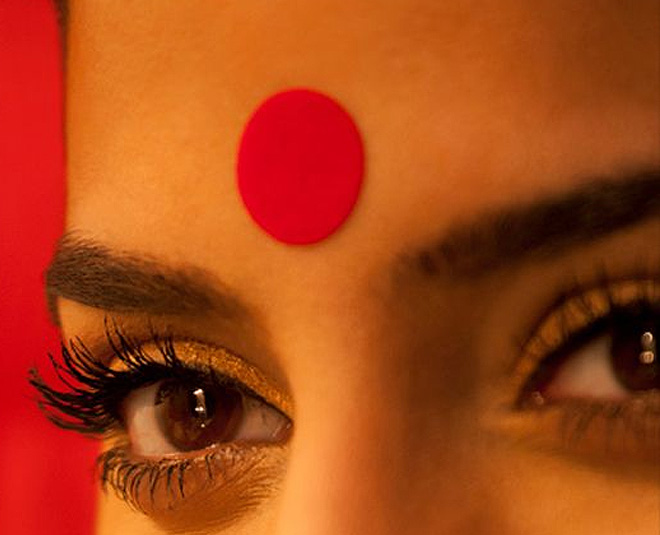
Kumkum (vermilion powder) and sindoor (red powder applied by married women) are among the most visible red symbols in Hinduism.
Sindoor signifies marital status, prosperity, and the long life of the husband.
Kumkum is applied during worship, festivals, and social greetings.
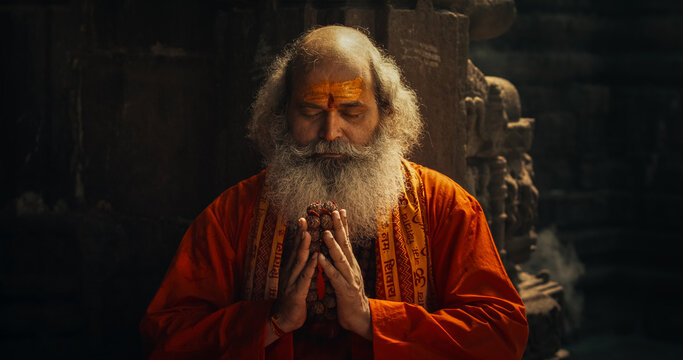
The red mark on the forehead represents the Ajna Chakra, the center of wisdom and consciousness. Applying red here is believed to awaken spiritual awareness and focus the mind.
2. Red in Weddings
In Hindu weddings, red dominates every aspect:
Bride’s attire
Sacred fire (Agni)
Decorations and flowers
A bride traditionally wears red because it symbolizes:
Fertility and continuity of family
Love and commitment
Strength to embrace new responsibilities
Red is believed to ward off negative energies and bless the couple with prosperity and harmony.
Red and Fire (Agni)
Fire is one of the five fundamental elements (Pancha Mahabhutas) in Hindu philosophy. Agni, the fire god, acts as a messenger between humans and the divine. Red, as the colour of fire, becomes sacred.
Every major Hindu ritual involves fire:
Yajnas
Homas
Wedding rituals
Red signifies purification—burning away impurities, ignorance, and ego.
Red in Hindu Festivals
1. Holi
Though Holi is now associated with many colours, red traditionally symbolizes love and divine joy, especially associated with Radha and Krishna.
2. Durga Puja and Navratri
Red dominates these festivals as a symbol of divine feminine power. Devotees wear red, temples are decorated in red, and red flowers are offered to the goddess.
Red in Hindu Scriptures and Symbolism
Ancient texts describe red as a Rajasic colour—associated with action, passion, and movement. While excessive attachment is discouraged, controlled passion is necessary for worldly duties (Dharma).
With Bhaktinama’s modern services like online temple booking, pandit booking, and पजू ा सामग्री
delivery, your spiritual practices become effortless and deeply fulfilling. Stay connected with
Bhaktinama to experience devotion in the most convenient and authentic way
Red thus represents:
Action with responsibility
Desire guided by ethics
Strength balanced by wisdom
Psychological and Spiritual Meaning of Red
Psychologically, red stimulates:
Confidence
Courage
Motivation
Spiritually, it reminds humans of their inner power and responsibility. Red encourages engagement with life while reminding one of discipline and moral balance.
Red as Protection and Auspiciousness
Red threads (kalava or mauli), red flags on temples, and red markings on sacred objects all serve protective purposes. Red is believed to repel negativity and invite divine blessings.
The colour red in Hinduism is far more than a visual element—it is a spiritual language. It speaks of life’s intensity, divine energy, sacred duty, and transformative power. Red teaches that passion, when guided by wisdom, becomes strength; energy, when guided by devotion, becomes divinity.
In every red mark, garment, flame, and flower lies a reminder of humanity’s connection to the cosmic force that creates, sustains, and transforms the universe.
Book experienced pandits online for all Hindu puja rituals with Bhaktinama – simple, reliable, and authentic.
At Bhaktinama, we not only share spiritual knowledge but also make your devotional journey
easier through modern, accessible services like online pandit booking, online temple booking,
ordering puja samagri online.
Red as the Colour of Life and Energy
Red is universally recognized as the colour of blood, which sustains life. In Hinduism, this biological reality is elevated to a spiritual truth. Blood represents prana, or life force. Because red resembles blood and fire, it becomes a symbol of vitality, survival, and continuous creation.
The Hindu worldview considers life as sacred and cyclical. Red reflects this cycle of birth, growth, and renewal. It is the colour of sunrise, symbolizing new beginnings and hope. Thus, red is used extensively in ceremonies that mark transitions—birth, marriage, and religious initiation.
At Bhaktinama, we not only share spiritual knowledge but also make your devotional journey
easier through modern, accessible services like online pandit booking, online temple booking,
ordering puja samagri online.
Red and Shakti: The Feminine Divine Energy
One of the most significant associations of red in Hinduism is with Shakti, the feminine principle of cosmic energy. Goddesses such as Durga, Kali, Lakshmi, and Parvati are often depicted wearing red garments or surrounded by red hues.
Bhaktinama Services: Making Your Vrat Easy and Divine
In today’s fast-paced life, maintaining traditional rituals can be challenging. Bhaktinama bridges
this gap by combining devotion with convenience, ensuring that your Kamada Ekadashi
observance becomes smooth and stress-free.
● Online Temple Booking: Devotees can book darshan or special पजू ा at renowned
temples from the comfort of their home, ensuring participation even when travel is not
possible.
● Online Pandit Booking: Arrange experienced and verified pandits for Ekadashi पजू ा,
vrat katha, and rituals at your home with ease and authenticity.
● Puja Samagri (Ingredients) Ordering: Get all essential पजू ा items—like incense, diya,
fruits, and sacred सामग्री—delivered to your doorstep without hassle.
● Personalized Ritual Guidance: Step-by-step assistance and guidance help even
beginners perform Kamada Ekadashi vrat correctly.
With Bhaktinama, devotion is no longer limited by time, distance, or availability—it becomes
accessible to everyone.
Red represents:
Creative power
Destruction of evil
Fertility and motherhood
Protection and courage
Goddess Durga, who defeats evil forces, symbolizes strength and fearlessness through red. Goddess Kali, often portrayed with a fierce red tongue, embodies time, transformation, and liberation. The colour red here is not violence but raw cosmic power—the force that destroys ignorance and restores balance.
Platforms like Bhaktinama further enhance this journey by making spiritual practices simpler,
accessible, and more meaningful in modern life. Online booking of pandits, temple, पजू ा सामग्री
delivery all just one tap away.
Red in Hindu Rituals and Ceremonies
1. Kumkum and Sindoor
Kumkum (vermilion powder) and sindoor (red powder applied by married women) are among the most visible red symbols in Hinduism.
Sindoor signifies marital status, prosperity, and the long life of the husband.
Kumkum is applied during worship, festivals, and social greetings.
The red mark on the forehead represents the Ajna Chakra, the center of wisdom and consciousness. Applying red here is believed to awaken spiritual awareness and focus the mind.
2. Red in Weddings
In Hindu weddings, red dominates every aspect:
Bride’s attire
Sacred fire (Agni)
Decorations and flowers
A bride traditionally wears red because it symbolizes:
Fertility and continuity of family
Love and commitment
Strength to embrace new responsibilities
Red is believed to ward off negative energies and bless the couple with prosperity and harmony.
Red and Fire (Agni)
Fire is one of the five fundamental elements (Pancha Mahabhutas) in Hindu philosophy. Agni, the fire god, acts as a messenger between humans and the divine. Red, as the colour of fire, becomes sacred.
Every major Hindu ritual involves fire:
Yajnas
Homas
Wedding rituals
Red signifies purification—burning away impurities, ignorance, and ego.
Red in Hindu Festivals
1. Holi
Though Holi is now associated with many colours, red traditionally symbolizes love and divine joy, especially associated with Radha and Krishna.
2. Durga Puja and Navratri
Red dominates these festivals as a symbol of divine feminine power. Devotees wear red, temples are decorated in red, and red flowers are offered to the goddess.
Red in Hindu Scriptures and Symbolism
Ancient texts describe red as a Rajasic colour—associated with action, passion, and movement. While excessive attachment is discouraged, controlled passion is necessary for worldly duties (Dharma).
With Bhaktinama’s modern services like online temple booking, pandit booking, and पजू ा सामग्री
delivery, your spiritual practices become effortless and deeply fulfilling. Stay connected with
Bhaktinama to experience devotion in the most convenient and authentic way
Red thus represents:
Action with responsibility
Desire guided by ethics
Strength balanced by wisdom
Psychological and Spiritual Meaning of Red
Psychologically, red stimulates:
Confidence
Courage
Motivation
Spiritually, it reminds humans of their inner power and responsibility. Red encourages engagement with life while reminding one of discipline and moral balance.
Red as Protection and Auspiciousness
Red threads (kalava or mauli), red flags on temples, and red markings on sacred objects all serve protective purposes. Red is believed to repel negativity and invite divine blessings.
The colour red in Hinduism is far more than a visual element—it is a spiritual language. It speaks of life’s intensity, divine energy, sacred duty, and transformative power. Red teaches that passion, when guided by wisdom, becomes strength; energy, when guided by devotion, becomes divinity.
In every red mark, garment, flame, and flower lies a reminder of humanity’s connection to the cosmic force that creates, sustains, and transforms the universe.
Book experienced pandits online for all Hindu puja rituals with Bhaktinama – simple, reliable, and authentic.