
August 01, 2026
Dieties/devta gan
7 min read
Seven Horses of Surya Dev: Names, Significance, Symbolism, and Spiritual Meaning in Hinduism
Discover the names of Surya Dev's seven horses, their Vedic significance, symbolism, and spiritual meaning in Hinduism. Learn why Lord Surya's chariot is drawn by seven divine horses and what they represent.
Among all Hindu deities, Surya Dev, the Sun God, is unique because he is visible to every living being. Worshipped since the Vedic period, Surya is regarded as the source of light, life, energy, health, knowledge, and prosperity. Every sunrise symbolizes hope, renewal, and the triumph of light over darkness.
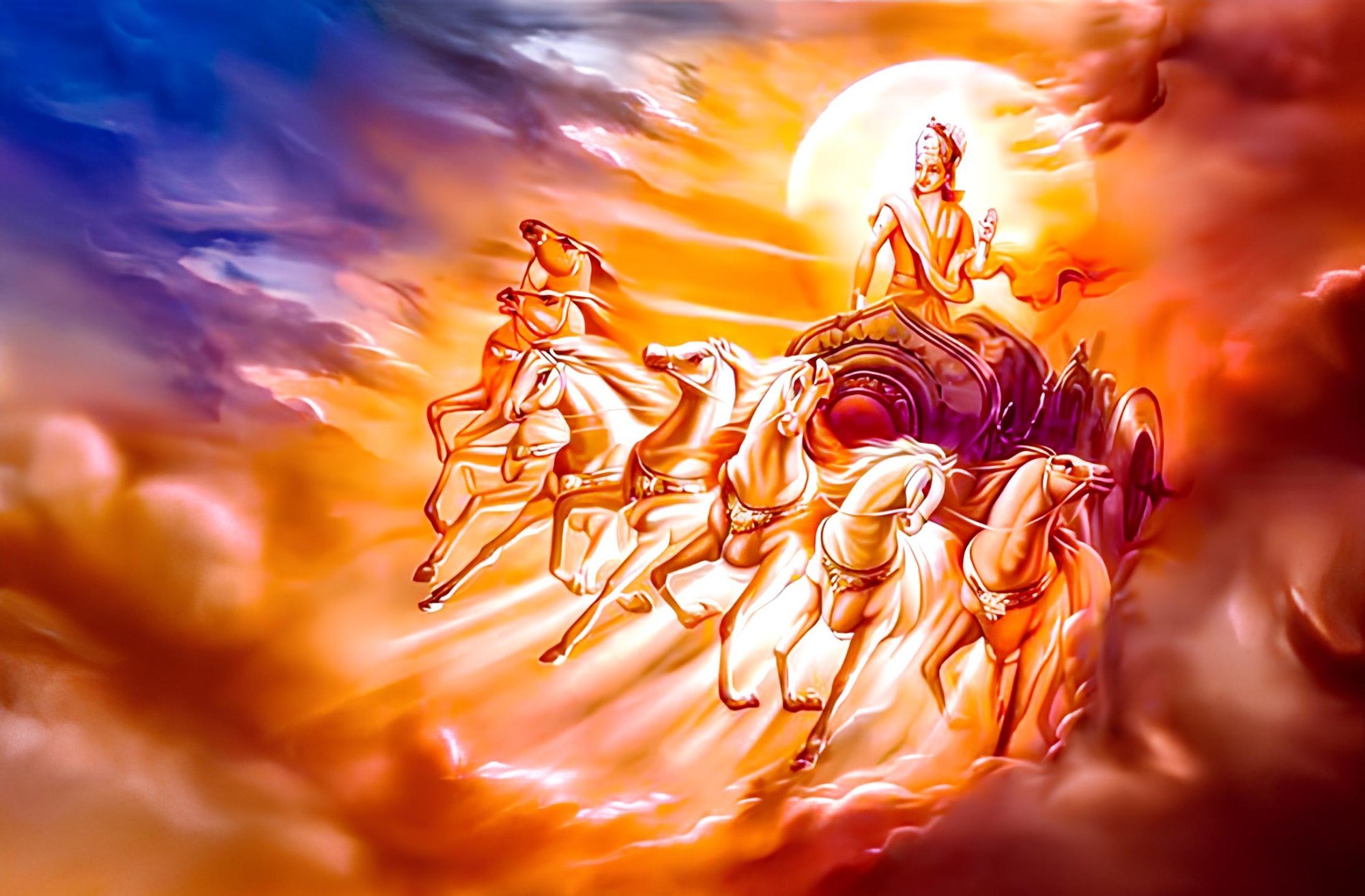
One of the most captivating aspects of Surya Dev's iconography is his magnificent golden chariot, driven by his charioteer Aruna and pulled by seven divine horses. While these horses create a striking visual image, Hindu scriptures reveal that they carry a much deeper spiritual meaning. They represent sacred knowledge, the rhythm of the universe, the flow of time, and the eternal energy that sustains creation.
Understanding the symbolism behind these seven horses helps devotees appreciate why Surya worship has remained an important part of Hindu tradition for thousands of years.
Surya Dev and His Divine Chariot
The Vedas and Puranas describe Surya Dev travelling across the sky every day in a radiant golden chariot. This journey is not merely the movement of the Sun but a symbol of the continuous cycle of life, time, and cosmic order.
The chariot is driven by Aruna, the deity of dawn, whose appearance before sunrise signifies the gradual arrival of light and knowledge. The seven horses pull the chariot tirelessly, representing the unstoppable movement of time and the divine forces that sustain the universe.
Unlike ordinary horses, these celestial beings symbolize spiritual principles rather than physical strength.
The number seven appears repeatedly throughout Hindu philosophy and spirituality. It symbolizes completeness, harmony, and divine perfection.
Some of the most significant groups of seven in Hinduism include:
Seven Chakras
Seven Sages (Saptarishi)
Seven Sacred Rivers
Seven Continents (Sapta Dvipa)
Seven Musical Notes (Sapta Swara)
Seven Flames of Sacrifice
Seven Steps of Marriage (Saptapadi)
Similarly, the seven horses of Surya Dev represent the complete expression of divine energy that governs the universe.
According to Vedic tradition, these horses symbolize the seven principal Chhandas (metrical patterns) used in Vedic hymns. Just as these metres create rhythm and harmony in sacred chants, the horses symbolize the rhythm that maintains the order of the cosmos.
Names of the Seven Horses of Surya Dev
The seven horses are traditionally identified with the seven Vedic Chhandas.
1. Gayatri
Gayatri is the most revered Vedic metre and is associated with the sacred Gayatri Mantra.
It represents divine wisdom, enlightenment, purity, and spiritual awakening. As the first horse of Surya Dev's chariot, Gayatri symbolizes the beginning of knowledge that dispels ignorance.
2. Brihati
The word Brihati means "great" or "vast."
This horse represents expansion, greatness, abundance, and limitless consciousness. It teaches devotees to broaden their perspective and cultivate generosity in both thought and action.
3. Ushnih
Ushnih signifies warmth, enthusiasm, and youthful energy.
Just as the first rays of the Sun awaken nature each morning, this horse symbolizes vitality, optimism, and the energy required to pursue one's duties with dedication.
4. Jagati
Derived from the Sanskrit word Jagat, meaning "the world," Jagati represents the entire universe.
It signifies harmony, stability, and the interconnectedness of all living beings. Surya's light reaches everyone equally, reminding us to practice compassion and impartiality.
5. Trishtubh
Trishtubh is among the most frequently used metres in the Rig Veda.
It symbolizes courage, discipline, perseverance, and righteous action. Like Surya Dev, who never fails to rise each day, this horse inspires consistency and commitment.
6. Anushtubh
Anushtubh is the metre used extensively in the Ramayana and Mahabharata.
It represents balance, ethics, communication, and practical wisdom. It reminds devotees that spiritual knowledge should guide everyday decisions and relationships.
7. Pankti
Pankti completes the seven sacred Vedic metres.
It symbolizes prosperity, nourishment, fulfillment, and gratitude. As the Sun nurtures crops, seasons, and life itself, Pankti reminds devotees to appreciate the abundance bestowed by nature.
The seven horses have inspired several symbolic interpretations within Hindu philosophy.
The Seven Colours of Sunlight
Modern readers often associate the horses with the seven colours of visible light—violet, indigo, blue, green, yellow, orange, and red.
Just as white sunlight contains all colours, the Divine manifests in countless forms while remaining one supreme reality.
The Seven Days of the Week
The horses are also believed to represent the seven days of the week, signifying that time itself moves under the divine order established by Surya Dev.
Every sunrise marks a fresh beginning and a new opportunity to perform righteous actions.
The Seven Chakras
Many spiritual teachers relate the horses to the seven chakras within the human body.
As sunlight nourishes life externally, spiritual awakening illuminates the inner self. Progress through the chakras symbolizes the journey from material awareness to higher consciousness.
The Seven Vedic Metres
The oldest and most scripturally authentic interpretation connects the horses to the seven Vedic Chhandas.
This association emphasizes that the universe itself moves according to divine rhythm and sacred sound.
Surya Dev's horses are traditionally depicted as pure white.
White represents purity, truth, righteousness, peace, and divine consciousness. It also contains every colour of visible light, making it a fitting symbol for the Sun, from whom all colours emerge.
The white horses remind devotees that although the world appears diverse, its ultimate source remains one.
The Importance of Aruna, the Charioteer
While the horses symbolize divine energy, Aruna directs their movement.
Aruna is the personification of dawn and represents the transition from darkness to light. His appearance before sunrise teaches that wisdom gradually replaces ignorance, just as dawn slowly dispels the night.
His role also reminds devotees that power should always be guided by wisdom and discipline.
Spiritual Lessons from the Seven Horses
The seven horses are not merely symbols of cosmic movement—they also offer valuable lessons for everyday life.
They teach us to remain disciplined even when faced with obstacles, just as the Sun rises unfailingly each day. They encourage continuous learning, reminding us that knowledge is the greatest light. They inspire us to maintain balance between material success and spiritual growth, to persevere through difficulties, and to recognize that every new sunrise offers another opportunity to improve ourselves.
Most importantly, they remind us that life is always moving forward. Just as Surya Dev's chariot never stands still, devotees are encouraged to continue progressing with faith, dedication, and humility.
Worshipping Surya Dev
Devotees worship Surya Dev to seek good health, success, wisdom, confidence, and protection from negative influences.
Some of the most common forms of Surya worship include:
Offering Arghya (water) to the rising Sun
Chanting the Gayatri Mantra
Reciting Aditya Hridayam
Performing Surya Namaskar
Observing Ratha Saptami and Chhath Puja
Performing Navagraha and Surya Shanti Pujas
For those who wish to perform Surya-related rituals with proper Vedic guidance, Bhaktinama makes the process convenient through Online Pandit Booking, Online Puja Booking, and Online Puja Samagri Booking services. Whether you are seeking blessings for health, career, prosperity, or spiritual well-being, experienced priests can help you perform these sacred ceremonies according to tradition.
Relevance of the Seven Horses in Modern Life
Although rooted in ancient scriptures, the symbolism of Surya Dev's seven horses remains meaningful today.
In a fast-paced world, they remind us to maintain discipline, value knowledge, respect time, and stay connected to nature. The Sun shines equally on all, teaching equality, generosity, and selfless service. The daily journey of Surya Dev inspires us to remain consistent in our efforts, regardless of challenges.
By reflecting on the deeper meaning of these seven horses, devotees can transform a simple image into a powerful source of spiritual inspiration.
Conclusion
The seven horses of Surya Dev are among the most profound symbols in Hindu philosophy. Rather than being ordinary celestial animals, they represent the seven sacred Vedic Chhandas—Gayatri, Brihati, Ushnih, Jagati, Trishtubh, Anushtubh, and Pankti—which embody the rhythm of the Vedas and the harmony of the universe.
They also symbolize the seven colours of light, the seven days of the week, the seven chakras, and the many dimensions of divine energy that sustain life. Together with Aruna, they illustrate the eternal movement of time, the victory of light over darkness, and the importance of living with discipline, wisdom, and gratitude.
As devotees greet the rising Sun each morning, the seven horses serve as a timeless reminder that true progress comes through knowledge, righteous action, and unwavering faith. By understanding their symbolism, Surya worship becomes not only an act of devotion but also a journey toward inner illumination and spiritual growth.
One of the most captivating aspects of Surya Dev's iconography is his magnificent golden chariot, driven by his charioteer Aruna and pulled by seven divine horses. While these horses create a striking visual image, Hindu scriptures reveal that they carry a much deeper spiritual meaning. They represent sacred knowledge, the rhythm of the universe, the flow of time, and the eternal energy that sustains creation.
Understanding the symbolism behind these seven horses helps devotees appreciate why Surya worship has remained an important part of Hindu tradition for thousands of years.
Surya Dev and His Divine Chariot
The Vedas and Puranas describe Surya Dev travelling across the sky every day in a radiant golden chariot. This journey is not merely the movement of the Sun but a symbol of the continuous cycle of life, time, and cosmic order.
The chariot is driven by Aruna, the deity of dawn, whose appearance before sunrise signifies the gradual arrival of light and knowledge. The seven horses pull the chariot tirelessly, representing the unstoppable movement of time and the divine forces that sustain the universe.
Unlike ordinary horses, these celestial beings symbolize spiritual principles rather than physical strength.
The number seven appears repeatedly throughout Hindu philosophy and spirituality. It symbolizes completeness, harmony, and divine perfection.
Some of the most significant groups of seven in Hinduism include:
Seven Chakras
Seven Sages (Saptarishi)
Seven Sacred Rivers
Seven Continents (Sapta Dvipa)
Seven Musical Notes (Sapta Swara)
Seven Flames of Sacrifice
Seven Steps of Marriage (Saptapadi)
Similarly, the seven horses of Surya Dev represent the complete expression of divine energy that governs the universe.
According to Vedic tradition, these horses symbolize the seven principal Chhandas (metrical patterns) used in Vedic hymns. Just as these metres create rhythm and harmony in sacred chants, the horses symbolize the rhythm that maintains the order of the cosmos.
Names of the Seven Horses of Surya Dev
The seven horses are traditionally identified with the seven Vedic Chhandas.
1. Gayatri
Gayatri is the most revered Vedic metre and is associated with the sacred Gayatri Mantra.
It represents divine wisdom, enlightenment, purity, and spiritual awakening. As the first horse of Surya Dev's chariot, Gayatri symbolizes the beginning of knowledge that dispels ignorance.
2. Brihati
The word Brihati means "great" or "vast."
This horse represents expansion, greatness, abundance, and limitless consciousness. It teaches devotees to broaden their perspective and cultivate generosity in both thought and action.
3. Ushnih
Ushnih signifies warmth, enthusiasm, and youthful energy.
Just as the first rays of the Sun awaken nature each morning, this horse symbolizes vitality, optimism, and the energy required to pursue one's duties with dedication.
4. Jagati
Derived from the Sanskrit word Jagat, meaning "the world," Jagati represents the entire universe.
It signifies harmony, stability, and the interconnectedness of all living beings. Surya's light reaches everyone equally, reminding us to practice compassion and impartiality.
5. Trishtubh
Trishtubh is among the most frequently used metres in the Rig Veda.
It symbolizes courage, discipline, perseverance, and righteous action. Like Surya Dev, who never fails to rise each day, this horse inspires consistency and commitment.
6. Anushtubh
Anushtubh is the metre used extensively in the Ramayana and Mahabharata.
It represents balance, ethics, communication, and practical wisdom. It reminds devotees that spiritual knowledge should guide everyday decisions and relationships.
7. Pankti
Pankti completes the seven sacred Vedic metres.
It symbolizes prosperity, nourishment, fulfillment, and gratitude. As the Sun nurtures crops, seasons, and life itself, Pankti reminds devotees to appreciate the abundance bestowed by nature.
The seven horses have inspired several symbolic interpretations within Hindu philosophy.
The Seven Colours of Sunlight
Modern readers often associate the horses with the seven colours of visible light—violet, indigo, blue, green, yellow, orange, and red.
Just as white sunlight contains all colours, the Divine manifests in countless forms while remaining one supreme reality.
The Seven Days of the Week
The horses are also believed to represent the seven days of the week, signifying that time itself moves under the divine order established by Surya Dev.
Every sunrise marks a fresh beginning and a new opportunity to perform righteous actions.
The Seven Chakras
Many spiritual teachers relate the horses to the seven chakras within the human body.
As sunlight nourishes life externally, spiritual awakening illuminates the inner self. Progress through the chakras symbolizes the journey from material awareness to higher consciousness.
The Seven Vedic Metres
The oldest and most scripturally authentic interpretation connects the horses to the seven Vedic Chhandas.
This association emphasizes that the universe itself moves according to divine rhythm and sacred sound.
Surya Dev's horses are traditionally depicted as pure white.
White represents purity, truth, righteousness, peace, and divine consciousness. It also contains every colour of visible light, making it a fitting symbol for the Sun, from whom all colours emerge.
The white horses remind devotees that although the world appears diverse, its ultimate source remains one.
The Importance of Aruna, the Charioteer
While the horses symbolize divine energy, Aruna directs their movement.
Aruna is the personification of dawn and represents the transition from darkness to light. His appearance before sunrise teaches that wisdom gradually replaces ignorance, just as dawn slowly dispels the night.
His role also reminds devotees that power should always be guided by wisdom and discipline.
Spiritual Lessons from the Seven Horses
The seven horses are not merely symbols of cosmic movement—they also offer valuable lessons for everyday life.
They teach us to remain disciplined even when faced with obstacles, just as the Sun rises unfailingly each day. They encourage continuous learning, reminding us that knowledge is the greatest light. They inspire us to maintain balance between material success and spiritual growth, to persevere through difficulties, and to recognize that every new sunrise offers another opportunity to improve ourselves.
Most importantly, they remind us that life is always moving forward. Just as Surya Dev's chariot never stands still, devotees are encouraged to continue progressing with faith, dedication, and humility.
Worshipping Surya Dev
Devotees worship Surya Dev to seek good health, success, wisdom, confidence, and protection from negative influences.
Some of the most common forms of Surya worship include:
Offering Arghya (water) to the rising Sun
Chanting the Gayatri Mantra
Reciting Aditya Hridayam
Performing Surya Namaskar
Observing Ratha Saptami and Chhath Puja
Performing Navagraha and Surya Shanti Pujas
For those who wish to perform Surya-related rituals with proper Vedic guidance, Bhaktinama makes the process convenient through Online Pandit Booking, Online Puja Booking, and Online Puja Samagri Booking services. Whether you are seeking blessings for health, career, prosperity, or spiritual well-being, experienced priests can help you perform these sacred ceremonies according to tradition.
Relevance of the Seven Horses in Modern Life
Although rooted in ancient scriptures, the symbolism of Surya Dev's seven horses remains meaningful today.
In a fast-paced world, they remind us to maintain discipline, value knowledge, respect time, and stay connected to nature. The Sun shines equally on all, teaching equality, generosity, and selfless service. The daily journey of Surya Dev inspires us to remain consistent in our efforts, regardless of challenges.
By reflecting on the deeper meaning of these seven horses, devotees can transform a simple image into a powerful source of spiritual inspiration.
Conclusion
The seven horses of Surya Dev are among the most profound symbols in Hindu philosophy. Rather than being ordinary celestial animals, they represent the seven sacred Vedic Chhandas—Gayatri, Brihati, Ushnih, Jagati, Trishtubh, Anushtubh, and Pankti—which embody the rhythm of the Vedas and the harmony of the universe.
They also symbolize the seven colours of light, the seven days of the week, the seven chakras, and the many dimensions of divine energy that sustain life. Together with Aruna, they illustrate the eternal movement of time, the victory of light over darkness, and the importance of living with discipline, wisdom, and gratitude.
As devotees greet the rising Sun each morning, the seven horses serve as a timeless reminder that true progress comes through knowledge, righteous action, and unwavering faith. By understanding their symbolism, Surya worship becomes not only an act of devotion but also a journey toward inner illumination and spiritual growth.