March 10, 2026
Festival Fast
6 min read
Sheetla Saptami
Rooted in devotion and ancient wisdom, Sheetala Saptami honors the compassionate Sheetala, the divine mother believed to cool suffering and protect families from illness. Celebrated soon after Holi, this sacred observance carries a touching legend of faith, humility, and divine grace that has been cherished for generations. The unique traditions of offering cooled food and observing purity on this day symbolize devotion and trust in the healing blessings of Maa Sheetala, reminding devotees that sincere faith and compassion invite protection, peace, and well-being into every home.
Sheetala Saptami is a sacred Hindu festival dedicated to 'Sheetala', the divine mother believed to protect devotees from illnesses and suffering. The festival is celebrated a few days after 'Holi' and holds special significance in many parts of India, particularly in Bihar, Uttar Pradesh, Rajasthan, and Gujarat. Devotees observe the day with devotion and reverence, praying to Maa Sheetala for health, protection, and peace within their families. The festival reflects the traditional belief that faith, cleanliness, and harmony with nature play an important role in maintaining balance and well-being in life.
Who is Goddess Sheetala?
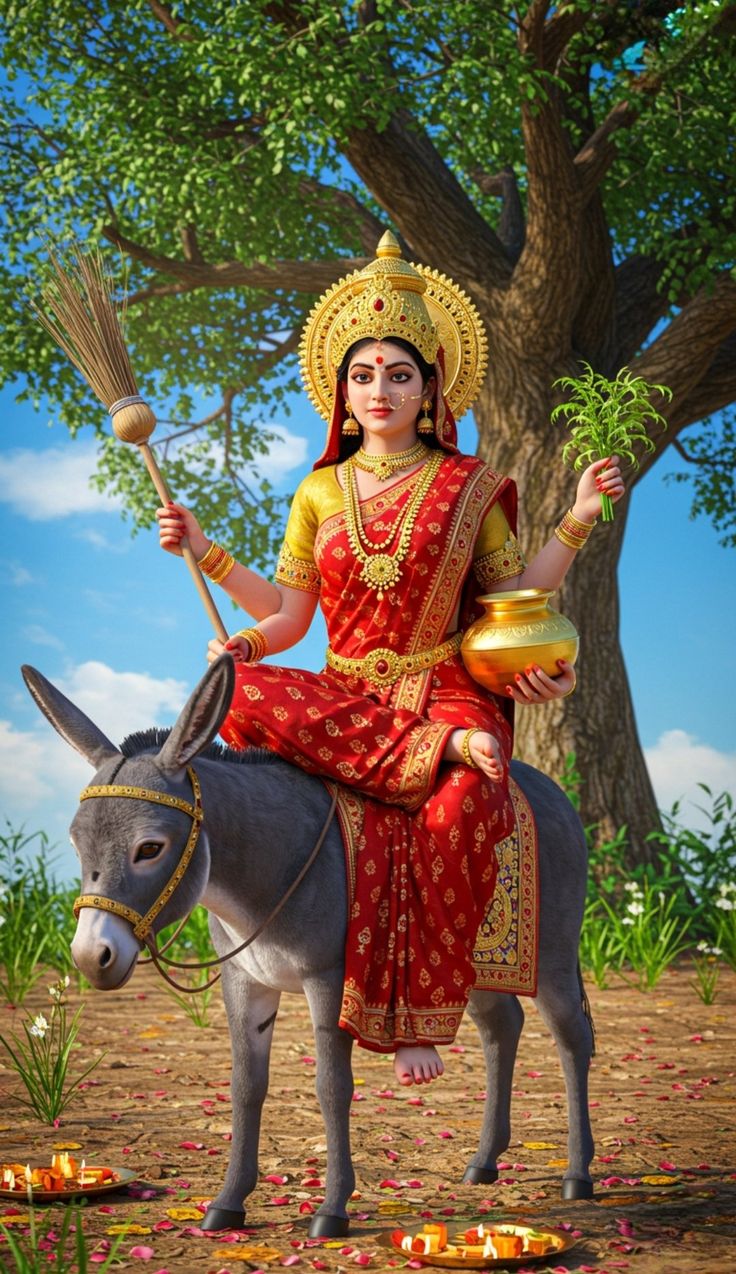
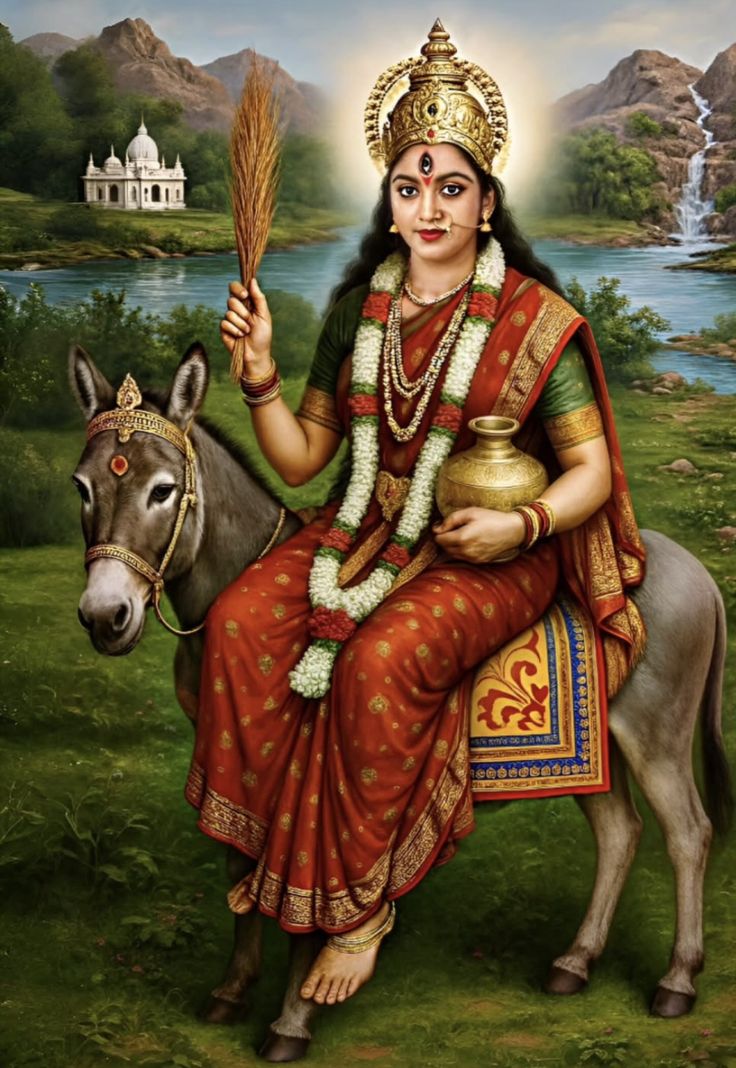
In Hindu belief, Goddess Sheetala is revered as the divine healer who relieves suffering and protects people from diseases and epidemics. Her name itself means “the one who cools,” symbolizing relief from fever, pain, and distress. She is traditionally depicted riding a donkey and holding sacred objects such as a broom, a pot of healing water, and neem leaves. These symbols represent purification, healing, and protection. For centuries, devotees have worshipped Maa Sheetala with deep faith, believing that her blessings safeguard families and communities from illness while bringing calmness and well-being into their lives.
The Sacred Story Behind Sheetala Saptami:
Long ago, there lived a prosperous king who ruled his kingdom with justice and kindness. The people of the kingdom were happy and lived peacefully. The king and his queen were devoted followers of Maa Sheetala and observed her worship every year with great devotion. During the sacred time following Holi, the queen prepared to observe the fast and rituals dedicated to the goddess on the day of Sheetala Saptami.
According to tradition, food for the goddess had to be prepared the previous day, and no fire was to be lit on the day of the festival. The queen carefully followed these customs, preparing simple food the night before and offering prayers with sincerity. However, in another part of the kingdom lived a proud woman who ignored the sacred rules of the festival. She cooked fresh food on the day of Sheetala Saptami and showed little respect for the traditions.
It is said that soon after, misfortune struck her household. Her children fell sick with severe fever and painful rashes. Terrified and helpless, the woman realized that she had disrespected the goddess and her sacred observances. In desperation, she prayed to Maa Sheetala and begged for forgiveness.
Moved by the woman’s sincere repentance, Maa Sheetala appeared in her dream. The goddess gently explained the importance of purity, devotion, and humility in observing sacred rituals. She instructed the woman to follow the traditional practices of Sheetala Saptami with faith and to offer cooled food prepared a day earlier.
The next year, the woman followed the rituals with complete devotion. She prepared the food the previous night, cleaned her home, and prayed sincerely to the goddess. Pleased with her devotion, Maa Sheetala blessed the family, and peace returned to their home. Her children recovered, and the household once again became joyful.
When the people of the kingdom heard this story, they understood the significance of the festival and began to observe Sheetala Saptami with deep reverence. Families prepared cooled food a day before, cleaned their homes, and prayed to the goddess for protection from illness.
Since then, devotees across many regions of India continue to celebrate Sheetala Saptami with devotion and gratitude. The story reminds people that faith, humility, and respect for sacred traditions invite the blessings of the divine mother. Through the worship of Maa Sheetala, devotees believe that their homes remain protected and their families blessed with health, peace, and well-being.
Mythological and Spiritual Significance of Sheetala Saptami:
Sheetala Saptami carries deep spiritual and cultural significance in Hindu tradition. In ancient times, when medical knowledge was limited, communities placed their faith in divine protection and prayed to Maa Sheetala during outbreaks of diseases. Over time, the observance of this festival became a reminder of the importance of cleanliness, discipline, and devotion in everyday life. By honoring the goddess on this sacred day, devotees express gratitude for good health and seek her blessings to protect their families from illness and misfortune.
Dates, Time, Rituals and Observances on Sheetala Saptami:
In 2026, Sheetala Saptami will be observed on 10 March 2026, a day when devotees across many parts of India worship Sheetala for protection from illness and for the well-being of their families. According to the Hindu Panchang, the Saptami Tithi begins on 9 March 2026 at 11:27 PM and ends on 11 March 2026 at 01:54 AM, making the morning and daytime of 10 March especially auspicious for performing the puja. Devotees usually begin their worship early in the morning after taking a ritual bath, offering cooled food prepared the previous day, flowers, and prayers to Maa Sheetala while seeking her blessings for health, peace, and protection from suffering.
The observance of Sheetala Saptami includes simple yet meaningful rituals that emphasize purity and devotion. Devotees begin the day by taking a ritual bath and cleaning their homes and surroundings, symbolizing respect and purity before offering prayers. Worship is then performed either at home or in temples dedicated to Maa Sheetala, where devotees offer flowers, prayers, and sacred food to the goddess. Neem leaves are often used during the worship as they are traditionally associated with healing and protection. These rituals help create a peaceful and spiritually uplifting atmosphere in the household.
The Tradition of Offering Cool Food:
One of the most distinctive customs of Sheetala Saptami is the offering of cooled food to the goddess. On this day, fresh food is not cooked. Instead, meals are prepared a day earlier and offered to Maa Sheetala as sacred 'bhog'. This tradition symbolizes the cooling and soothing nature of the goddess and reflects the discipline and devotion associated with the festival. After the offering, the same food is shared among family members as blessed prasad, strengthening the sense of unity and faith within the household.
Observing Sheetala Saptami with Proper Ritual Guidance:
Many families also choose to perform special pujas or havan on this day to invite divine blessings and remove negative energies from their homes. Performing these rituals according to proper Vedic traditions enhances the spiritual significance of the festival. Platforms such as **Bhaktinama** make it easier for devotees to connect with experienced pandits who can perform Sheetala Mata Puja, havan, and other traditional ceremonies. Such services allow families to observe the festival with authenticity and devotion while ensuring that the rituals are conducted in accordance with sacred traditions.
Spiritual Essence of the Festival:
Ultimately, Sheetala Saptami is more than a religious observance; it is a reminder of the harmony between spirituality, health, and nature. The festival encourages devotees to cultivate faith, maintain cleanliness, and live with gratitude for the blessings of good health and protection. By worshipping Maa Sheetala, families renew their spiritual connection with the divine and continue to preserve a sacred tradition that has been cherished for generations.
Who is Goddess Sheetala?
In Hindu belief, Goddess Sheetala is revered as the divine healer who relieves suffering and protects people from diseases and epidemics. Her name itself means “the one who cools,” symbolizing relief from fever, pain, and distress. She is traditionally depicted riding a donkey and holding sacred objects such as a broom, a pot of healing water, and neem leaves. These symbols represent purification, healing, and protection. For centuries, devotees have worshipped Maa Sheetala with deep faith, believing that her blessings safeguard families and communities from illness while bringing calmness and well-being into their lives.
The Sacred Story Behind Sheetala Saptami:
Long ago, there lived a prosperous king who ruled his kingdom with justice and kindness. The people of the kingdom were happy and lived peacefully. The king and his queen were devoted followers of Maa Sheetala and observed her worship every year with great devotion. During the sacred time following Holi, the queen prepared to observe the fast and rituals dedicated to the goddess on the day of Sheetala Saptami.
According to tradition, food for the goddess had to be prepared the previous day, and no fire was to be lit on the day of the festival. The queen carefully followed these customs, preparing simple food the night before and offering prayers with sincerity. However, in another part of the kingdom lived a proud woman who ignored the sacred rules of the festival. She cooked fresh food on the day of Sheetala Saptami and showed little respect for the traditions.
It is said that soon after, misfortune struck her household. Her children fell sick with severe fever and painful rashes. Terrified and helpless, the woman realized that she had disrespected the goddess and her sacred observances. In desperation, she prayed to Maa Sheetala and begged for forgiveness.
Moved by the woman’s sincere repentance, Maa Sheetala appeared in her dream. The goddess gently explained the importance of purity, devotion, and humility in observing sacred rituals. She instructed the woman to follow the traditional practices of Sheetala Saptami with faith and to offer cooled food prepared a day earlier.
The next year, the woman followed the rituals with complete devotion. She prepared the food the previous night, cleaned her home, and prayed sincerely to the goddess. Pleased with her devotion, Maa Sheetala blessed the family, and peace returned to their home. Her children recovered, and the household once again became joyful.
When the people of the kingdom heard this story, they understood the significance of the festival and began to observe Sheetala Saptami with deep reverence. Families prepared cooled food a day before, cleaned their homes, and prayed to the goddess for protection from illness.
Since then, devotees across many regions of India continue to celebrate Sheetala Saptami with devotion and gratitude. The story reminds people that faith, humility, and respect for sacred traditions invite the blessings of the divine mother. Through the worship of Maa Sheetala, devotees believe that their homes remain protected and their families blessed with health, peace, and well-being.
Mythological and Spiritual Significance of Sheetala Saptami:
Sheetala Saptami carries deep spiritual and cultural significance in Hindu tradition. In ancient times, when medical knowledge was limited, communities placed their faith in divine protection and prayed to Maa Sheetala during outbreaks of diseases. Over time, the observance of this festival became a reminder of the importance of cleanliness, discipline, and devotion in everyday life. By honoring the goddess on this sacred day, devotees express gratitude for good health and seek her blessings to protect their families from illness and misfortune.
Dates, Time, Rituals and Observances on Sheetala Saptami:
In 2026, Sheetala Saptami will be observed on 10 March 2026, a day when devotees across many parts of India worship Sheetala for protection from illness and for the well-being of their families. According to the Hindu Panchang, the Saptami Tithi begins on 9 March 2026 at 11:27 PM and ends on 11 March 2026 at 01:54 AM, making the morning and daytime of 10 March especially auspicious for performing the puja. Devotees usually begin their worship early in the morning after taking a ritual bath, offering cooled food prepared the previous day, flowers, and prayers to Maa Sheetala while seeking her blessings for health, peace, and protection from suffering.
The observance of Sheetala Saptami includes simple yet meaningful rituals that emphasize purity and devotion. Devotees begin the day by taking a ritual bath and cleaning their homes and surroundings, symbolizing respect and purity before offering prayers. Worship is then performed either at home or in temples dedicated to Maa Sheetala, where devotees offer flowers, prayers, and sacred food to the goddess. Neem leaves are often used during the worship as they are traditionally associated with healing and protection. These rituals help create a peaceful and spiritually uplifting atmosphere in the household.
The Tradition of Offering Cool Food:
One of the most distinctive customs of Sheetala Saptami is the offering of cooled food to the goddess. On this day, fresh food is not cooked. Instead, meals are prepared a day earlier and offered to Maa Sheetala as sacred 'bhog'. This tradition symbolizes the cooling and soothing nature of the goddess and reflects the discipline and devotion associated with the festival. After the offering, the same food is shared among family members as blessed prasad, strengthening the sense of unity and faith within the household.
Observing Sheetala Saptami with Proper Ritual Guidance:
Many families also choose to perform special pujas or havan on this day to invite divine blessings and remove negative energies from their homes. Performing these rituals according to proper Vedic traditions enhances the spiritual significance of the festival. Platforms such as **Bhaktinama** make it easier for devotees to connect with experienced pandits who can perform Sheetala Mata Puja, havan, and other traditional ceremonies. Such services allow families to observe the festival with authenticity and devotion while ensuring that the rituals are conducted in accordance with sacred traditions.
Spiritual Essence of the Festival:
Ultimately, Sheetala Saptami is more than a religious observance; it is a reminder of the harmony between spirituality, health, and nature. The festival encourages devotees to cultivate faith, maintain cleanliness, and live with gratitude for the blessings of good health and protection. By worshipping Maa Sheetala, families renew their spiritual connection with the divine and continue to preserve a sacred tradition that has been cherished for generations.