March 09, 2026
Dieties/devta gan
9 min read
Yama: The Divine Judge and Guardian of Dharma
Learn about Yama, the divine judge in Hinduism who governs karma and the journey of the soul after death. Explore his role in sacred texts, the festivals associated with him, and the traditional rituals devotees perform to honor him.
In Hindu philosophy, life and death are part of an eternal cycle rather than a beginning and an end. One of the most important divine figures connected with this cycle is Yama, the god who governs death, justice, and moral order. Often misunderstood as a fearful deity, Yama actually represents fairness, balance, and the law of karma that governs the universe. His role is not simply to take life, but to guide souls on their journey after death and ensure that every action receives its rightful result.
The concept of Yama reminds people that life should be lived with awareness, responsibility, and adherence to dharma, as every action contributes to the destiny of the soul.
At Bhaktinama, we not only share spiritual knowledge but also make your devotional journey
easier through modern, accessible services like online pandit booking, online temple booking,
ordering puja samagri online.
Who is Yama in Hindu Tradition?
Book experienced pandits online for all Hindu puja rituals with Bhaktinama – simple, reliable, and authentic.
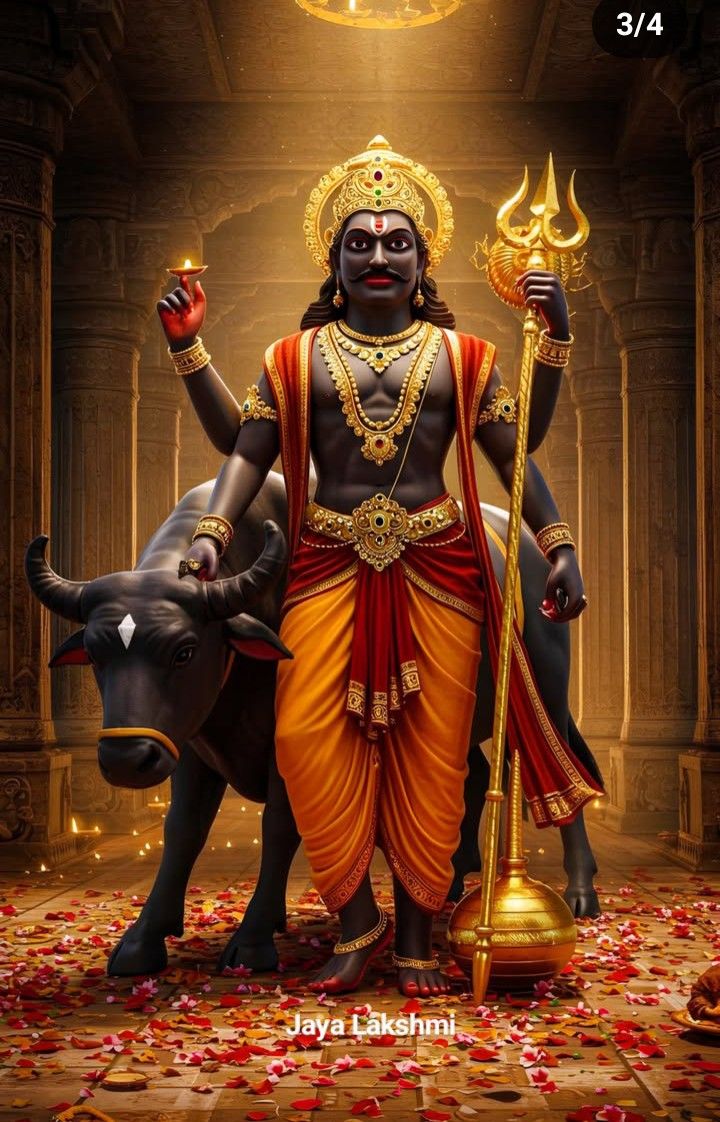
Yama is known as Yama Dharma Raja, the king who judges the deeds of all beings. In Hindu belief, when a person dies, their soul is brought before Yama where their actions during life are evaluated. Based on their karma, the soul may experience heavenly realms, undergo purification, or take rebirth in another form.
Ancient scriptures like the Rigveda describe Yama as the first being who traveled the path of death and discovered the world of the ancestors. Because of this, he became the ruler of that realm and the guide for all departed souls.
Yama is traditionally depicted riding a buffalo and carrying a noose used to draw the soul from the body. His divine messengers, known as Yamadutas, assist him in bringing souls to his court. Despite the powerful imagery associated with him, Yama represents justice rather than punishment.
At Bhaktinama, these rituals are made easy with our online booking services, which include
pandit booking, temple booking, ordering ingredients, and guidance for performing any ritual all
at your fingertips.
Yama in Sacred Hindu Texts:
Yama’s role is deeply discussed in several important Hindu scriptures. One of the most famous philosophical discussions involving Yama appears in the Kathopanishad. In this text, a young seeker named Nachiketa meets Yama and asks him about the mystery of death and the nature of the soul. Yama explains profound spiritual truths, teaching that the soul, or Atman, is eternal and cannot be destroyed.
Another important reference comes from the Garuda Purana, which describes the journey of the soul after death and how karma determines its future. In these teachings, Yama acts as the divine judge who maintains the moral balance of the universe.
Spiritual Meaning of Yama:
The presence of Yama in Hindu philosophy carries deep spiritual meaning. He symbolizes the universal truth that every action has consequences. By reminding humanity of the inevitability of death and the continuity of the soul’s journey, Yama encourages people to live with integrity, compassion, and righteousness.
Rather than representing fear, Yama serves as a reminder that life should be used wisely to perform good deeds, follow dharma, and move closer to spiritual liberation.
Bhaktinama Services: Making Your Vrat Easy and Divine
In today’s fast-paced life, maintaining traditional rituals can be challenging. Bhaktinama bridges
this gap by combining devotion with convenience, ensuring that your Kamada Ekadashi
observance becomes smooth and stress-free.
● Online Temple Booking: Devotees can book darshan or special पजू ा at renowned
temples from the comfort of their home, ensuring participation even when travel is not
possible.
● Online Pandit Booking: Arrange experienced and verified pandits for Ekadashi पजू ा,
vrat katha, and rituals at your home with ease and authenticity.
● Puja Samagri (Ingredients) Ordering: Get all essential पजू ा items—like incense, diya,
fruits, and sacred सामग्री—delivered to your doorstep without hassle.
● Personalized Ritual Guidance: Step-by-step assistance and guidance help even
beginners perform Kamada Ekadashi vrat correctly.
With Bhaktinama, devotion is no longer limited by time, distance, or availability—it becomes
accessible to everyone.
The Story of Nachiketa and Yamaraj
Long ago, during the age of sacred rituals and Vedic wisdom, there lived a sage named Vajashravasa. One day he decided to perform a grand yajna in which he would donate all his possessions to gain spiritual merit.
His young son, Nachiketa, watched the ceremony carefully. According to the rules of the sacrifice, valuable gifts were supposed to be given to the priests and the needy. However, Nachiketa noticed that his father was donating old and weak cows that could no longer give milk or work.
The boy was deeply troubled.
He believed that a sacred ritual should be performed with honesty and purity. Wanting to remind his father of true righteousness, Nachiketa asked him an innocent but powerful question.
“Father, to whom will you give me?”
At first, his father ignored him. But Nachiketa asked again and again.
Finally, irritated and angry, the sage shouted, “I give you to Yama!”
Though spoken in anger, those words carried the weight of a sacred vow. Respecting his father’s command, the young boy decided to go to the abode of Yama.
When Nachiketa reached the realm of Yama, the lord of death was not there. The boy waited patiently at the gates for three days and nights without food or water.
When Yamaraj returned and learned that a young Brahmin had waited for him without hospitality, he felt concerned. According to dharma, a guest must always be honored.
To make up for this mistake, Yamaraj granted Nachiketa three wishes.
For his first wish, Nachiketa asked that when he returned home, his father should no longer be angry and should welcome him with love. Yamaraj granted the wish immediately.
For the second wish, Nachiketa asked to learn the sacred fire ritual that leads to heaven. Yamaraj explained the knowledge of the holy sacrifice and blessed him with divine understanding.
Platforms like Bhaktinama further enhance this journey by making spiritual practices simpler,
accessible, and more meaningful in modern life. Online booking of pandits, temple, पजू ा सामग्री
delivery all just one tap away.
But it was the third wish that surprised even the lord of death.
Nachiketa asked, “When a person dies, some say the soul continues to exist, while others say it does not. Tell me the truth—what happens after death?”
Yamaraj was silent.
This was one of the deepest spiritual mysteries. He tried to persuade the boy to ask for something else—long life, wealth, kingdoms, or divine pleasures.
But Nachiketa refused.
He said, “All those things are temporary. I seek only the knowledge of the eternal truth.”
Seeing the boy’s determination and wisdom, Yamaraj was pleased. He then revealed profound teachings about the nature of the soul.
He explained that the Atman is eternal, beyond birth and death. Just as a person changes clothes, the soul changes bodies. The wise understand this truth and therefore do not fear death.
Through this sacred teaching, Nachiketa gained the knowledge of immortality and the path to liberation.
Festivals and Rituals Connected with Yama:
Although Yama is not worshipped daily like many other Hindu deities, he is remembered during certain important festivals. One such occasion is Yama Dwitiya, also known as Bhai Dooj, which celebrates the sacred bond between brothers and sisters. According to tradition, Yama visited his sister Yamuna on this day, making it a symbol of affection, protection, and blessings.
Another occasion connected with the themes of purification and liberation is Naraka Chaturdashi during the Diwali celebrations.
On these sacred days, many devotees perform special prayers, listen to Yama Katha, and conduct rituals seeking protection, longevity, and peace for ancestors. Traditional practices also include offering prayers for departed souls and performing sacred fire rituals that help bring spiritual harmony to the household.
Such ceremonies ensure that the prayers, mantras, and storytelling associated with Yama are performed according to authentic tradition.
For those who wish to observe the traditions connected with Yama in the proper Vedic manner, guidance from knowledgeable priests can make the rituals more meaningful and spiritually fulfilling. Devotees often arrange Yama Puja, Yama Katha, and prayers for ancestors during occasions such as Yama Dwitiya or other spiritually significant days to seek blessings for protection, longevity, and peace for departed souls. Many families today prefer the convenience of booking experienced pandits who can perform these ceremonies according to authentic scriptural traditions. Through Bhaktinama.com website, devotees can easily arrange qualified priests for such rituals, ensuring that the puja, katha, and sacred mantras are conducted with devotion, correctness, and respect for the ancient traditions of Sanatana Dharma.
The Relevance of Yama in Modern Life:
Even in modern times, the teachings associated with Yama remain highly meaningful. They remind us that life is temporary but valuable, and that every action shapes the journey of the soul. Living with honesty, compassion, and responsibility aligns a person with dharma and creates positive karma for the future.
Understanding Yama’s role helps people view death not with fear but with spiritual awareness. It encourages individuals to live a meaningful life, serve others, and remain connected with divine wisdom.
With Bhaktinama’s modern services like online temple booking, pandit booking, and पजू ा सामग्री
delivery, your spiritual practices become effortless and deeply fulfilling. Stay connected with
Bhaktinama to experience devotion in the most convenient and authentic way
Conclusion:
Yama stands as one of the most profound figures in Hindu philosophy. As the divine judge and guardian of cosmic justice, he ensures that the moral balance of the universe remains intact. His teachings remind humanity that while death is inevitable, the soul continues its journey guided by karma and dharma.
Through devotion, spiritual knowledge, and sacred rituals performed with faith, devotees seek harmony with the cosmic order that Yama represents, allowing the soul to progress toward peace and liberation.
Book experienced pandits online for all Hindu puja rituals with Bhaktinama – simple, reliable, and authentic.
The concept of Yama reminds people that life should be lived with awareness, responsibility, and adherence to dharma, as every action contributes to the destiny of the soul.
At Bhaktinama, we not only share spiritual knowledge but also make your devotional journey
easier through modern, accessible services like online pandit booking, online temple booking,
ordering puja samagri online.
Who is Yama in Hindu Tradition?
Book experienced pandits online for all Hindu puja rituals with Bhaktinama – simple, reliable, and authentic.
Yama is known as Yama Dharma Raja, the king who judges the deeds of all beings. In Hindu belief, when a person dies, their soul is brought before Yama where their actions during life are evaluated. Based on their karma, the soul may experience heavenly realms, undergo purification, or take rebirth in another form.
Ancient scriptures like the Rigveda describe Yama as the first being who traveled the path of death and discovered the world of the ancestors. Because of this, he became the ruler of that realm and the guide for all departed souls.
Yama is traditionally depicted riding a buffalo and carrying a noose used to draw the soul from the body. His divine messengers, known as Yamadutas, assist him in bringing souls to his court. Despite the powerful imagery associated with him, Yama represents justice rather than punishment.
At Bhaktinama, these rituals are made easy with our online booking services, which include
pandit booking, temple booking, ordering ingredients, and guidance for performing any ritual all
at your fingertips.
Yama in Sacred Hindu Texts:
Yama’s role is deeply discussed in several important Hindu scriptures. One of the most famous philosophical discussions involving Yama appears in the Kathopanishad. In this text, a young seeker named Nachiketa meets Yama and asks him about the mystery of death and the nature of the soul. Yama explains profound spiritual truths, teaching that the soul, or Atman, is eternal and cannot be destroyed.
Another important reference comes from the Garuda Purana, which describes the journey of the soul after death and how karma determines its future. In these teachings, Yama acts as the divine judge who maintains the moral balance of the universe.
Spiritual Meaning of Yama:
The presence of Yama in Hindu philosophy carries deep spiritual meaning. He symbolizes the universal truth that every action has consequences. By reminding humanity of the inevitability of death and the continuity of the soul’s journey, Yama encourages people to live with integrity, compassion, and righteousness.
Rather than representing fear, Yama serves as a reminder that life should be used wisely to perform good deeds, follow dharma, and move closer to spiritual liberation.
Bhaktinama Services: Making Your Vrat Easy and Divine
In today’s fast-paced life, maintaining traditional rituals can be challenging. Bhaktinama bridges
this gap by combining devotion with convenience, ensuring that your Kamada Ekadashi
observance becomes smooth and stress-free.
● Online Temple Booking: Devotees can book darshan or special पजू ा at renowned
temples from the comfort of their home, ensuring participation even when travel is not
possible.
● Online Pandit Booking: Arrange experienced and verified pandits for Ekadashi पजू ा,
vrat katha, and rituals at your home with ease and authenticity.
● Puja Samagri (Ingredients) Ordering: Get all essential पजू ा items—like incense, diya,
fruits, and sacred सामग्री—delivered to your doorstep without hassle.
● Personalized Ritual Guidance: Step-by-step assistance and guidance help even
beginners perform Kamada Ekadashi vrat correctly.
With Bhaktinama, devotion is no longer limited by time, distance, or availability—it becomes
accessible to everyone.
The Story of Nachiketa and Yamaraj
Long ago, during the age of sacred rituals and Vedic wisdom, there lived a sage named Vajashravasa. One day he decided to perform a grand yajna in which he would donate all his possessions to gain spiritual merit.
His young son, Nachiketa, watched the ceremony carefully. According to the rules of the sacrifice, valuable gifts were supposed to be given to the priests and the needy. However, Nachiketa noticed that his father was donating old and weak cows that could no longer give milk or work.
The boy was deeply troubled.
He believed that a sacred ritual should be performed with honesty and purity. Wanting to remind his father of true righteousness, Nachiketa asked him an innocent but powerful question.
“Father, to whom will you give me?”
At first, his father ignored him. But Nachiketa asked again and again.
Finally, irritated and angry, the sage shouted, “I give you to Yama!”
Though spoken in anger, those words carried the weight of a sacred vow. Respecting his father’s command, the young boy decided to go to the abode of Yama.
When Nachiketa reached the realm of Yama, the lord of death was not there. The boy waited patiently at the gates for three days and nights without food or water.
When Yamaraj returned and learned that a young Brahmin had waited for him without hospitality, he felt concerned. According to dharma, a guest must always be honored.
To make up for this mistake, Yamaraj granted Nachiketa three wishes.
For his first wish, Nachiketa asked that when he returned home, his father should no longer be angry and should welcome him with love. Yamaraj granted the wish immediately.
For the second wish, Nachiketa asked to learn the sacred fire ritual that leads to heaven. Yamaraj explained the knowledge of the holy sacrifice and blessed him with divine understanding.
Platforms like Bhaktinama further enhance this journey by making spiritual practices simpler,
accessible, and more meaningful in modern life. Online booking of pandits, temple, पजू ा सामग्री
delivery all just one tap away.
But it was the third wish that surprised even the lord of death.
Nachiketa asked, “When a person dies, some say the soul continues to exist, while others say it does not. Tell me the truth—what happens after death?”
Yamaraj was silent.
This was one of the deepest spiritual mysteries. He tried to persuade the boy to ask for something else—long life, wealth, kingdoms, or divine pleasures.
But Nachiketa refused.
He said, “All those things are temporary. I seek only the knowledge of the eternal truth.”
Seeing the boy’s determination and wisdom, Yamaraj was pleased. He then revealed profound teachings about the nature of the soul.
He explained that the Atman is eternal, beyond birth and death. Just as a person changes clothes, the soul changes bodies. The wise understand this truth and therefore do not fear death.
Through this sacred teaching, Nachiketa gained the knowledge of immortality and the path to liberation.
Festivals and Rituals Connected with Yama:
Although Yama is not worshipped daily like many other Hindu deities, he is remembered during certain important festivals. One such occasion is Yama Dwitiya, also known as Bhai Dooj, which celebrates the sacred bond between brothers and sisters. According to tradition, Yama visited his sister Yamuna on this day, making it a symbol of affection, protection, and blessings.
Another occasion connected with the themes of purification and liberation is Naraka Chaturdashi during the Diwali celebrations.
On these sacred days, many devotees perform special prayers, listen to Yama Katha, and conduct rituals seeking protection, longevity, and peace for ancestors. Traditional practices also include offering prayers for departed souls and performing sacred fire rituals that help bring spiritual harmony to the household.
Such ceremonies ensure that the prayers, mantras, and storytelling associated with Yama are performed according to authentic tradition.
For those who wish to observe the traditions connected with Yama in the proper Vedic manner, guidance from knowledgeable priests can make the rituals more meaningful and spiritually fulfilling. Devotees often arrange Yama Puja, Yama Katha, and prayers for ancestors during occasions such as Yama Dwitiya or other spiritually significant days to seek blessings for protection, longevity, and peace for departed souls. Many families today prefer the convenience of booking experienced pandits who can perform these ceremonies according to authentic scriptural traditions. Through Bhaktinama.com website, devotees can easily arrange qualified priests for such rituals, ensuring that the puja, katha, and sacred mantras are conducted with devotion, correctness, and respect for the ancient traditions of Sanatana Dharma.
The Relevance of Yama in Modern Life:
Even in modern times, the teachings associated with Yama remain highly meaningful. They remind us that life is temporary but valuable, and that every action shapes the journey of the soul. Living with honesty, compassion, and responsibility aligns a person with dharma and creates positive karma for the future.
Understanding Yama’s role helps people view death not with fear but with spiritual awareness. It encourages individuals to live a meaningful life, serve others, and remain connected with divine wisdom.
With Bhaktinama’s modern services like online temple booking, pandit booking, and पजू ा सामग्री
delivery, your spiritual practices become effortless and deeply fulfilling. Stay connected with
Bhaktinama to experience devotion in the most convenient and authentic way
Conclusion:
Yama stands as one of the most profound figures in Hindu philosophy. As the divine judge and guardian of cosmic justice, he ensures that the moral balance of the universe remains intact. His teachings remind humanity that while death is inevitable, the soul continues its journey guided by karma and dharma.
Through devotion, spiritual knowledge, and sacred rituals performed with faith, devotees seek harmony with the cosmic order that Yama represents, allowing the soul to progress toward peace and liberation.
Book experienced pandits online for all Hindu puja rituals with Bhaktinama – simple, reliable, and authentic.