March 15, 2026
Dieties/devta gan
7 min read
Chandra Dev: From His Divine Birth to Lord Shiva’s Crown.
Chandra Dev, the divine Moon in Hindu mythology, symbolizes peace, calmness, and the balance of the human mind. Revered as the lord of emotions and imagination, his stories of birth, penance to Lord Shiva, and connection with the twenty-seven nakshatras hold deep significance in Indian spiritual tradition. From ancient legends to festivals and astrological importance, the worship of Chandra Dev continues to inspire devotion and rituals among believers.
In Hinduism, every element of nature is associated with divinity. Just as the Sun, Fire, Air, and Water are revered, the Moon shining in the sky is also considered a divine form. For this reason, Chandra Dev holds a very important place in Hindu mythological tradition. Chandra Dev is worshipped as the deity of coolness, gentleness, the mind, and emotions. His light does not only remove the darkness of the night but, in Indian spiritual thought, it also symbolizes peace, love, and balance. Whenever devotees require rituals, priest services, or religious materials related to Chandra Dev, they can access facilities such as pandit booking, religious services, and pooja materials through Bhaktinama.
At Bhaktinama, we not only share spiritual knowledge but also make your devotional journey
easier through modern, accessible services like online pandit booking, online temple booking,
ordering puja samagri online.
1. Birth of Chandra Dev:
According to mythological scriptures, several stories describe the birth of Chandra Dev. One popular legend states that Chandra Dev was born to the sage Atri and his virtuous wife Anasuya. It is said that Sage Atri performed intense penance, from which a divine radiance emerged, and from that radiance Chandra Dev was born. In Hindu tradition, this story symbolizes the sacred and divine nature of Chandra.
Another famous legend states that Chandra Dev appeared during the Samudra Manthan (the churning of the cosmic ocean). When the gods and demons churned the ocean in search of the nectar of immortality, many divine treasures emerged, and Chandra was among them. The gods placed him in the sky so that his soothing light could bring peace and balance to the world. Inspired by such mythological narratives, many devotees perform rituals, fasts, and worship dedicated to Chandra, for which Bhaktinama provides access to qualified priests and religious services.
At Bhaktinama, these rituals are made easy with our online booking services, which include
pandit booking, temple booking, ordering ingredients, and guidance for performing any ritual all
at your fingertips.
2. Form and Significance of Chandra Dev:
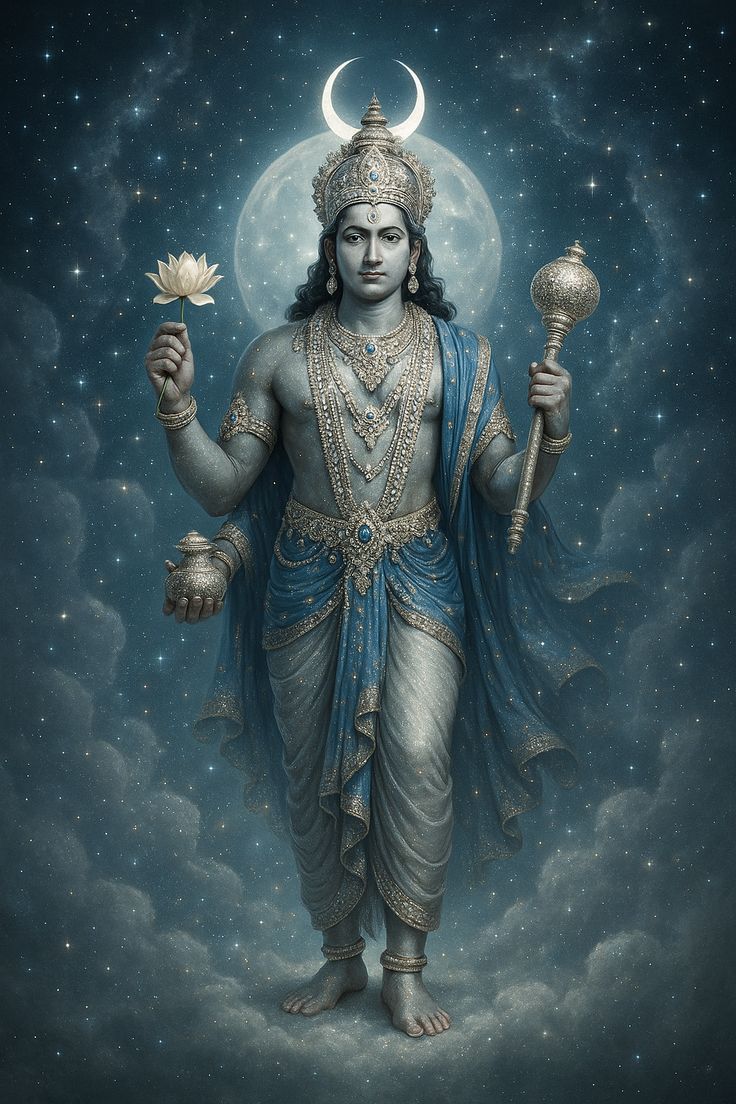
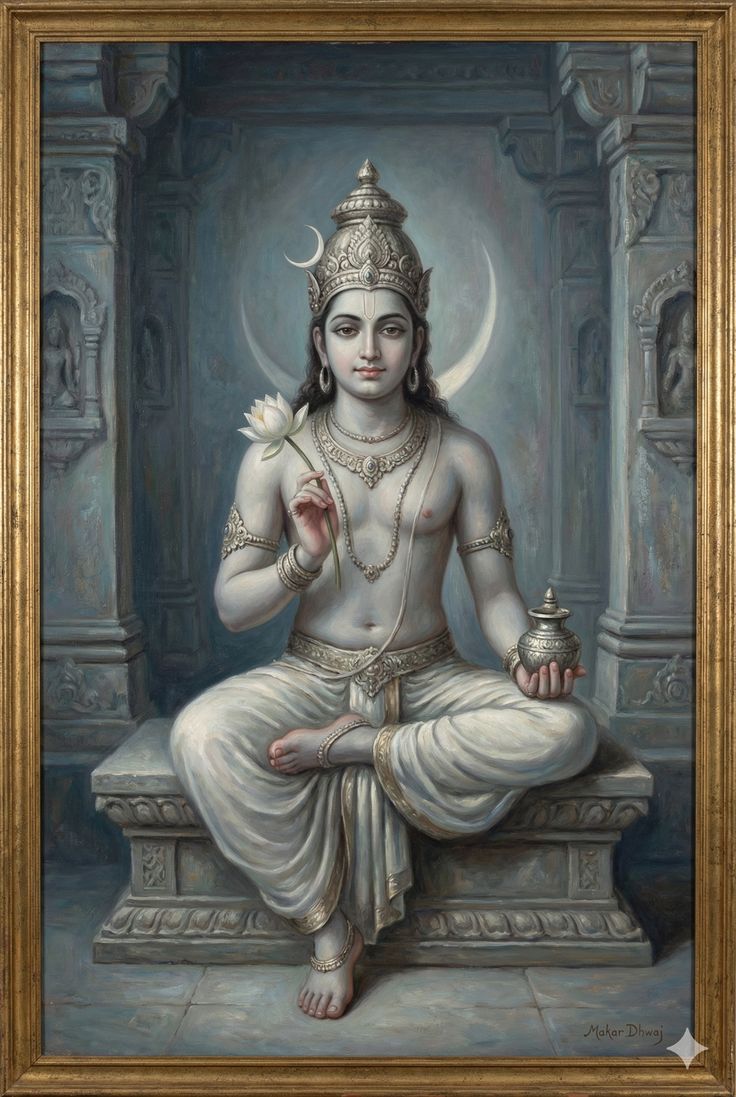
Chandra Dev is described as a very beautiful, calm, and radiant deity. His complexion is said to be pure white, and he is depicted riding a celestial chariot. According to mythological descriptions, his chariot travels across the sky and is drawn by ten white horses.
Unlike the Sun, whose light is intense, the Moon’s light is gentle and soothing. Because of this, Chandra is considered a symbol of peace and serenity of the mind. In Indian philosophy, Chandra is regarded as the lord of the mind. Human emotions, imagination, and mental balance are believed to be connected with the Moon.
Bhaktinama Services: Making Your Vrat Easy and Divine
In today’s fast-paced life, maintaining traditional rituals can be challenging. Bhaktinama bridges
this gap by combining devotion with convenience, ensuring that your Kamada Ekadashi
observance becomes smooth and stress-free.
● Online Temple Booking: Devotees can book darshan or special पजू ा at renowned
temples from the comfort of their home, ensuring participation even when travel is not
possible.
● Online Pandit Booking: Arrange experienced and verified pandits for Ekadashi पजू ा,
vrat katha, and rituals at your home with ease and authenticity.
● Puja Samagri (Ingredients) Ordering: Get all essential पजू ा items—like incense, diya,
fruits, and sacred सामग्री—delivered to your doorstep without hassle.
● Personalized Ritual Guidance: Step-by-step assistance and guidance help even
beginners perform Kamada Ekadashi vrat correctly.
With Bhaktinama, devotion is no longer limited by time, distance, or availability—it becomes
accessible to everyone.
3. Marriage to the Daughters of Daksha:
The Prajapati Daksha had twenty-seven daughters, who are considered the symbolic representation of the twenty-seven nakshatras (lunar constellations). Daksha married all of his daughters to Chandra Dev.
After the marriage, Chandra was expected to treat all his wives equally, but he became especially attached to Rohini, one of his wives. Because of this favoritism, the other wives became unhappy and complained to their father Daksha.
Daksha became extremely angry and cursed Chandra that his brilliance would gradually fade away. As the curse took effect, the Moon’s radiance began to diminish, causing concern throughout the world.
Platforms like Bhaktinama further enhance this journey by making spiritual practices simpler,
accessible, and more meaningful in modern life. Online booking of pandits, temple, पजू ा सामग्री
delivery all just one tap away.
4.Worship of Lord Shiva and Liberation from the Curse:
Suffering from the curse, Chandra performed severe penance to Lord Shiva. He meditated upon Shiva for a long time in Prabhas Kshetra.
Pleased by his devotion, Lord Shiva appeared before him and blessed him. Shiva declared that Daksha’s curse would not be completely removed, but Chandra’s brilliance would never fully disappear either. Instead, the Moon would diminish and grow again in a continuous cycle.
This is why the Moon gradually increases from Amavasya (new moon) to Purnima (full moon) and then decreases again. Lord Shiva also placed Chandra on his head, and since then Shiva has been known as Chandrashekhar. Because of this legend, many rituals and traditions related to Lord Shiva and Chandra became popular, which devotees can perform through qualified priests via Bhaktinama.
With Bhaktinama’s modern services like online temple booking, pandit booking, and पजू ा सामग्री
delivery, your spiritual practices become effortless and deeply fulfilling. Stay connected with
Bhaktinama to experience devotion in the most convenient and authentic way.
5. The Story of Ganesha and Chandra Dev:
A famous story involving Chandra Dev is also connected with Lord Ganesha. Once, Ganesha was riding on his vehicle, the mouse. Suddenly the mouse slipped, and Ganesha fell to the ground.
Seeing this, Chandra Dev laughed. Ganesha felt insulted and angrily cursed Chandra, declaring that anyone who looked at the Moon would be falsely accused and face undeserved blame.
Later, upon the request of the gods, Ganesha softened the curse. Since then, seeing the Moon on the fourth day (Chaturthi) of the month of Bhadrapada is considered inauspicious.
6. Places Where Chandra Dev is Worshipped:
Chandra Dev is worshipped in many places across India. His worship is especially significant in Navagraha temples, where the nine planetary deities are revered. One of the most important places associated with Chandra is the Somnath Temple.
According to tradition, it was here that Chandra worshipped Lord Shiva and was freed from Daksha’s curse. Because of this, Shiva is worshipped here as Somnath, meaning “Lord of Soma (the Moon).” Inspired by such sacred traditions, many devotees perform Chandra pooja, Navagraha shanti, and other rituals at home or in temples, which can be arranged through Bhaktinama’s priest booking and religious services.
7. Festivals and Fasts Associated with Chandra Dev:
In Indian culture, many festivals and fasts are connected with the sighting of the Moon. For example, during Karva Chauth, married women complete their fast only after seeing the Moon. Similarly, festivals like Sharad Purnima, Guru Purnima, and Holi Purnima are closely associated with the full moon.
On these occasions, seeing the Moon is considered highly auspicious, and many people observe special prayers and fasts.
8. Importance of Chandra Dev in Astrology:
In Hindu astrology, Chandra Dev is considered a very important celestial influence. The position of the Moon in a person’s birth chart affects the mind, emotions, mental balance, and imagination.
If the Moon is placed favorably, the person is believed to be calm, sensitive, and creative. If the Moon is unfavorably placed, it may lead to mental stress and instability. In such cases, people often perform Chandra Shanti or Navagraha pooja, which can be arranged through priest services provided by Bhaktinama.
9. Conclusion:
Chandra Dev is one of the most important deities in Hindu mythological tradition. His birth stories, legends, and forms of worship are deeply rooted in Indian culture.
He is not merely the Moon that illuminates the night sky but also a symbol of peace, gentleness, and balance of the mind. The stories of Chandra Dev teach us the importance of humility, devotion, and maintaining balance in life.
Book experienced pandits online for all Hindu puja rituals with Bhaktinama – simple, reliable, and authentic.
At Bhaktinama, we not only share spiritual knowledge but also make your devotional journey
easier through modern, accessible services like online pandit booking, online temple booking,
ordering puja samagri online.
1. Birth of Chandra Dev:
According to mythological scriptures, several stories describe the birth of Chandra Dev. One popular legend states that Chandra Dev was born to the sage Atri and his virtuous wife Anasuya. It is said that Sage Atri performed intense penance, from which a divine radiance emerged, and from that radiance Chandra Dev was born. In Hindu tradition, this story symbolizes the sacred and divine nature of Chandra.
Another famous legend states that Chandra Dev appeared during the Samudra Manthan (the churning of the cosmic ocean). When the gods and demons churned the ocean in search of the nectar of immortality, many divine treasures emerged, and Chandra was among them. The gods placed him in the sky so that his soothing light could bring peace and balance to the world. Inspired by such mythological narratives, many devotees perform rituals, fasts, and worship dedicated to Chandra, for which Bhaktinama provides access to qualified priests and religious services.
At Bhaktinama, these rituals are made easy with our online booking services, which include
pandit booking, temple booking, ordering ingredients, and guidance for performing any ritual all
at your fingertips.
2. Form and Significance of Chandra Dev:
Chandra Dev is described as a very beautiful, calm, and radiant deity. His complexion is said to be pure white, and he is depicted riding a celestial chariot. According to mythological descriptions, his chariot travels across the sky and is drawn by ten white horses.
Unlike the Sun, whose light is intense, the Moon’s light is gentle and soothing. Because of this, Chandra is considered a symbol of peace and serenity of the mind. In Indian philosophy, Chandra is regarded as the lord of the mind. Human emotions, imagination, and mental balance are believed to be connected with the Moon.
Bhaktinama Services: Making Your Vrat Easy and Divine
In today’s fast-paced life, maintaining traditional rituals can be challenging. Bhaktinama bridges
this gap by combining devotion with convenience, ensuring that your Kamada Ekadashi
observance becomes smooth and stress-free.
● Online Temple Booking: Devotees can book darshan or special पजू ा at renowned
temples from the comfort of their home, ensuring participation even when travel is not
possible.
● Online Pandit Booking: Arrange experienced and verified pandits for Ekadashi पजू ा,
vrat katha, and rituals at your home with ease and authenticity.
● Puja Samagri (Ingredients) Ordering: Get all essential पजू ा items—like incense, diya,
fruits, and sacred सामग्री—delivered to your doorstep without hassle.
● Personalized Ritual Guidance: Step-by-step assistance and guidance help even
beginners perform Kamada Ekadashi vrat correctly.
With Bhaktinama, devotion is no longer limited by time, distance, or availability—it becomes
accessible to everyone.
3. Marriage to the Daughters of Daksha:
The Prajapati Daksha had twenty-seven daughters, who are considered the symbolic representation of the twenty-seven nakshatras (lunar constellations). Daksha married all of his daughters to Chandra Dev.
After the marriage, Chandra was expected to treat all his wives equally, but he became especially attached to Rohini, one of his wives. Because of this favoritism, the other wives became unhappy and complained to their father Daksha.
Daksha became extremely angry and cursed Chandra that his brilliance would gradually fade away. As the curse took effect, the Moon’s radiance began to diminish, causing concern throughout the world.
Platforms like Bhaktinama further enhance this journey by making spiritual practices simpler,
accessible, and more meaningful in modern life. Online booking of pandits, temple, पजू ा सामग्री
delivery all just one tap away.
4.Worship of Lord Shiva and Liberation from the Curse:
Suffering from the curse, Chandra performed severe penance to Lord Shiva. He meditated upon Shiva for a long time in Prabhas Kshetra.
Pleased by his devotion, Lord Shiva appeared before him and blessed him. Shiva declared that Daksha’s curse would not be completely removed, but Chandra’s brilliance would never fully disappear either. Instead, the Moon would diminish and grow again in a continuous cycle.
This is why the Moon gradually increases from Amavasya (new moon) to Purnima (full moon) and then decreases again. Lord Shiva also placed Chandra on his head, and since then Shiva has been known as Chandrashekhar. Because of this legend, many rituals and traditions related to Lord Shiva and Chandra became popular, which devotees can perform through qualified priests via Bhaktinama.
With Bhaktinama’s modern services like online temple booking, pandit booking, and पजू ा सामग्री
delivery, your spiritual practices become effortless and deeply fulfilling. Stay connected with
Bhaktinama to experience devotion in the most convenient and authentic way.
5. The Story of Ganesha and Chandra Dev:
A famous story involving Chandra Dev is also connected with Lord Ganesha. Once, Ganesha was riding on his vehicle, the mouse. Suddenly the mouse slipped, and Ganesha fell to the ground.
Seeing this, Chandra Dev laughed. Ganesha felt insulted and angrily cursed Chandra, declaring that anyone who looked at the Moon would be falsely accused and face undeserved blame.
Later, upon the request of the gods, Ganesha softened the curse. Since then, seeing the Moon on the fourth day (Chaturthi) of the month of Bhadrapada is considered inauspicious.
6. Places Where Chandra Dev is Worshipped:
Chandra Dev is worshipped in many places across India. His worship is especially significant in Navagraha temples, where the nine planetary deities are revered. One of the most important places associated with Chandra is the Somnath Temple.
According to tradition, it was here that Chandra worshipped Lord Shiva and was freed from Daksha’s curse. Because of this, Shiva is worshipped here as Somnath, meaning “Lord of Soma (the Moon).” Inspired by such sacred traditions, many devotees perform Chandra pooja, Navagraha shanti, and other rituals at home or in temples, which can be arranged through Bhaktinama’s priest booking and religious services.
7. Festivals and Fasts Associated with Chandra Dev:
In Indian culture, many festivals and fasts are connected with the sighting of the Moon. For example, during Karva Chauth, married women complete their fast only after seeing the Moon. Similarly, festivals like Sharad Purnima, Guru Purnima, and Holi Purnima are closely associated with the full moon.
On these occasions, seeing the Moon is considered highly auspicious, and many people observe special prayers and fasts.
8. Importance of Chandra Dev in Astrology:
In Hindu astrology, Chandra Dev is considered a very important celestial influence. The position of the Moon in a person’s birth chart affects the mind, emotions, mental balance, and imagination.
If the Moon is placed favorably, the person is believed to be calm, sensitive, and creative. If the Moon is unfavorably placed, it may lead to mental stress and instability. In such cases, people often perform Chandra Shanti or Navagraha pooja, which can be arranged through priest services provided by Bhaktinama.
9. Conclusion:
Chandra Dev is one of the most important deities in Hindu mythological tradition. His birth stories, legends, and forms of worship are deeply rooted in Indian culture.
He is not merely the Moon that illuminates the night sky but also a symbol of peace, gentleness, and balance of the mind. The stories of Chandra Dev teach us the importance of humility, devotion, and maintaining balance in life.
Book experienced pandits online for all Hindu puja rituals with Bhaktinama – simple, reliable, and authentic.