
October 13, 2026
Festival Fast
8 min read
Third Day of Navratri 2026: Maa Chandraghanta Puja and Hawan
Discover the significance of the third day of Navratri 2026, Maa Chandraghanta Puja, her mantra, and the spiritual importance of Hawan in Sanatan Dharma
Navratri is a sacred Hindu festival dedicated to the nine forms of Goddess Durga, each representing a different aspect of divine feminine energy. On the third day of Navratri, devotees worship Maa Chandraghanta, the third form of Navdurga, who symbolises courage, strength, peace, and protection.
Maa Chandraghanta is known for her warrior-like appearance and compassionate nature. Her form teaches devotees to face challenges with confidence while maintaining inner peace and balance. Worshipping her during Navratri is traditionally associated with seeking protection, removing fear, and developing the courage to overcome difficulties.
Along with Maa Chandraghanta Puja, devotees may perform mantra chanting, meditation, and traditional rituals such as Hawan. In Sanatan Dharma, Hawan represents devotion, surrender, and the offering of prayers through sacred fire.
Understanding the significance of Maa Chandraghanta and the role of Hawan can help devotees appreciate the deeper spiritual meaning of the third day of Navratri.
When Is the Third Day of Navratri 2026?
The third day of Shardiya Navratri 2026 falls on Tuesday, 13 October 2026, according to the commonly followed Navratri day sequence beginning on 11 October.
This day is associated with the worship of Maa Chandraghanta. Since Hindu festival observances depend on the lunar calendar, local Panchang calculations, and regional traditions, devotees should verify the applicable tithi and puja timings for their location.
Who Is Maa Chandraghanta?
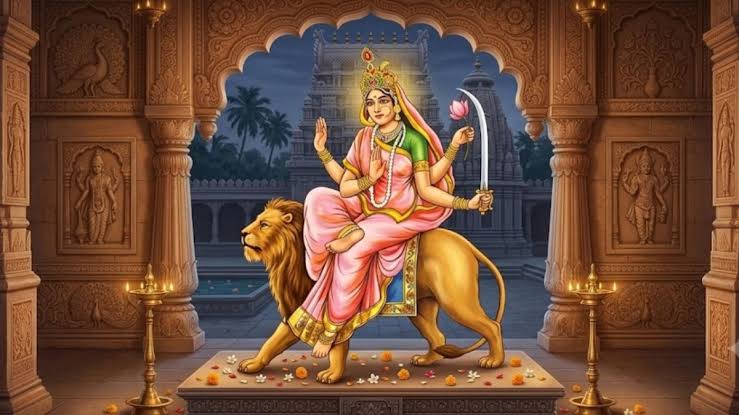
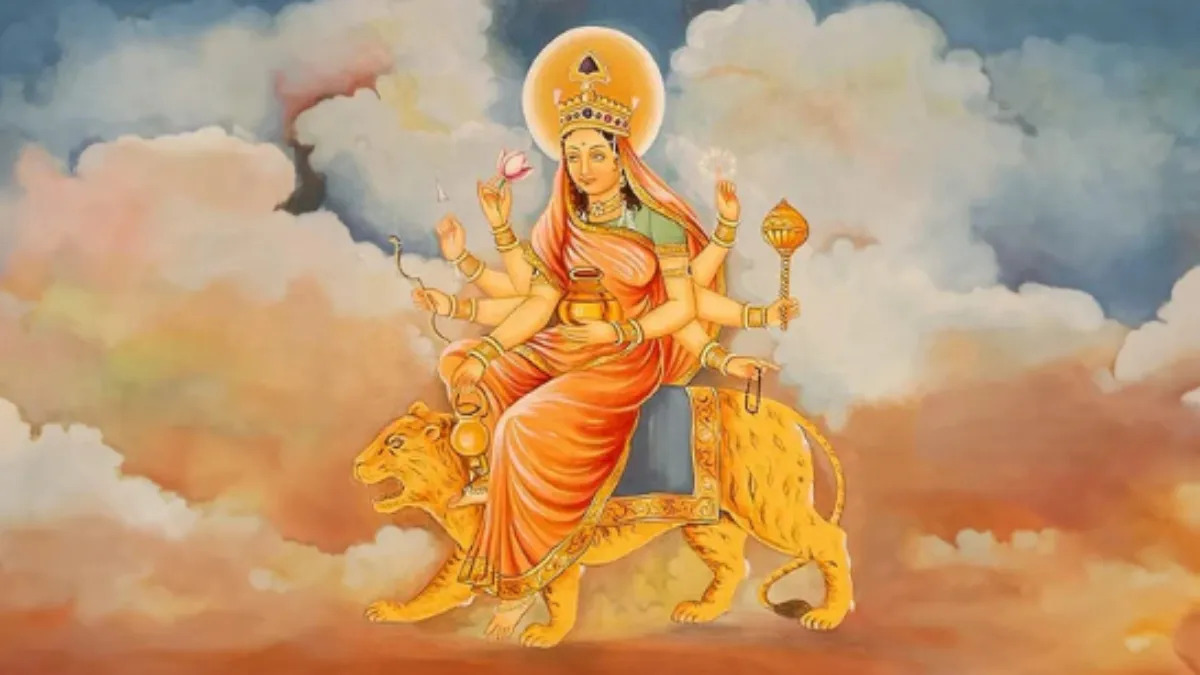
Maa Chandraghanta is the third manifestation of Goddess Durga worshipped during Navratri. Her name comes from the crescent-shaped bell, or ghanta, adorning her forehead.
She is generally depicted riding a tiger or lion, with several arms carrying divine weapons and other sacred objects. Her appearance represents readiness to protect devotees from negative forces, while her compassionate nature reflects the peaceful aspect of the Divine Mother.
The bell associated with her name symbolises the call to spiritual awareness and the destruction of ignorance. Her warrior form reminds devotees that courage does not mean the absence of fear; it means facing challenges with determination and faith.
Maa Chandraghanta therefore represents the balance between strength and serenity. Her worship encourages devotees to remain brave during difficult circumstances without losing their inner peace.
Significance of Maa Chandraghanta Puja on the Third Day of Navratri
The third day of Navratri is dedicated to seeking the blessings of Maa Chandraghanta for courage, protection, confidence, and peace of mind.
Devotees believe that worshipping the Goddess with sincere devotion helps them overcome fear and approach life's challenges with greater determination. Her form also reminds people that strength should be guided by compassion and wisdom.
Common worship practices include offering flowers, fruits, and traditional prasad, chanting devotional mantras, and performing Aarti. Some devotees also observe a fast according to their family customs and religious traditions.
The deeper message of Maa Chandraghanta Puja is that true strength lies in maintaining balance. A peaceful mind, a courageous heart, and a sense of responsibility can help a person face difficult situations more thoughtfully.
Through Bhaktinama, devotees can explore traditional worship practices and access services such as Online Pandit Booking and Online Puja Booking to help organise their religious observances.
How to Perform Maa Chandraghanta Puja
Devotees can worship Maa Chandraghanta at home according to their family traditions and established puja practices.
1. Prepare the puja space: Clean the worship area and place the image or idol of Maa Chandraghanta.
2. Begin with prayers: Remember Goddess Durga and seek the blessings of Maa Chandraghanta.
3. Offer traditional items: Present flowers, fruits, incense, and other offerings according to your customs.
4. Chant the mantra: Recite the Maa Chandraghanta mantra with devotion and concentration.
5. Perform Aarti: Conclude the main worship with the traditional Aarti.
6. Practise gratitude: Spend a few moments reflecting on courage, compassion, and inner peace.
A commonly recited mantra dedicated to Maa Chandraghanta is:
ॐ देवी चन्द्रघण्टायै नमः॥
Om Devi Chandraghantayai Namah.
Devotees chant this mantra as an expression of faith and a prayer for courage, protection, and spiritual well-being.
Why Is Hawan Important During Navratri?
Hawan, also known as Homa or Yajna, is an ancient Vedic ritual in which offerings such as ghee and prescribed sacred materials are placed into a consecrated fire while mantras are recited.
In Sanatan Dharma, Agni holds an important position in Vedic rituals and is traditionally regarded as the divine medium through which offerings are presented during a Yajna. Hawan is performed for different religious purposes, including expressing gratitude, seeking divine blessings, and praying for peace and well-being.
During Navratri, Hawan may form part of Goddess Durga worship, depending on the specific ritual and family tradition. Some devotees perform it during particular days of the festival, while others include it in the concluding ceremonies.
The spiritual significance of Hawan can be understood through three important aspects:
- Purification: The sacred fire symbolises spiritual cleansing and the preparation of a sacred environment.
- Devotion and surrender: Offerings made into the fire represent gratitude, faith, and reverence.
- Positive intentions: Mantra chanting and ritual participation encourage concentration, reflection, and a disciplined approach to worship.
Hawan is not compulsory on the third day in every Navratri tradition. Its timing and procedure depend on the ritual being performed and the guidance followed by the devotees.
The Connection Between Maa Chandraghanta Puja and Hawan
Maa Chandraghanta represents courage, protection, and the balance between power and peace. Hawan, meanwhile, provides a traditional way to express devotion through sacred offerings and mantra chanting.
These practices share a common spiritual message: devotion should inspire positive intentions and meaningful actions.
Worshipping Maa Chandraghanta encourages devotees to face challenges with courage and wisdom. Hawan allows them to express their prayers and gratitude through a time-honoured Vedic ritual.
Together, these practices offer an opportunity to reflect on the importance of inner strength, self-discipline, and spiritual awareness during Navratri.
For devotees planning traditional rituals, Bhaktinama offers Online Pandit Booking, Online Puja Booking, and Online Puja Samagri Booking services to help with their puja arrangements.
Anantkaal Surya Hawan: Honouring the Tradition of Sacred Fire
The significance of Hawan during Navratri also offers an opportunity to understand the continuing relevance of Vedic fire rituals in Sanatan Dharma.
Anantkaal Surya Hawan, an initiative by Bhaktinama and International Awareness for Sun (IAS), focuses on the spiritual and cultural significance of Surya Dev and the enduring tradition of solar worship.
Maa Chandraghanta Puja and Anantkaal Surya Hawan have distinct devotional focuses. While the third day of Navratri honours the courage, strength, and protective nature of the Goddess, Anantkaal Surya Hawan draws attention to Surya Dev as a symbol of light, vitality, and the sustaining power of life.
Both traditions provide opportunities to reflect on devotion, the significance of sacred rituals, and the place of divine forces in Sanatan Dharma.
Through this initiative, Bhaktinama and IAS seek to raise awareness of the Sun's spiritual and cultural importance and encourage a deeper understanding of traditional solar worship.
Devotees interested in this initiative can visit Bhaktinama to explore Anantkaal Hawan Slot Booking, available dates, and event details.
Spiritual Lessons From Maa Chandraghanta
The third day of Navratri offers valuable lessons that remain relevant in everyday life.
1. Courage in difficult situations: Maa Chandraghanta inspires devotees to face challenges rather than allow fear to control their decisions.
2. Balance between strength and peace: True strength includes the ability to remain calm and thoughtful under pressure.
3. Faith and confidence: Devotion can provide a sense of direction and encourage perseverance during uncertain times.
4. Protection through awareness: Her symbolism reminds devotees to remain alert, responsible, and prepared to respond wisely to difficulties.
5. Compassion alongside power: Strength becomes meaningful when it is guided by kindness, justice, and wisdom.
These lessons make Maa Chandraghanta an important symbol of courage, resilience, and spiritual balance.
Conclusion
The third day of Navratri is dedicated to Maa Chandraghanta, the divine form of Goddess Durga who represents courage, protection, strength, and peace. Her worship reminds devotees that facing life's challenges requires both determination and a calm mind.
Hawan adds another dimension to Navratri worship by providing a traditional means of offering prayers, expressing gratitude, and seeking divine blessings. Although its timing and procedure vary according to religious traditions, its spiritual significance remains closely connected with devotion and surrender.
Initiatives such as Anantkaal Surya Hawan by Bhaktinama and International Awareness for Sun (IAS) also help bring attention to the enduring cultural and spiritual significance of Vedic rituals and Surya Dev worship.
This Navratri, devotees can honour Maa Chandraghanta by embracing courage, compassion, and inner balance while learning more about the rich ritual traditions of Sanatan Dharma.
Visit Bhaktinama to explore Online Pandit Booking, Online Puja Booking, and Anantkaal Hawan Slot Booking.
Maa Chandraghanta is known for her warrior-like appearance and compassionate nature. Her form teaches devotees to face challenges with confidence while maintaining inner peace and balance. Worshipping her during Navratri is traditionally associated with seeking protection, removing fear, and developing the courage to overcome difficulties.
Along with Maa Chandraghanta Puja, devotees may perform mantra chanting, meditation, and traditional rituals such as Hawan. In Sanatan Dharma, Hawan represents devotion, surrender, and the offering of prayers through sacred fire.
Understanding the significance of Maa Chandraghanta and the role of Hawan can help devotees appreciate the deeper spiritual meaning of the third day of Navratri.
When Is the Third Day of Navratri 2026?
The third day of Shardiya Navratri 2026 falls on Tuesday, 13 October 2026, according to the commonly followed Navratri day sequence beginning on 11 October.
This day is associated with the worship of Maa Chandraghanta. Since Hindu festival observances depend on the lunar calendar, local Panchang calculations, and regional traditions, devotees should verify the applicable tithi and puja timings for their location.
Who Is Maa Chandraghanta?
Maa Chandraghanta is the third manifestation of Goddess Durga worshipped during Navratri. Her name comes from the crescent-shaped bell, or ghanta, adorning her forehead.
She is generally depicted riding a tiger or lion, with several arms carrying divine weapons and other sacred objects. Her appearance represents readiness to protect devotees from negative forces, while her compassionate nature reflects the peaceful aspect of the Divine Mother.
The bell associated with her name symbolises the call to spiritual awareness and the destruction of ignorance. Her warrior form reminds devotees that courage does not mean the absence of fear; it means facing challenges with determination and faith.
Maa Chandraghanta therefore represents the balance between strength and serenity. Her worship encourages devotees to remain brave during difficult circumstances without losing their inner peace.
Significance of Maa Chandraghanta Puja on the Third Day of Navratri
The third day of Navratri is dedicated to seeking the blessings of Maa Chandraghanta for courage, protection, confidence, and peace of mind.
Devotees believe that worshipping the Goddess with sincere devotion helps them overcome fear and approach life's challenges with greater determination. Her form also reminds people that strength should be guided by compassion and wisdom.
Common worship practices include offering flowers, fruits, and traditional prasad, chanting devotional mantras, and performing Aarti. Some devotees also observe a fast according to their family customs and religious traditions.
The deeper message of Maa Chandraghanta Puja is that true strength lies in maintaining balance. A peaceful mind, a courageous heart, and a sense of responsibility can help a person face difficult situations more thoughtfully.
Through Bhaktinama, devotees can explore traditional worship practices and access services such as Online Pandit Booking and Online Puja Booking to help organise their religious observances.
How to Perform Maa Chandraghanta Puja
Devotees can worship Maa Chandraghanta at home according to their family traditions and established puja practices.
1. Prepare the puja space: Clean the worship area and place the image or idol of Maa Chandraghanta.
2. Begin with prayers: Remember Goddess Durga and seek the blessings of Maa Chandraghanta.
3. Offer traditional items: Present flowers, fruits, incense, and other offerings according to your customs.
4. Chant the mantra: Recite the Maa Chandraghanta mantra with devotion and concentration.
5. Perform Aarti: Conclude the main worship with the traditional Aarti.
6. Practise gratitude: Spend a few moments reflecting on courage, compassion, and inner peace.
A commonly recited mantra dedicated to Maa Chandraghanta is:
ॐ देवी चन्द्रघण्टायै नमः॥
Om Devi Chandraghantayai Namah.
Devotees chant this mantra as an expression of faith and a prayer for courage, protection, and spiritual well-being.
Why Is Hawan Important During Navratri?
Hawan, also known as Homa or Yajna, is an ancient Vedic ritual in which offerings such as ghee and prescribed sacred materials are placed into a consecrated fire while mantras are recited.
In Sanatan Dharma, Agni holds an important position in Vedic rituals and is traditionally regarded as the divine medium through which offerings are presented during a Yajna. Hawan is performed for different religious purposes, including expressing gratitude, seeking divine blessings, and praying for peace and well-being.
During Navratri, Hawan may form part of Goddess Durga worship, depending on the specific ritual and family tradition. Some devotees perform it during particular days of the festival, while others include it in the concluding ceremonies.
The spiritual significance of Hawan can be understood through three important aspects:
- Purification: The sacred fire symbolises spiritual cleansing and the preparation of a sacred environment.
- Devotion and surrender: Offerings made into the fire represent gratitude, faith, and reverence.
- Positive intentions: Mantra chanting and ritual participation encourage concentration, reflection, and a disciplined approach to worship.
Hawan is not compulsory on the third day in every Navratri tradition. Its timing and procedure depend on the ritual being performed and the guidance followed by the devotees.
The Connection Between Maa Chandraghanta Puja and Hawan
Maa Chandraghanta represents courage, protection, and the balance between power and peace. Hawan, meanwhile, provides a traditional way to express devotion through sacred offerings and mantra chanting.
These practices share a common spiritual message: devotion should inspire positive intentions and meaningful actions.
Worshipping Maa Chandraghanta encourages devotees to face challenges with courage and wisdom. Hawan allows them to express their prayers and gratitude through a time-honoured Vedic ritual.
Together, these practices offer an opportunity to reflect on the importance of inner strength, self-discipline, and spiritual awareness during Navratri.
For devotees planning traditional rituals, Bhaktinama offers Online Pandit Booking, Online Puja Booking, and Online Puja Samagri Booking services to help with their puja arrangements.
Anantkaal Surya Hawan: Honouring the Tradition of Sacred Fire
The significance of Hawan during Navratri also offers an opportunity to understand the continuing relevance of Vedic fire rituals in Sanatan Dharma.
Anantkaal Surya Hawan, an initiative by Bhaktinama and International Awareness for Sun (IAS), focuses on the spiritual and cultural significance of Surya Dev and the enduring tradition of solar worship.
Maa Chandraghanta Puja and Anantkaal Surya Hawan have distinct devotional focuses. While the third day of Navratri honours the courage, strength, and protective nature of the Goddess, Anantkaal Surya Hawan draws attention to Surya Dev as a symbol of light, vitality, and the sustaining power of life.
Both traditions provide opportunities to reflect on devotion, the significance of sacred rituals, and the place of divine forces in Sanatan Dharma.
Through this initiative, Bhaktinama and IAS seek to raise awareness of the Sun's spiritual and cultural importance and encourage a deeper understanding of traditional solar worship.
Devotees interested in this initiative can visit Bhaktinama to explore Anantkaal Hawan Slot Booking, available dates, and event details.
Spiritual Lessons From Maa Chandraghanta
The third day of Navratri offers valuable lessons that remain relevant in everyday life.
1. Courage in difficult situations: Maa Chandraghanta inspires devotees to face challenges rather than allow fear to control their decisions.
2. Balance between strength and peace: True strength includes the ability to remain calm and thoughtful under pressure.
3. Faith and confidence: Devotion can provide a sense of direction and encourage perseverance during uncertain times.
4. Protection through awareness: Her symbolism reminds devotees to remain alert, responsible, and prepared to respond wisely to difficulties.
5. Compassion alongside power: Strength becomes meaningful when it is guided by kindness, justice, and wisdom.
These lessons make Maa Chandraghanta an important symbol of courage, resilience, and spiritual balance.
Conclusion
The third day of Navratri is dedicated to Maa Chandraghanta, the divine form of Goddess Durga who represents courage, protection, strength, and peace. Her worship reminds devotees that facing life's challenges requires both determination and a calm mind.
Hawan adds another dimension to Navratri worship by providing a traditional means of offering prayers, expressing gratitude, and seeking divine blessings. Although its timing and procedure vary according to religious traditions, its spiritual significance remains closely connected with devotion and surrender.
Initiatives such as Anantkaal Surya Hawan by Bhaktinama and International Awareness for Sun (IAS) also help bring attention to the enduring cultural and spiritual significance of Vedic rituals and Surya Dev worship.
This Navratri, devotees can honour Maa Chandraghanta by embracing courage, compassion, and inner balance while learning more about the rich ritual traditions of Sanatan Dharma.
Visit Bhaktinama to explore Online Pandit Booking, Online Puja Booking, and Anantkaal Hawan Slot Booking.