
October 15, 2026
Festival Fast
6 min read
Fifth Day of Navratri 2026: Maa Skandamata Puja and Hawan
Learn about the fifth day of Navratri 2026, Maa Skandamata Puja Vidhi, mantra, significance, and Hawan traditions. Explore Anantkaal Surya Hawan and puja services through Bhaktinama
The fifth day of Navratri is dedicated to Maa Skandamata, the fifth form of Goddess Durga. She is worshipped as the mother of Lord Kartikeya, also known as Skanda, the commander of the divine army. Maa Skandamata represents motherhood, compassion, wisdom, protection, and unconditional love.
During Navratri, devotees worship her to seek blessings for family well-being, happiness, prosperity, and spiritual growth. The day also reminds us of the importance of nurturing others with love while maintaining inner strength and devotion.
Through traditional puja, mantra chanting, and Hawan, devotees express their faith and strengthen their spiritual connection.
When Is the Fifth Day of Navratri in 2026?
The fifth day of Navratri falls on Thursday, 15 October 2026, following the commonly observed Navratri sequence beginning on 11 October.
On this day, devotees worship Maa Skandamata and pray for peace, family happiness, wisdom, and protection. Since tithi timings can vary by location, devotees should consult their local Panchang for the correct puja muhurat.
Who Is Maa Skandamata?
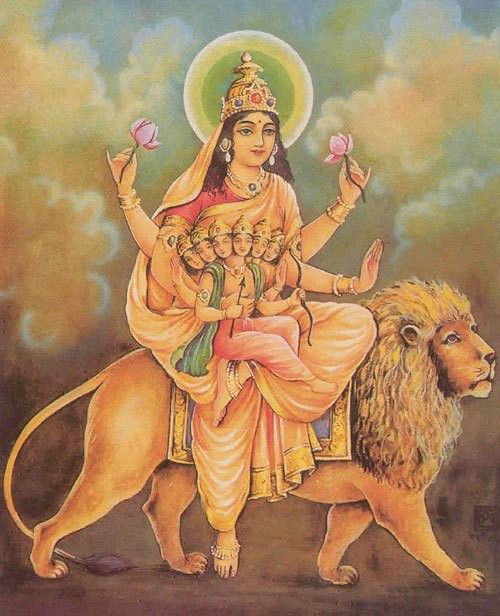
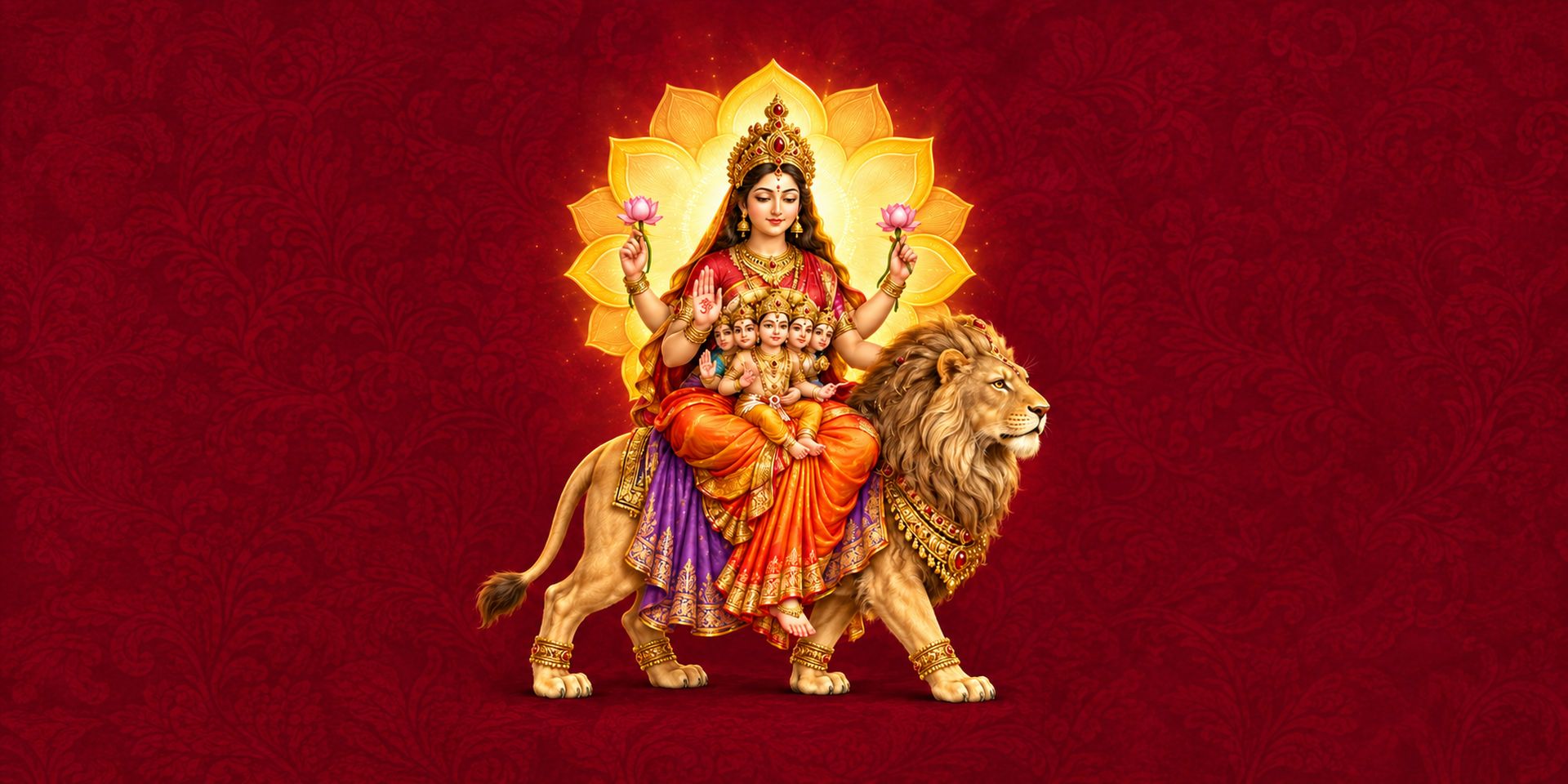
Maa Skandamata is the fifth manifestation of Goddess Durga. She is depicted holding her son, Lord Skanda, in her lap. Her image symbolises a mother's unconditional love, care, and protective strength.
She is generally shown seated on a lotus, which is why she is also associated with the name Padmasana Devi. Her divine form conveys the idea that true strength is not limited to power or authority; it also lies in compassion, patience, and the ability to protect and nurture others.
Devotees believe that worshipping Maa Skandamata brings peace, wisdom, and blessings to the family.
Significance of Maa Skandamata Puja
Maa Skandamata represents the nurturing aspect of divine feminine energy. Her worship on the fifth day of Navratri encourages devotees to develop compassion, responsibility, and emotional strength.
The spiritual significance of her worship includes:
- Motherhood and compassion: Respecting the love and care that support families and communities.
- Wisdom and understanding: Making thoughtful decisions and learning from experience.
- Protection and courage: Supporting loved ones while facing challenges with strength.
- Peace and devotion: Cultivating a calm mind and a sincere connection with the divine.
Her teachings remind devotees that kindness and strength can exist together, and that caring for others is itself a meaningful spiritual practice.
How to Perform Maa Skandamata Puja
Devotees can worship Maa Skandamata at home by following a simple traditional procedure.
1. Take a bath and clean the puja area.
2. Place an image or idol of Maa Skandamata in the worship space.
3. Light a diya and offer flowers, fruits, akshat, and naivedya according to your family tradition.
4. Chant the Maa Skandamata mantra with devotion.
5. Recite the Durga Chalisa or other devotional prayers.
6. Perform aarti and pray for the well-being of your family and loved ones.
Devotees who need assistance with traditional rituals can explore Online Pandit Booking through Bhaktinama. For the necessary worship materials, Online Puja Samagri Booking can also be a convenient option.
Maa Skandamata Mantra
The following mantra is traditionally recited while worshipping Maa Skandamata:
ॐ देवी स्कन्दमातायै नमः॥
Devotees can chant this mantra with faith and concentration, seeking the Goddess's blessings for wisdom, peace, protection, and family well-being.
Why Is Hawan Important During Navratri?
Hawan is a sacred Vedic ritual in which offerings are made into a consecrated fire while mantras are recited. In Sanatan Dharma, it represents devotion, gratitude, prayer, and the offering of one's intentions to the divine.
During Navratri, many devotees perform Hawan as part of their Devi worship. Some families conduct it on Durga Ashtami or Mahanavami, while others follow their own family traditions.
Hawan can also serve as a reminder to cultivate positive thoughts, act responsibly, and dedicate one's efforts to a meaningful purpose.
Devotees who wish to arrange a puja or Hawan with the guidance of a priest can explore Online Puja Booking through Bhaktinama.
The Connection Between Maa Skandamata Puja and Hawan
Maa Skandamata's worship focuses on compassion, protection, wisdom, and the well-being of loved ones. Hawan, meanwhile, provides a traditional way to express devotion and offer prayers for peace and prosperity.
When performed according to family customs and appropriate guidance, these practices allow devotees to reflect on their responsibilities towards their families and communities.
The deeper message is that spiritual devotion should also be reflected in everyday actions: caring for others, showing patience, and fulfilling responsibilities with sincerity.
Anantkaal Surya Hawan: A Special Initiative by Bhaktinama and IAS
The Sun holds a special place in Sanatan Dharma as a symbol of light, life, energy, and time. Surya Upasana has long been practised through prayers, offerings, and other traditional rituals.
Inspired by this heritage, Bhaktinama and International Awareness for Sun (IAS) have introduced the Anantkaal Surya Hawan initiative. It aims to raise awareness of the spiritual significance of Sun worship and reconnect people with the tradition of sacred fire rituals.
Although Maa Skandamata Puja and Anantkaal Surya Hawan both belong to broader Hindu spiritual traditions, they have distinct religious contexts. Anantkaal Surya Hawan is a separate initiative related to Surya Upasana, not a ritual specifically prescribed for the fifth day of Navratri.
Devotees interested in the initiative can explore the details available through Bhaktinama and learn more about Anantkaal Hawan Slot Booking.
Spiritual Lessons from Maa Skandamata
Maa Skandamata teaches that love, compassion, and responsibility are important expressions of strength. Her maternal form reminds devotees to care for their families while developing wisdom, patience, and courage.
Her worship also encourages people to create a peaceful environment at home, support those in need, and approach their duties with sincerity.
Conclusion
The fifth day of Navratri celebrates Maa Skandamata, whose divine form represents motherhood, compassion, wisdom, and protection. Through puja, mantra chanting, and Hawan according to their traditions, devotees express their faith and pray for the well-being of their families.
Through Bhaktinama, devotees can explore Hindu religious traditions and services such as Online Pandit Booking, Online Puja Booking, and Online Puja Samagri Booking.
The Anantkaal Surya Hawan, a separate initiative by Bhaktinama and International Awareness for Sun (IAS), provides another opportunity to learn about and connect with the tradition of Surya Upasana.
During Navratri, devotees worship her to seek blessings for family well-being, happiness, prosperity, and spiritual growth. The day also reminds us of the importance of nurturing others with love while maintaining inner strength and devotion.
Through traditional puja, mantra chanting, and Hawan, devotees express their faith and strengthen their spiritual connection.
When Is the Fifth Day of Navratri in 2026?
The fifth day of Navratri falls on Thursday, 15 October 2026, following the commonly observed Navratri sequence beginning on 11 October.
On this day, devotees worship Maa Skandamata and pray for peace, family happiness, wisdom, and protection. Since tithi timings can vary by location, devotees should consult their local Panchang for the correct puja muhurat.
Who Is Maa Skandamata?
Maa Skandamata is the fifth manifestation of Goddess Durga. She is depicted holding her son, Lord Skanda, in her lap. Her image symbolises a mother's unconditional love, care, and protective strength.
She is generally shown seated on a lotus, which is why she is also associated with the name Padmasana Devi. Her divine form conveys the idea that true strength is not limited to power or authority; it also lies in compassion, patience, and the ability to protect and nurture others.
Devotees believe that worshipping Maa Skandamata brings peace, wisdom, and blessings to the family.
Significance of Maa Skandamata Puja
Maa Skandamata represents the nurturing aspect of divine feminine energy. Her worship on the fifth day of Navratri encourages devotees to develop compassion, responsibility, and emotional strength.
The spiritual significance of her worship includes:
- Motherhood and compassion: Respecting the love and care that support families and communities.
- Wisdom and understanding: Making thoughtful decisions and learning from experience.
- Protection and courage: Supporting loved ones while facing challenges with strength.
- Peace and devotion: Cultivating a calm mind and a sincere connection with the divine.
Her teachings remind devotees that kindness and strength can exist together, and that caring for others is itself a meaningful spiritual practice.
How to Perform Maa Skandamata Puja
Devotees can worship Maa Skandamata at home by following a simple traditional procedure.
1. Take a bath and clean the puja area.
2. Place an image or idol of Maa Skandamata in the worship space.
3. Light a diya and offer flowers, fruits, akshat, and naivedya according to your family tradition.
4. Chant the Maa Skandamata mantra with devotion.
5. Recite the Durga Chalisa or other devotional prayers.
6. Perform aarti and pray for the well-being of your family and loved ones.
Devotees who need assistance with traditional rituals can explore Online Pandit Booking through Bhaktinama. For the necessary worship materials, Online Puja Samagri Booking can also be a convenient option.
Maa Skandamata Mantra
The following mantra is traditionally recited while worshipping Maa Skandamata:
ॐ देवी स्कन्दमातायै नमः॥
Devotees can chant this mantra with faith and concentration, seeking the Goddess's blessings for wisdom, peace, protection, and family well-being.
Why Is Hawan Important During Navratri?
Hawan is a sacred Vedic ritual in which offerings are made into a consecrated fire while mantras are recited. In Sanatan Dharma, it represents devotion, gratitude, prayer, and the offering of one's intentions to the divine.
During Navratri, many devotees perform Hawan as part of their Devi worship. Some families conduct it on Durga Ashtami or Mahanavami, while others follow their own family traditions.
Hawan can also serve as a reminder to cultivate positive thoughts, act responsibly, and dedicate one's efforts to a meaningful purpose.
Devotees who wish to arrange a puja or Hawan with the guidance of a priest can explore Online Puja Booking through Bhaktinama.
The Connection Between Maa Skandamata Puja and Hawan
Maa Skandamata's worship focuses on compassion, protection, wisdom, and the well-being of loved ones. Hawan, meanwhile, provides a traditional way to express devotion and offer prayers for peace and prosperity.
When performed according to family customs and appropriate guidance, these practices allow devotees to reflect on their responsibilities towards their families and communities.
The deeper message is that spiritual devotion should also be reflected in everyday actions: caring for others, showing patience, and fulfilling responsibilities with sincerity.
Anantkaal Surya Hawan: A Special Initiative by Bhaktinama and IAS
The Sun holds a special place in Sanatan Dharma as a symbol of light, life, energy, and time. Surya Upasana has long been practised through prayers, offerings, and other traditional rituals.
Inspired by this heritage, Bhaktinama and International Awareness for Sun (IAS) have introduced the Anantkaal Surya Hawan initiative. It aims to raise awareness of the spiritual significance of Sun worship and reconnect people with the tradition of sacred fire rituals.
Although Maa Skandamata Puja and Anantkaal Surya Hawan both belong to broader Hindu spiritual traditions, they have distinct religious contexts. Anantkaal Surya Hawan is a separate initiative related to Surya Upasana, not a ritual specifically prescribed for the fifth day of Navratri.
Devotees interested in the initiative can explore the details available through Bhaktinama and learn more about Anantkaal Hawan Slot Booking.
Spiritual Lessons from Maa Skandamata
Maa Skandamata teaches that love, compassion, and responsibility are important expressions of strength. Her maternal form reminds devotees to care for their families while developing wisdom, patience, and courage.
Her worship also encourages people to create a peaceful environment at home, support those in need, and approach their duties with sincerity.
Conclusion
The fifth day of Navratri celebrates Maa Skandamata, whose divine form represents motherhood, compassion, wisdom, and protection. Through puja, mantra chanting, and Hawan according to their traditions, devotees express their faith and pray for the well-being of their families.
Through Bhaktinama, devotees can explore Hindu religious traditions and services such as Online Pandit Booking, Online Puja Booking, and Online Puja Samagri Booking.
The Anantkaal Surya Hawan, a separate initiative by Bhaktinama and International Awareness for Sun (IAS), provides another opportunity to learn about and connect with the tradition of Surya Upasana.