November 15, 2025
Spirituality
2 min read
Symbolism in Hindu Gods
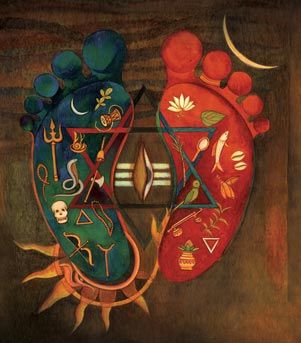
Hindu deities are not merely artistic figures — every color, weapon, posture, number, and symbol in their iconography encodes spiritual science. Blue represents infinity, the trishula destroys ignorance, the lotus mirrors cosmic geometry, and the mount reflects inner qualities one must cultivate. Understanding these symbols transforms mythology into a guide for consciousness, revealing how Hindu gods are living maps of spiritual evolution.
Every Hindu deity is a living symbol — their colors, forms, weapons, mounts, and hand gestures are filled with meaning.
These are not artistic decorations but encoded spiritual truths, cosmic principles, and layers of ancient science.
Understanding them turns a simple glance at a temple idol into a journey of awareness.
1. Color Symbolism
Blue (Krishna, Vishnu) – infinity, calmness, and divine depth.
White (Saraswati, meditating Shiva) – purity and spiritual awakening.
Red (Durga, Shakti) – energy, strength, and protection.
Black (Kali) – the cosmic void, absorber of negativity.
Ancient texts say colors emit frequencies that affect consciousness — a concept now explored in chromotherapy.
2. Number Symbolism
Four arms – four Vedas, four directions, four goals of life.
Ten arms (Durga) – mastery over ten divine powers.
Three eyes (Shiva) – past, present, and future; timeless awareness.
Seven serpents (Kundalini) – energy awakening through chakras.
Every number is an energy code rooted in spiritual philosophy.
3. Weapons and Their Meaning
Trishula (Shiva) – destroys ego, illusion, and ignorance.
Sudarsana Chakra (Vishnu) – spinning cosmic energy that removes negativity.
Bow and Arrow (Rama) – focus and discipline.
Sword (Durga) – clarity of intellect, cutting through illusion.
Even the metal used in weapons was selected for energetic resonance.
4. Mounts of Gods
Lion (Durga) – courage and control over instincts.
Tiger (Kali) – raw power.
Mouse (Ganesha) – humility and the ability to overcome obstacles.
Eagle (Garuda) – liberation, vision, and speed.
A mount reflects the qualities one must cultivate to align with the deity.
5. Mudras
Abhaya Mudra – fearlessness.
Varada Mudra – compassion and giving.
Jnana Mudra – knowledge and inner awareness.
Each mudra is a biological and energetic trigger activating specific parts of the mind.
6. Lotus and Sacred Geometry
The lotus symbolizes purity rising above chaos.
Its petals reflect cosmic geometry, chakras, and dimensions.
Many temples use lotus-based designs to represent universal harmony.
7. Divine Symbols
Conch – cosmic sound vibration.
Snake – kundalini and transformation.
Third Eye – inner vision.
Crescent Moon – mastery over mind and time.
Hindu gods are cosmic metaphors.
Their symbols guide a seeker toward higher consciousness, deeper understanding, and alignment with universal energy.
What appears as mythology is often a coded spiritual science.
Every element of a deity is a map for inner evolution — the divine always reveals wisdom to those who look with awareness.
Book experienced pandits online for all Hindu puja rituals with Bhaktinama – simple, reliable, and authentic.
These are not artistic decorations but encoded spiritual truths, cosmic principles, and layers of ancient science.
Understanding them turns a simple glance at a temple idol into a journey of awareness.
1. Color Symbolism
Blue (Krishna, Vishnu) – infinity, calmness, and divine depth.
White (Saraswati, meditating Shiva) – purity and spiritual awakening.
Red (Durga, Shakti) – energy, strength, and protection.
Black (Kali) – the cosmic void, absorber of negativity.
Ancient texts say colors emit frequencies that affect consciousness — a concept now explored in chromotherapy.
2. Number Symbolism
Four arms – four Vedas, four directions, four goals of life.
Ten arms (Durga) – mastery over ten divine powers.
Three eyes (Shiva) – past, present, and future; timeless awareness.
Seven serpents (Kundalini) – energy awakening through chakras.
Every number is an energy code rooted in spiritual philosophy.
3. Weapons and Their Meaning
Trishula (Shiva) – destroys ego, illusion, and ignorance.
Sudarsana Chakra (Vishnu) – spinning cosmic energy that removes negativity.
Bow and Arrow (Rama) – focus and discipline.
Sword (Durga) – clarity of intellect, cutting through illusion.
Even the metal used in weapons was selected for energetic resonance.
4. Mounts of Gods
Lion (Durga) – courage and control over instincts.
Tiger (Kali) – raw power.
Mouse (Ganesha) – humility and the ability to overcome obstacles.
Eagle (Garuda) – liberation, vision, and speed.
A mount reflects the qualities one must cultivate to align with the deity.
5. Mudras
Abhaya Mudra – fearlessness.
Varada Mudra – compassion and giving.
Jnana Mudra – knowledge and inner awareness.
Each mudra is a biological and energetic trigger activating specific parts of the mind.
6. Lotus and Sacred Geometry
The lotus symbolizes purity rising above chaos.
Its petals reflect cosmic geometry, chakras, and dimensions.
Many temples use lotus-based designs to represent universal harmony.
7. Divine Symbols
Conch – cosmic sound vibration.
Snake – kundalini and transformation.
Third Eye – inner vision.
Crescent Moon – mastery over mind and time.
Hindu gods are cosmic metaphors.
Their symbols guide a seeker toward higher consciousness, deeper understanding, and alignment with universal energy.
What appears as mythology is often a coded spiritual science.
Every element of a deity is a map for inner evolution — the divine always reveals wisdom to those who look with awareness.
Book experienced pandits online for all Hindu puja rituals with Bhaktinama – simple, reliable, and authentic.