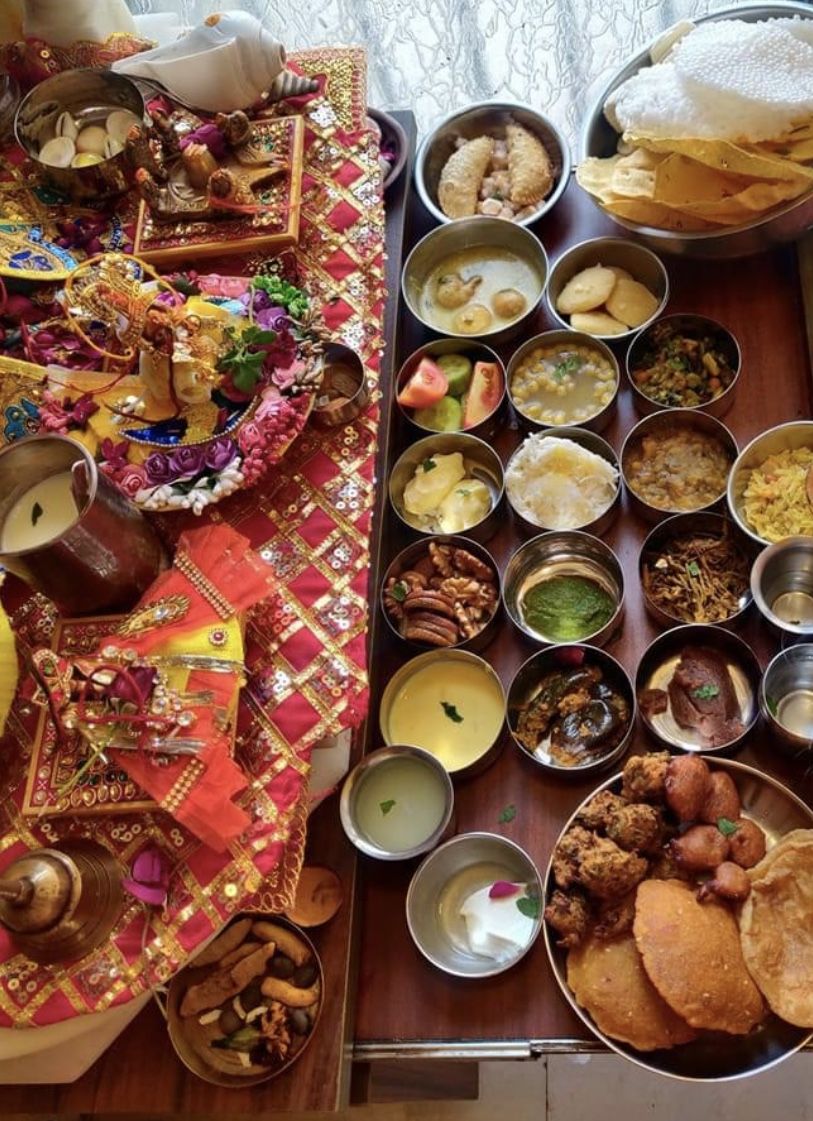
Govardhan Puja
The Govardhan Puja service includes traditional worship of Govardhan Parvat in symbolic form using cow dung or sacred earth, preparation and offering of Annakut (variety of food items), Tulsi leaves, flowers, deepak seva, and mantra chanting dedicated to Lord Krishna. The priest conducts the puja with proper sankalp, parikrama ritual, and concludes with Krishna Aarti and prasad distribution, ensuring adherence to regional and Vedic customs.
2,000+ devotees have booked this service online
Overview
Govardhan Puja is a sacred ritual performed a day after Diwali to honor Lord Krishna’s divine act of lifting Govardhan Hill and to express gratitude toward nature, cattle, and the sustainer of life. This puja symbolizes protection, humility, and devotion through simple yet profound worship.
Govardhan Puja holds deep spiritual meaning in Vaishnav tradition, celebrating Lord Krishna’s divine protection and His message of surrender to dharma rather than ritualistic pride. Performed on the Pratipada Tithi after Diwali, this puja honors Govardhan Parvat as a living symbol of nature’s generosity and Krishna’s compassionate guardianship over devotees. The ritual begins with purification and sankalp, followed by symbolic creation of Govardhan using sacred materials, representing the hill lifted by Lord Krishna to protect the people of Vrindavan from torrential rains. Annakut—an elaborate offering of food—is prepared with devotion and gratitude, signifying abundance, nourishment, and collective harmony. Deepak seva and mantra recitation elevate the spiritual atmosphere, while parikrama around Govardhan reinforces humility and devotion. Govardhan Puja encourages devotees to live in balance with nature, honor cows as sacred nurturers, and cultivate gratitude for divine sustenance. Whether performed at home, temple, or cowshed, this puja strengthens faith, invites protection, and blesses devotees with prosperity, humility, and lasting spiritual growth.
Visiting Information
- Timing: Temple, Home
- Best Time to Visit: Navratri (Chaitra & Ashwin months)
Facilities & Amenities
- • Parking: On-site for two-wheelers & four-wheeler
- • Accessibility: Wheelchair accessible parking and entrance