Navratri (All 9 Days)
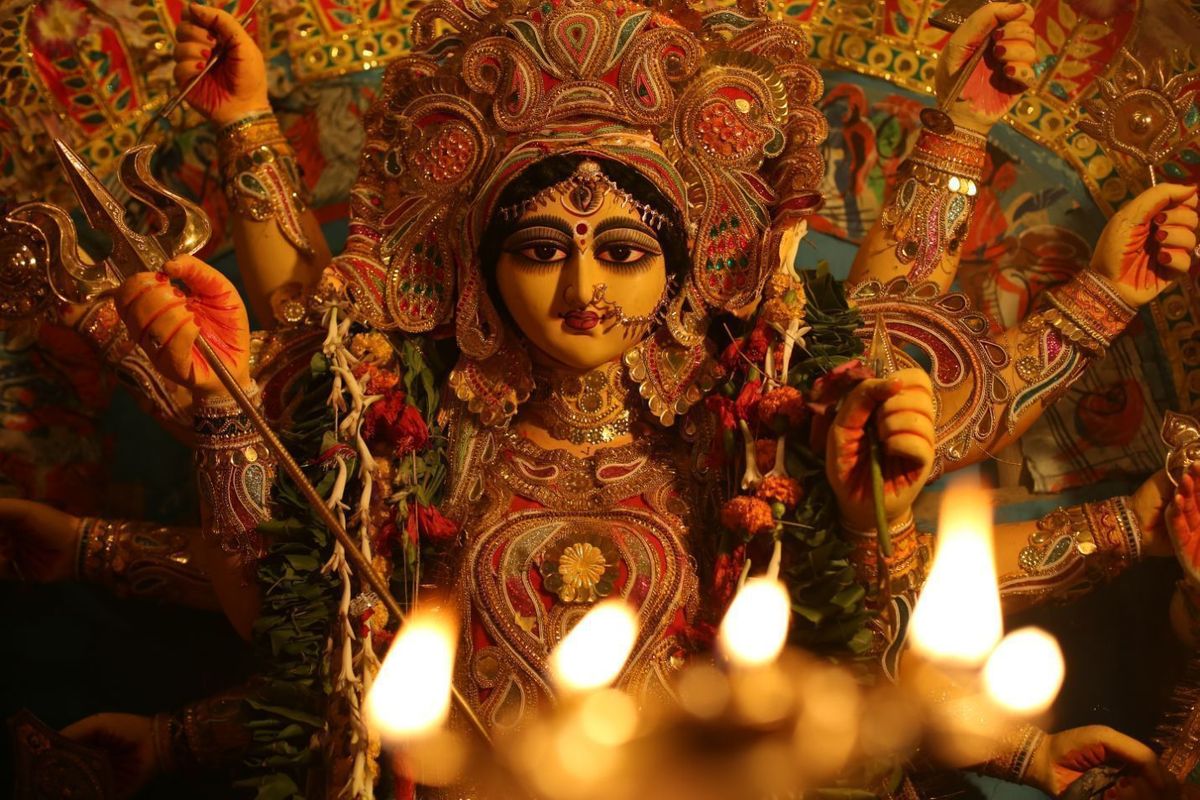
Navratri is a sacred nine-day Hindu festival dedicated to the worship of Goddess Durga in her nine divine forms, known as the Navdurgas. Observed through fasting, puja, mantra chanting, and devotion, Navratri celebrates the triumph of divine energy over negativity and awakens spiritual strength, purity, and inner balance in devotees.
2,000+ devotees have booked this service online
Overview
Navratri is a complete Devi worship observance performed to invoke Goddess Durga’s blessings for protection, strength, prosperity, and spiritual upliftment through continuous rituals, mantra sadhana, and devotion.
Navratri is one of the most powerful and spiritually enriching festivals in Hinduism, celebrated over nine consecutive nights and days in honor of Goddess Durga and her nine manifestations—Shailaputri, Brahmacharini, Chandraghanta, Kushmanda, Skandamata, Katyayani, Kaalratri, Mahagauri, and Siddhidatri. Each form represents a distinct spiritual quality such as strength, discipline, courage, wisdom, protection, purity, and divine accomplishment. The festival is observed four times a year, with Chaitra Navratri and Sharad Navratri being the most prominent. During these nine days, devotees engage in disciplined spiritual practices including fasting, daily puja, recitation of Durga Saptashati, chanting of mantras, lighting of lamps, and offering flowers and bhog to the Goddess. Homes and temples maintain a sacred atmosphere throughout the period, symbolizing continuous remembrance of divine energy. Navratri signifies the eternal battle between good and evil, where Goddess Durga destroys negative forces represented by Mahishasura and other demons. On a deeper spiritual level, these demons symbolize inner impurities such as ego, anger, fear, ignorance, and attachment. Worship during Navratri is therefore not only external ritual but also an inner process of purification, self-control, and transformation. Each day of Navratri is associated with specific colors, rituals, and spiritual focus. Devotees align their thoughts and actions with the qualities of the Goddess worshipped on that day, gradually progressing toward higher spiritual awareness. The ninth day, known as Navami, marks the culmination of devotion, and is often followed by Kanya Pujan or Durga Visarjan, depending on regional traditions. Culturally, Navratri is celebrated with immense joy and collective participation. In many regions, it includes devotional music, Garba and Dandiya dances, temple gatherings, and community pujas. These celebrations strengthen social bonds and preserve cultural heritage while keeping spiritual values at the center of communal life. Spiritually, continuous nine-day worship is believed to generate powerful divine vibrations that purify the environment and the devotee’s mind. Observing Navratri with sincerity enhances discipline, strengthens faith, and brings clarity and courage to face life’s challenges. It is also considered an auspicious period to begin spiritual practices, resolve long-standing issues, and seek divine guidance for personal and family well-being. Navratri ultimately teaches that divine power resides within every individual, and through devotion, self-discipline, and surrender, one can awaken that inner Shakti to lead a balanced, righteous, and spiritually aligned life.
Visiting Information
- Timing: Temple(optional)
- Best Time to Visit: Navratri (Chaitra & Ashwin months)
Facilities & Amenities
- • Parking: On-site for two-wheelers & four-wheeler
- • Accessibility: Wheelchair accessible parking and entrance