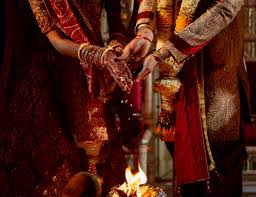
Vivah Hawan
Vivah Hawan is a sacred Vedic fire ritual performed during Hindu marriage ceremonies to invoke divine blessings for a harmonious, prosperous, and lifelong marital union. Conducted in the presence of Agni, this hawan sanctifies the marriage vows and marks the spiritual beginning of the couple’s journey together, seeking strength, unity, and mutual understanding.
2,000+ devotees have booked this service online
Overview
Vivah Hawan is the central Vedic ritual of a Hindu wedding in which sacred fire acts as the divine witness to marriage vows, ensuring spiritual sanctity, commitment, and blessings for a balanced married life.
Vivah Hawan is one of the most important and spiritually significant rituals in a Hindu wedding, forming the sacred foundation upon which the marital bond is established. Rooted in Vedic tradition, this hawan is performed to invoke Agni, the sacred fire, who is regarded as the eternal witness (Sakshi) to the marriage. In Hindu belief, a marriage is not merely a social contract but a sacred samskara, and Vivah Hawan transforms this union into a divine commitment blessed by higher cosmic forces. The ritual begins with purification ceremonies, after which the priest establishes the sacred fire at the mandap. A sankalp is taken on behalf of the bride and groom, stating their intention to enter married life with dharma, loyalty, and shared responsibility. Offerings such as ghee, grains, herbs, and sacred samagri are made into the fire while Vedic mantras are chanted, invoking blessings for harmony, prosperity, fertility, health, and mutual respect. Each offering symbolizes essential values required for a successful marriage, such as patience, cooperation, devotion, and balance. During Vivah Hawan, the couple sits together near the fire, representing equality and partnership. The presence of Agni signifies purity and truth, reminding the couple that their relationship should be built on honesty and mutual trust. The mantras chanted during the hawan seek divine guidance so that the couple can face life’s challenges together with strength and unity. The ritual also emphasizes gratitude toward nature and divine energies, acknowledging that marital happiness is sustained through both personal effort and divine grace. Vivah Hawan is often followed by key marriage rituals such as Saptapadi (seven sacred vows), which further reinforce the spiritual commitments made during the hawan. It is believed that the blessings invoked through the fire during Vivah Hawan protect the marriage from negativity and guide the couple toward a balanced and righteous life. The ritual creates a spiritually charged atmosphere that instills calmness, faith, and emotional stability in the couple as they step into a new phase of life. Performed according to ancient scriptures, Vivah Hawan is not limited to religious symbolism alone but also serves as a reminder of social responsibility, family harmony, and shared spiritual growth. It unites two individuals, two families, and their values under divine presence, making marriage a sacred journey rather than a mere ceremony. Through Vivah Hawan, the couple seeks lifelong blessings for love, understanding, prosperity, and spiritual companionship.
Visiting Information
- Timing: Temple(optional)
- Best Time to Visit: Navratri (Chaitra & Ashwin months)
Facilities & Amenities
- • Parking: On-site for two-wheelers & four-wheeler
- • Accessibility: Wheelchair accessible parking and entrance