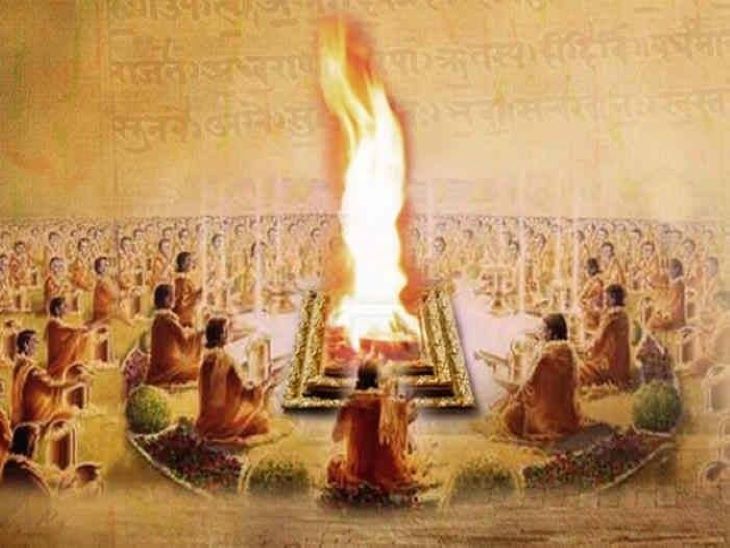
Samuhik Hawan
Samuhik Hawan is a sacred collective fire ritual performed by a group of devotees with a shared spiritual intention, aimed at creating harmony, purification, and collective well-being. The word Samuhik means collective, and this hawan emphasizes the power of united prayers, where individual intentions merge into a single spiritual force.
2,000+ devotees have booked this service online
Overview
In a Samuhik Hawan, the sacred fire (Agni) is established following proper purification rituals, mantra recitation, and invocation of divine energies. A common sankalp is taken on behalf of all participants, clearly stating the purpose of the hawan, which may include peace, health, prosperity, protection, rain, environmental balance, removal of negativity, or success in collective endeavors. Each participant mentally connects their prayers and wishes to this sankalp, making the ritual deeply inclusive and spiritually unifying.
Samuhik Hawan is a sacred collective fire ritual performed by a group of devotees with a shared spiritual intention, aimed at creating harmony, purification, and collective well-being. The word Samuhik means collective, and this hawan emphasizes the power of united prayers, where individual intentions merge into a single spiritual force. Rooted in ancient Vedic tradition, Samuhik Hawan is conducted to invoke divine blessings not only for individuals but also for families, communities, institutions, and society at large. In a Samuhik Hawan, the sacred fire (Agni) is established following proper purification rituals, mantra recitation, and invocation of divine energies. A common sankalp is taken on behalf of all participants, clearly stating the purpose of the hawan, which may include peace, health, prosperity, protection, rain, environmental balance, removal of negativity, or success in collective endeavors. Each participant mentally connects their prayers and wishes to this sankalp, making the ritual deeply inclusive and spiritually unifying. Offerings such as ghee, hawan samagri, grains, herbs, and sacred woods are offered into the fire while Vedic mantras are chanted rhythmically by experienced priests. As the mantras resonate and offerings are made, the fire becomes a powerful medium that carries collective prayers to the divine. The synchronized chanting and shared devotion generate strong spiritual vibrations, which are believed to purify the surroundings and elevate the consciousness of all present. The atmosphere created during a Samuhik Hawan is charged with positivity, devotion, and inner calm, allowing participants to experience a sense of belonging and spiritual upliftment. Samuhik Hawan is commonly organized during festivals, Navratri, special religious occasions, temple events, community gatherings, and important milestones such as inaugurations, anniversaries, or large family ceremonies. It is also performed for social causes like peace, environmental harmony, and collective healing, reflecting the timeless belief that spiritual practices are not limited to personal gain but are meant for the welfare of all. By participating in a Samuhik Hawan, devotees reaffirm the principle that collective intention amplifies spiritual results. Beyond ritual performance, Samuhik Hawan nurtures values of unity, cooperation, and shared responsibility. Sitting together around the sacred fire, irrespective of social or personal differences, reinforces the cultural idea that all beings are equal in the presence of the divine. The ritual encourages humility, discipline, and faith, reminding participants that when prayers are offered selflessly for the greater good, divine grace flows more abundantly. Samuhik Hawan thus becomes a spiritual experience that strengthens both inner awareness and social harmony.
Visiting Information
- Timing: Temple, Pandits
- Best Time to Visit: Navratri (Chaitra & Ashwin months)
Facilities & Amenities
- • Parking: On-site for two-wheelers & four-wheeler
- • Accessibility: Wheelchair accessible parking and entrance