
September 14, 2026
Festival Fast
7 min read
Ganesh Chaturthi 2026: Date, Puja Vidhi, Muhurat, Vrat & Significance
Know Ganesh Chaturthi 2026 date, puja vidhi, muhurat, samagri, Ganesh Visarjan and the spiritual significance of worshipping Lord Ganesha.
Ganesh Chaturthi is one of the most celebrated Hindu festivals dedicated to Lord Ganesha, the beloved deity known as Vighnaharta, the remover of obstacles, and the giver of wisdom, prosperity and auspicious beginnings. The festival marks the birth of Lord Ganesha and is observed with devotion across India, particularly in Maharashtra, Karnataka, Gujarat, Telangana and several other regions.
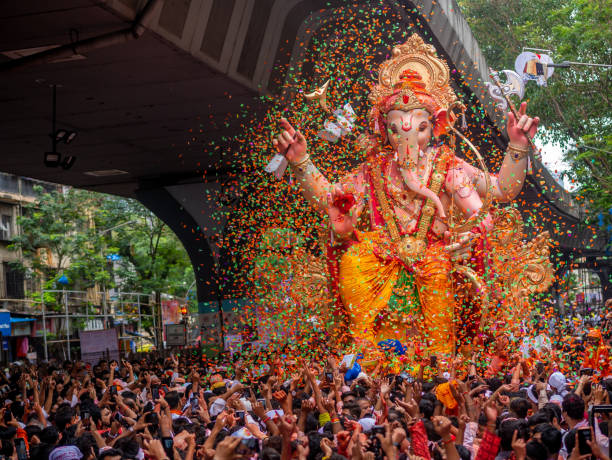
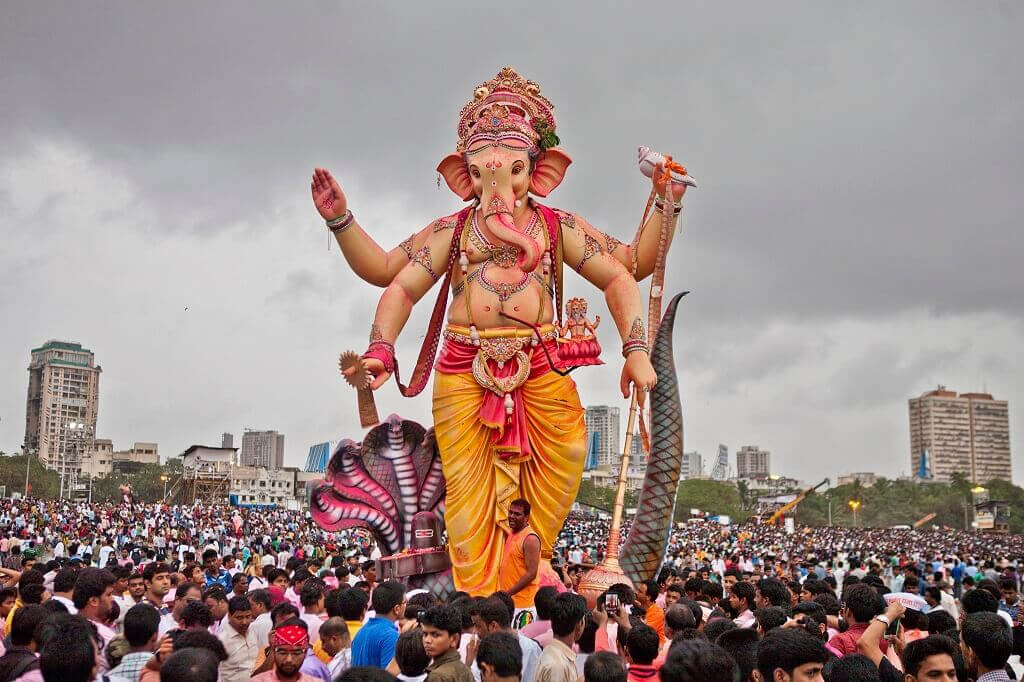
During Ganesh Chaturthi, devotees bring beautifully decorated idols of Lord Ganesha into their homes, temples and community pandals. The festival is filled with prayers, devotional music, offerings and cultural celebrations, while its deeper message revolves around wisdom, humility and beginning every important journey with divine blessings.
Ganesh Chaturthi 2026 Date
Ganesh Chaturthi is observed on the Chaturthi Tithi of Shukla Paksha in the Hindu month of Bhadrapada.
In 2026, Ganesh Chaturthi will be observed in August/September according to the Hindu lunar calendar. The exact puja muhurat and tithi timings may vary slightly according to the location, so devotees should check their local Panchang before performing the puja.
The Madhyahna period is traditionally considered especially important for Ganesh Chaturthi Puja.
Why is Ganesh Chaturthi Celebrated
Ganesh Chaturthi celebrates the divine appearance of Lord Ganesha, the son of Lord Shiva and Goddess Parvati. According to Hindu tradition, Goddess Parvati created Ganesha and entrusted him with guarding her while she was preparing for her bath.
When Lord Shiva returned and Ganesha stopped him from entering, a conflict followed. Lord Shiva eventually severed Ganesha's head. Seeing Parvati's grief, Lord Shiva restored Ganesha's life by placing the head of an elephant on him.
This story is remembered not only as the origin of Ganesha's elephant-headed form but also as a reminder of devotion, duty, transformation and divine grace.
The Spiritual Significance of Lord Ganesha
Lord Ganesha represents much more than the removal of obstacles. His form itself carries symbolic meanings.
His large ears remind us to listen carefully before speaking. His small eyes represent concentration, while his large head symbolises wisdom and expansive thinking. His trunk represents adaptability and the ability to handle both delicate and difficult tasks.
Ganesha's vehicle, the mouse, is also symbolic. The mouse is often associated with desires that can move rapidly and become difficult to control. Ganesha sitting upon the mouse represents the importance of keeping desires under control through wisdom.
For devotees, worshipping Ganesha therefore becomes an opportunity to seek not only success but also the intelligence and discipline needed to use success wisely.
Ganesh Chaturthi Puja Vidhi
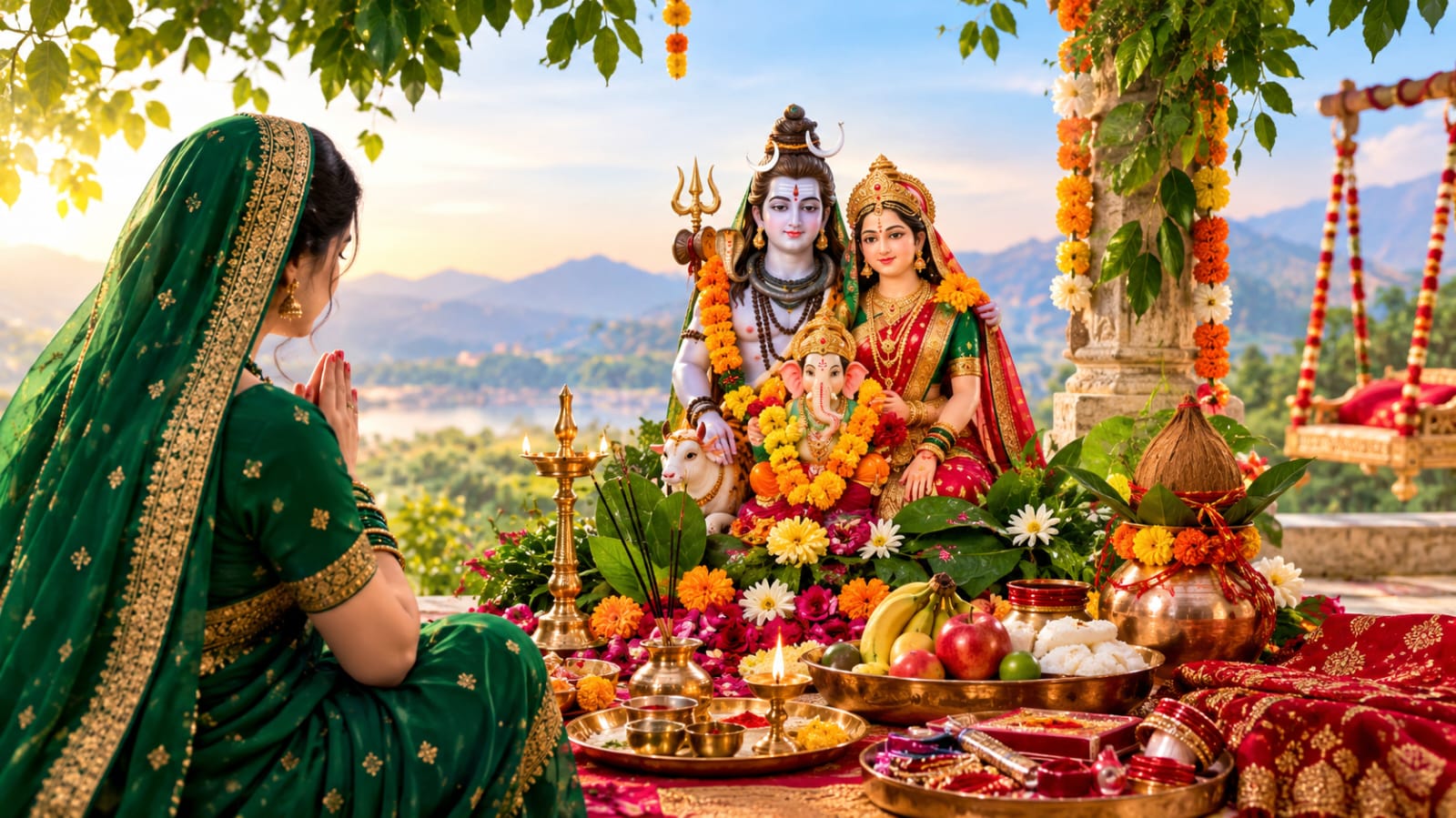
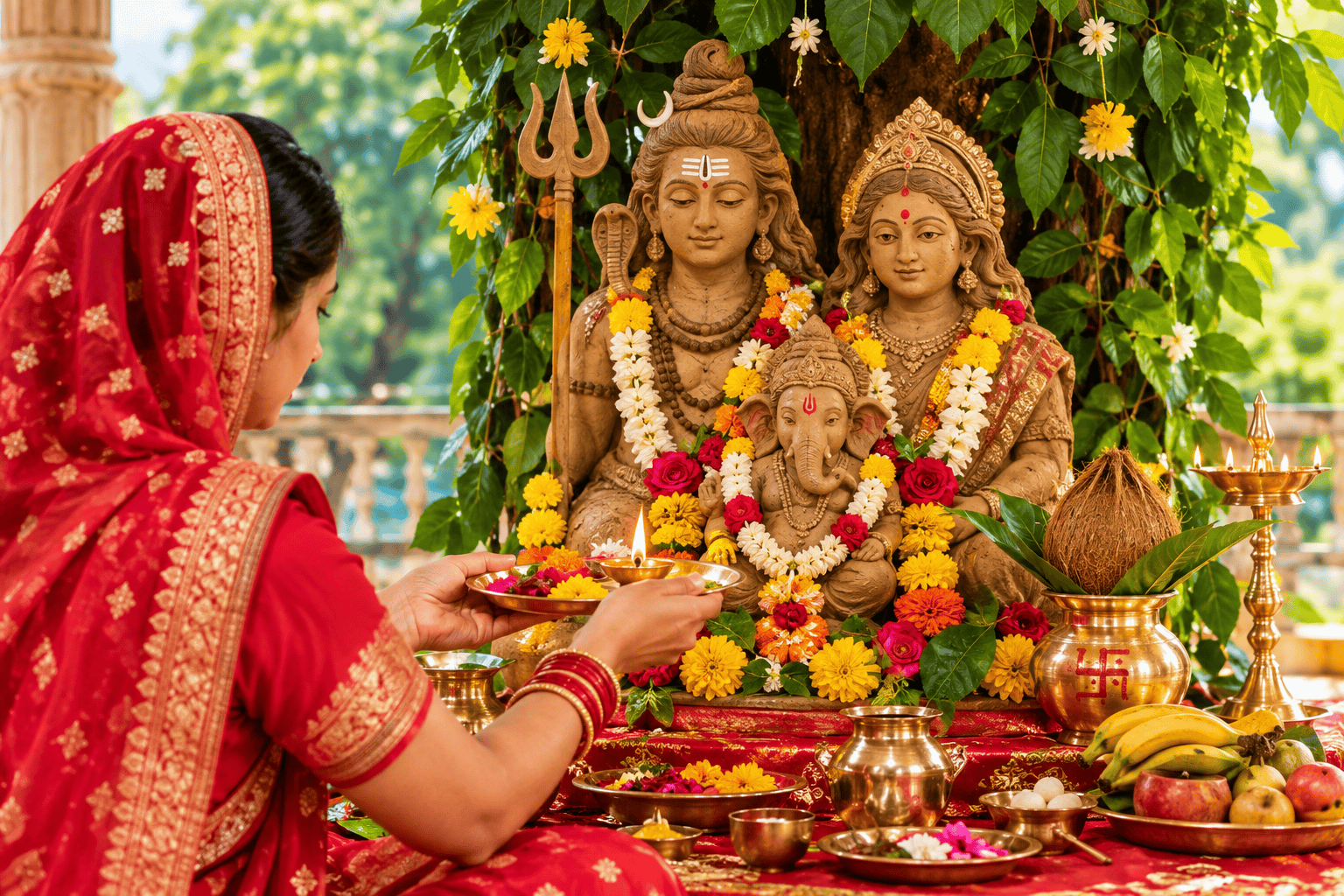
Ganesh Chaturthi Puja begins with preparing a clean and peaceful place for the idol. The idol of Lord Ganesha is placed on a clean platform and devotees traditionally invoke the deity with श्रद्धा and devotion.
The general puja process includes:
Cleaning and purifying the puja space.
Placing the idol of Lord Ganesha on a decorated platform.
Performing Sankalp for the puja.
Invoking Lord Ganesha through appropriate mantras.
Offering water, flowers, Durva grass, sandalwood and other puja items.
Offering Modak and other bhog.
Performing Ganesh Aarti.
Praying for wisdom, prosperity, peace and the removal of obstacles.
Those who want to perform the rituals according to traditional procedures can arrange an Online Pandit Booking through Bhaktinama and conduct the puja with proper guidance.
Ganesh Chaturthi Puja Samagri
The exact list of items can vary according to family tradition and regional customs, but some commonly used Ganesh Chaturthi Puja Samagri includes:
Lord Ganesha idol
Durva grass
Red flowers
Sandalwood
Kumkum and turmeric
Akshat
Incense sticks and diya
Fruits
Coconut
Betel leaves and betel nuts
Modak or other sweets
Panchamrit
Kalash and puja vessels
Cloth for the deity
Devotees who prefer to arrange everything conveniently can also use Online Puja Samagri Booking to organise the required puja materials.
Why is Durva Offered to Lord Ganesha?
Durva grass has a special place in Ganesha worship. Traditionally, devotees offer bundles of Durva to Lord Ganesha because it is considered especially dear to him.
The offering also carries a deeper spiritual idea. Durva is simple, green and capable of growing again even after being cut. It can therefore be seen as a symbol of resilience, renewal and the ability to overcome difficulties.
Ganesh Chaturthi reminds devotees that obstacles are not always the end of a journey; with wisdom, patience and determination, they can become opportunities for growth.
Why is Modak Associated with Lord Ganesha?
Modak is one of the most popular offerings made to Lord Ganesha. It is often described as his favourite sweet.
The shape and preparation of a traditional Modak also carry symbolic meaning. Its outer covering surrounds a sweet filling, representing the idea that the sweetness of spiritual knowledge and inner happiness is discovered within.
During Ganesh Chaturthi, homes and community celebrations often prepare different varieties of Modak as part of the bhog offered to Ganesha.
Ganesh Chaturthi and the Tradition of Public Celebrations
While Ganesha worship has been practised in homes and temples for centuries, the large-scale public celebration of Ganesh Chaturthi became particularly prominent in Maharashtra during the late nineteenth century.
Lokmanya Bal Gangadhar Tilak played an important role in transforming Ganesh Chaturthi into a large public festival. Community celebrations brought people together through worship, cultural programmes and social gatherings.
Over time, this tradition spread widely and Ganesh Chaturthi became one of India's most recognisable cultural and religious celebrations.
Ganesh Chaturthi Idol and Visarjan
The festival traditionally concludes with the immersion, or Visarjan, of the Ganesha idol. Depending on family and regional traditions, the idol may be immersed after one and a half days, three days, five days, seven days, ten days or on Anant Chaturdashi.
The immersion represents the temporary nature of the physical form. The deity is welcomed with devotion and eventually bid farewell with the understanding that the divine presence remains beyond the physical idol.
The familiar sentiment of Ganesh Visarjan, therefore, is not simply about saying goodbye. It represents acceptance of change, detachment and the cycle of creation and dissolution.
The Importance of Eco-Friendly Ganesh Chaturthi
In recent years, greater attention has been given to environmentally responsible celebrations. Traditional clay idols are generally preferred because they can dissolve more naturally in water compared with idols made from materials that may contain harmful substances.
Devotees can also reduce unnecessary plastic decorations, choose natural flowers and reusable décor, and participate in responsible immersion practices.
Celebrating a festival with devotion while caring for nature reflects the broader Hindu understanding of respecting the elements and the natural world.
Ganesh Chaturthi for New Beginnings
Lord Ganesha is traditionally worshipped before important ceremonies, journeys, religious rituals and new ventures. This is why his presence is closely associated with auspicious beginnings.
Ganesh Chaturthi offers a meaningful opportunity to reflect on the obstacles in our own lives. Instead of simply praying for difficulties to disappear, devotees can seek the wisdom, patience and courage required to overcome them.
This makes Ganesha worship relevant not only during the festival but throughout everyday life.
Celebrate Ganesh Chaturthi with Devotion
Ganesh Chaturthi is a festival of faith, wisdom and renewal. From welcoming Lord Ganesha into the home to offering Durva and Modak, performing Aarti and finally observing Visarjan, every part of the celebration carries a deeper spiritual meaning.
Whether the festival is celebrated privately with family or as a large community gathering, its central message remains the same: begin with wisdom, act with humility and face obstacles with courage.
For devotees who wish to perform Ganesh Chaturthi Puja with traditional rituals and guidance, Bhaktinama makes it easier to arrange Online Pandit Booking and Online Puja Booking, bringing the convenience of organised devotional services to your celebration.
During Ganesh Chaturthi, devotees bring beautifully decorated idols of Lord Ganesha into their homes, temples and community pandals. The festival is filled with prayers, devotional music, offerings and cultural celebrations, while its deeper message revolves around wisdom, humility and beginning every important journey with divine blessings.
Ganesh Chaturthi 2026 Date
Ganesh Chaturthi is observed on the Chaturthi Tithi of Shukla Paksha in the Hindu month of Bhadrapada.
In 2026, Ganesh Chaturthi will be observed in August/September according to the Hindu lunar calendar. The exact puja muhurat and tithi timings may vary slightly according to the location, so devotees should check their local Panchang before performing the puja.
The Madhyahna period is traditionally considered especially important for Ganesh Chaturthi Puja.
Why is Ganesh Chaturthi Celebrated
Ganesh Chaturthi celebrates the divine appearance of Lord Ganesha, the son of Lord Shiva and Goddess Parvati. According to Hindu tradition, Goddess Parvati created Ganesha and entrusted him with guarding her while she was preparing for her bath.
When Lord Shiva returned and Ganesha stopped him from entering, a conflict followed. Lord Shiva eventually severed Ganesha's head. Seeing Parvati's grief, Lord Shiva restored Ganesha's life by placing the head of an elephant on him.
This story is remembered not only as the origin of Ganesha's elephant-headed form but also as a reminder of devotion, duty, transformation and divine grace.
The Spiritual Significance of Lord Ganesha
Lord Ganesha represents much more than the removal of obstacles. His form itself carries symbolic meanings.
His large ears remind us to listen carefully before speaking. His small eyes represent concentration, while his large head symbolises wisdom and expansive thinking. His trunk represents adaptability and the ability to handle both delicate and difficult tasks.
Ganesha's vehicle, the mouse, is also symbolic. The mouse is often associated with desires that can move rapidly and become difficult to control. Ganesha sitting upon the mouse represents the importance of keeping desires under control through wisdom.
For devotees, worshipping Ganesha therefore becomes an opportunity to seek not only success but also the intelligence and discipline needed to use success wisely.
Ganesh Chaturthi Puja Vidhi
Ganesh Chaturthi Puja begins with preparing a clean and peaceful place for the idol. The idol of Lord Ganesha is placed on a clean platform and devotees traditionally invoke the deity with श्रद्धा and devotion.
The general puja process includes:
Cleaning and purifying the puja space.
Placing the idol of Lord Ganesha on a decorated platform.
Performing Sankalp for the puja.
Invoking Lord Ganesha through appropriate mantras.
Offering water, flowers, Durva grass, sandalwood and other puja items.
Offering Modak and other bhog.
Performing Ganesh Aarti.
Praying for wisdom, prosperity, peace and the removal of obstacles.
Those who want to perform the rituals according to traditional procedures can arrange an Online Pandit Booking through Bhaktinama and conduct the puja with proper guidance.
Ganesh Chaturthi Puja Samagri
The exact list of items can vary according to family tradition and regional customs, but some commonly used Ganesh Chaturthi Puja Samagri includes:
Lord Ganesha idol
Durva grass
Red flowers
Sandalwood
Kumkum and turmeric
Akshat
Incense sticks and diya
Fruits
Coconut
Betel leaves and betel nuts
Modak or other sweets
Panchamrit
Kalash and puja vessels
Cloth for the deity
Devotees who prefer to arrange everything conveniently can also use Online Puja Samagri Booking to organise the required puja materials.
Why is Durva Offered to Lord Ganesha?
Durva grass has a special place in Ganesha worship. Traditionally, devotees offer bundles of Durva to Lord Ganesha because it is considered especially dear to him.
The offering also carries a deeper spiritual idea. Durva is simple, green and capable of growing again even after being cut. It can therefore be seen as a symbol of resilience, renewal and the ability to overcome difficulties.
Ganesh Chaturthi reminds devotees that obstacles are not always the end of a journey; with wisdom, patience and determination, they can become opportunities for growth.
Why is Modak Associated with Lord Ganesha?
Modak is one of the most popular offerings made to Lord Ganesha. It is often described as his favourite sweet.
The shape and preparation of a traditional Modak also carry symbolic meaning. Its outer covering surrounds a sweet filling, representing the idea that the sweetness of spiritual knowledge and inner happiness is discovered within.
During Ganesh Chaturthi, homes and community celebrations often prepare different varieties of Modak as part of the bhog offered to Ganesha.
Ganesh Chaturthi and the Tradition of Public Celebrations
While Ganesha worship has been practised in homes and temples for centuries, the large-scale public celebration of Ganesh Chaturthi became particularly prominent in Maharashtra during the late nineteenth century.
Lokmanya Bal Gangadhar Tilak played an important role in transforming Ganesh Chaturthi into a large public festival. Community celebrations brought people together through worship, cultural programmes and social gatherings.
Over time, this tradition spread widely and Ganesh Chaturthi became one of India's most recognisable cultural and religious celebrations.
Ganesh Chaturthi Idol and Visarjan
The festival traditionally concludes with the immersion, or Visarjan, of the Ganesha idol. Depending on family and regional traditions, the idol may be immersed after one and a half days, three days, five days, seven days, ten days or on Anant Chaturdashi.
The immersion represents the temporary nature of the physical form. The deity is welcomed with devotion and eventually bid farewell with the understanding that the divine presence remains beyond the physical idol.
The familiar sentiment of Ganesh Visarjan, therefore, is not simply about saying goodbye. It represents acceptance of change, detachment and the cycle of creation and dissolution.
The Importance of Eco-Friendly Ganesh Chaturthi
In recent years, greater attention has been given to environmentally responsible celebrations. Traditional clay idols are generally preferred because they can dissolve more naturally in water compared with idols made from materials that may contain harmful substances.
Devotees can also reduce unnecessary plastic decorations, choose natural flowers and reusable décor, and participate in responsible immersion practices.
Celebrating a festival with devotion while caring for nature reflects the broader Hindu understanding of respecting the elements and the natural world.
Ganesh Chaturthi for New Beginnings
Lord Ganesha is traditionally worshipped before important ceremonies, journeys, religious rituals and new ventures. This is why his presence is closely associated with auspicious beginnings.
Ganesh Chaturthi offers a meaningful opportunity to reflect on the obstacles in our own lives. Instead of simply praying for difficulties to disappear, devotees can seek the wisdom, patience and courage required to overcome them.
This makes Ganesha worship relevant not only during the festival but throughout everyday life.
Celebrate Ganesh Chaturthi with Devotion
Ganesh Chaturthi is a festival of faith, wisdom and renewal. From welcoming Lord Ganesha into the home to offering Durva and Modak, performing Aarti and finally observing Visarjan, every part of the celebration carries a deeper spiritual meaning.
Whether the festival is celebrated privately with family or as a large community gathering, its central message remains the same: begin with wisdom, act with humility and face obstacles with courage.
For devotees who wish to perform Ganesh Chaturthi Puja with traditional rituals and guidance, Bhaktinama makes it easier to arrange Online Pandit Booking and Online Puja Booking, bringing the convenience of organised devotional services to your celebration.